
A Journey Through History
In the early 1960s, South Vietnam was experiencing growing political and religious tensions. Many Buddhists believed that the government under President Ngô Đình Diệm favored Catholicism while imposing restrictions on Buddhist practices.
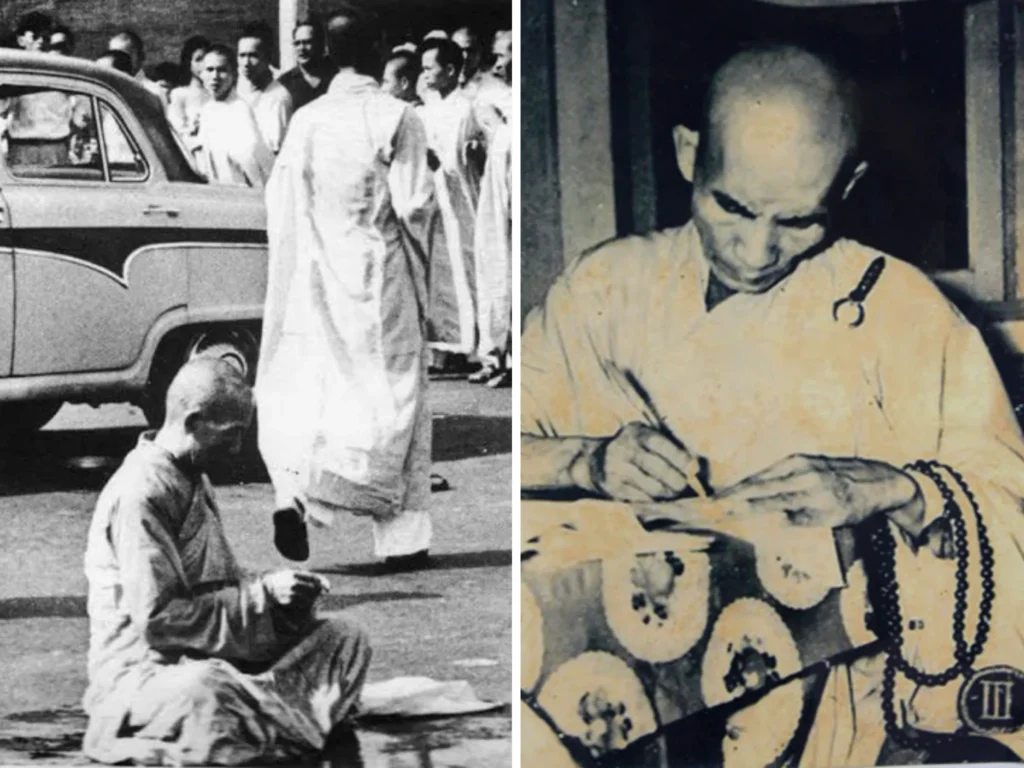
The final days before performing the noble deed.
See more: Ho Chi Minh City Hall – The Elegant Heart Of Saigon
After months of peaceful demonstrations, Venerable Thích Quảng Đức made an extraordinary decision. On the morning of June 11, 1963, he calmly sat in the lotus position at this busy intersection while fellow monks poured gasoline over him. He then ignited himself in complete silence.
Witnesses described the scene as astonishingly peaceful.
Witnesses described the scene as astonishingly peaceful. Despite the intense flames, he reportedly never cried out or moved from his meditation posture.
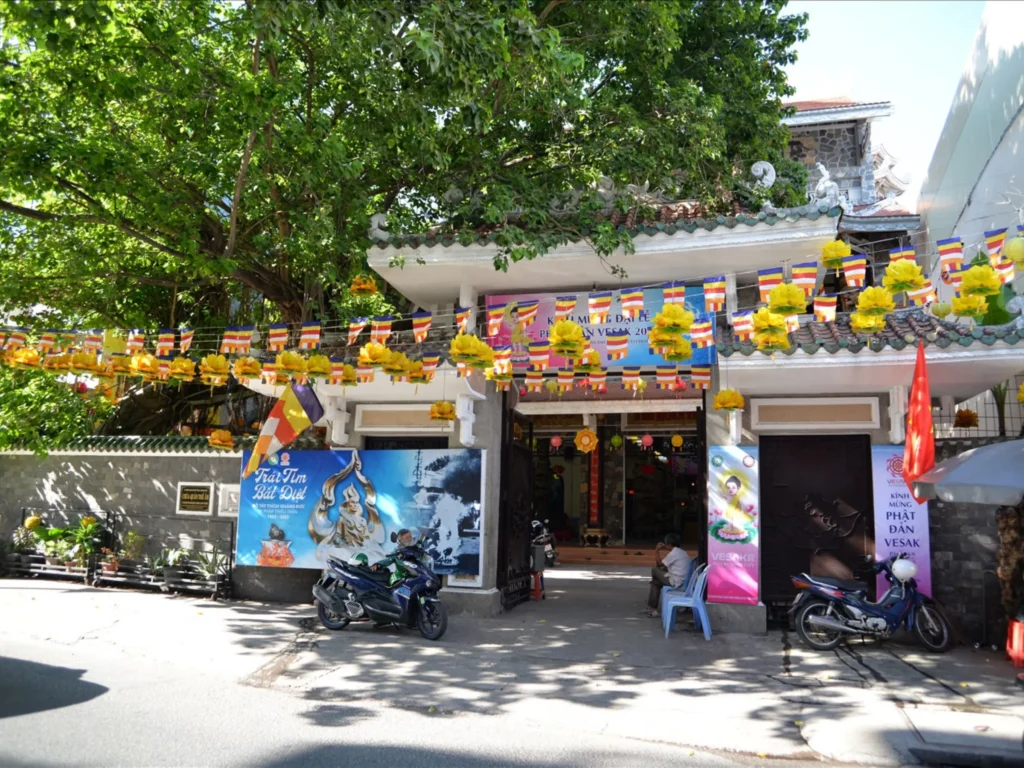
The last temple where he served as abbot.
The event was photographed by American journalist Malcolm Browne. His iconic image quickly spread around the world, appearing on the front pages of major newspapers and dramatically influencing international opinion about the situation in South Vietnam.
The self-immolation became one of the defining moments of the Buddhist Crisis of 1963 and remains one of the most significant acts of non-violent protest in modern history.
The Monument & Symbolism
The memorial was inaugurated in 2010, nearly five decades after the historic event.
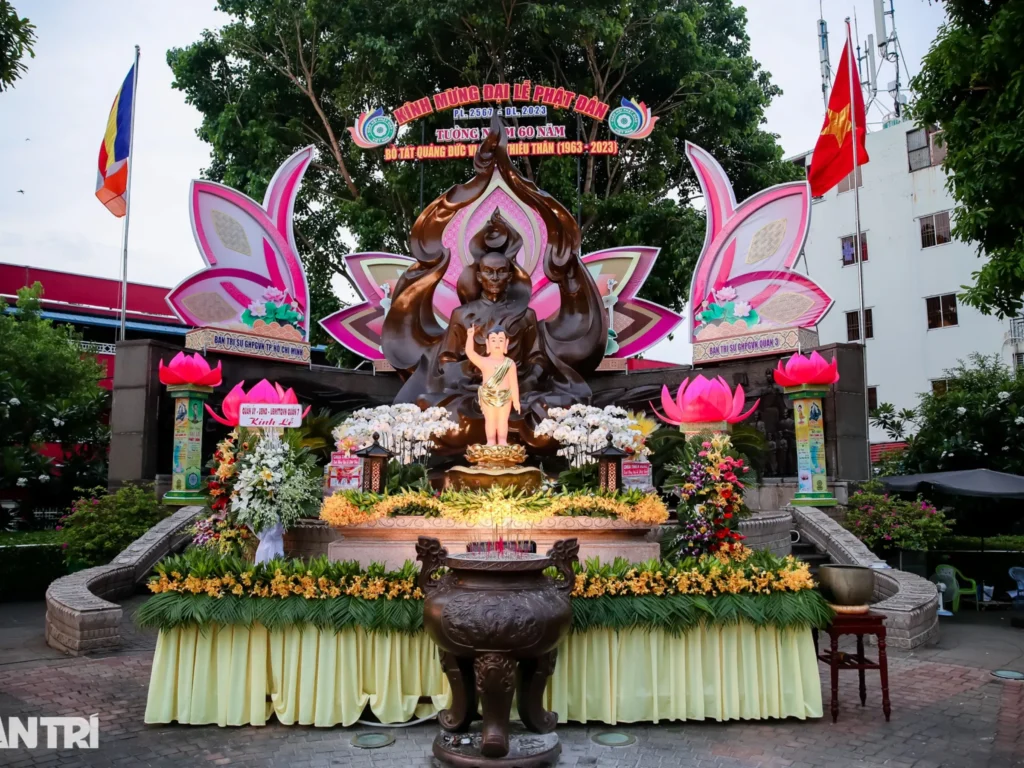
At its center stands a bronze statue depicting Thích Quảng Đức seated peacefully in the lotus position. Behind him rises a stylized flame carved from stone, symbolizing both the fire of sacrifice and the eternal light of compassion and wisdom.
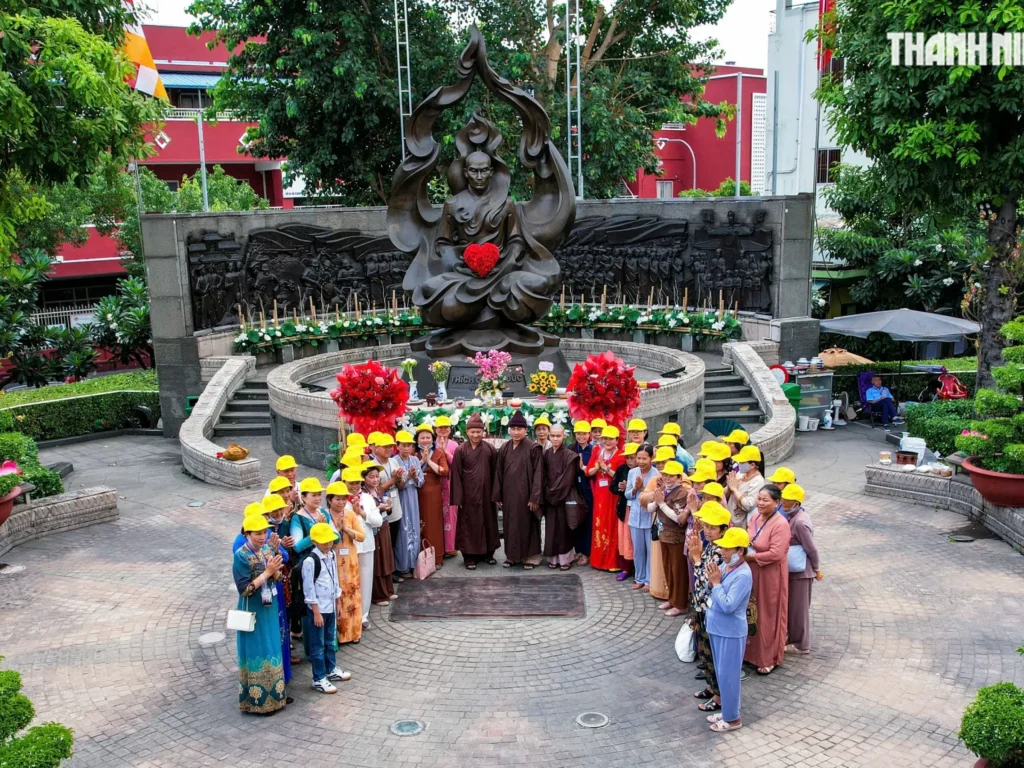
Buddhists and local people come to offer incense.
The surrounding lotus-shaped landscape represents purity in Buddhist philosophy – the lotus grows from muddy water yet blossoms unstained, reminding visitors that wisdom and compassion can emerge even during times of suffering.
The monument’s design emphasizes serenity rather than tragedy. Instead of portraying pain, it invites contemplation, reflection, and hope.
See more: Bach Dang Wharf – Where Saigon Meets The River
Cultural & Historical Significance
For many Vietnamese, Thích Quảng Đức represents selflessness and compassion rather than anger or violence. His sacrifice has become part of Vietnam’s modern historical memory and is frequently discussed in studies of civil rights, religious freedom, and non-violent resistance.
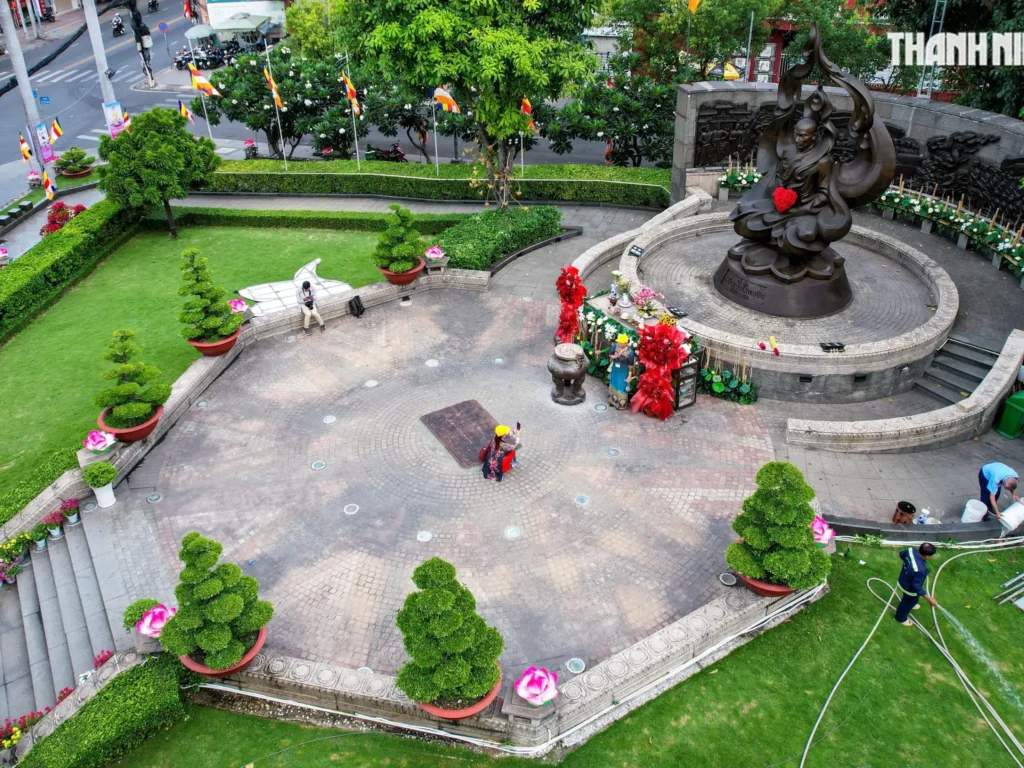
Today, the monument serves not only as a historical landmark but also as a place where people of different religions and nationalities can reflect on humanity, tolerance, and peace.
The event also profoundly influenced international politics. U.S. President John F. Kennedy reportedly remarked that “No news picture in history has generated so much emotion around the world as that one.”
Today, the monument serves not only as a historical landmark but also as a place where people of different religions and nationalities can reflect on humanity, tolerance, and peace.
Visitor Information
- Location: The Thich Quang Duc Memorial Monument is located in District 3, right at the corner of the intersection of Nguyen Dinh Chieu street & Cach Mang Thang Tam street.
- Opening Hours: The memorial is located in an open public park and can be visited at any time of day.
- Entry Fee: Admission is completely free.
- Best time to visit: Early morning and late afternoon offer cooler temperatures and a peaceful atmosphere suitable for reflection and photography.
See more: Saigon Central Post Office – A Timeless Landmark In The Heart Of Ho Chi Minh City
Things to Do & Experiences
Visitors can enjoy several meaningful experiences:
- Learn about one of the world’s most famous acts of peaceful protest.
- Admire the symbolism of Buddhist art and architecture.
- Spend a few quiet moments reflecting in the peaceful garden.
- Photograph one of Ho Chi Minh City’s lesser-known but historically significant landmarks.
- Combine your visit with nearby attractions such as the War Remnants Museum, Independence Palace, and Turtle Lake.
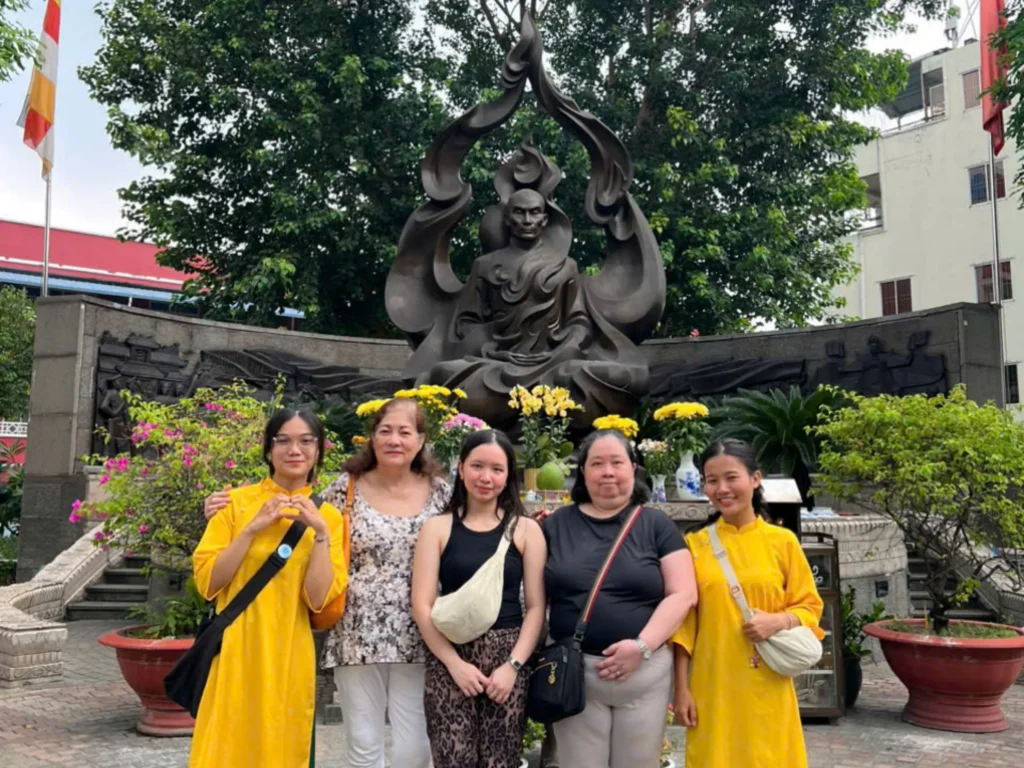
Tourists visit and offer incense.
The Thích Quảng Đức Memorial Monument is not simply a historical site – it is a place where history, spirituality, and humanity meet. Whether you come to learn about Vietnam’s modern history, appreciate Buddhist philosophy, or simply seek a quiet corner amid the city’s energy, the monument offers a powerful reminder that compassion and conviction can leave an enduring mark on the world.