
Thích Quảng Đức Memorial Monument – A Place of Compassion, Courage and Conscience
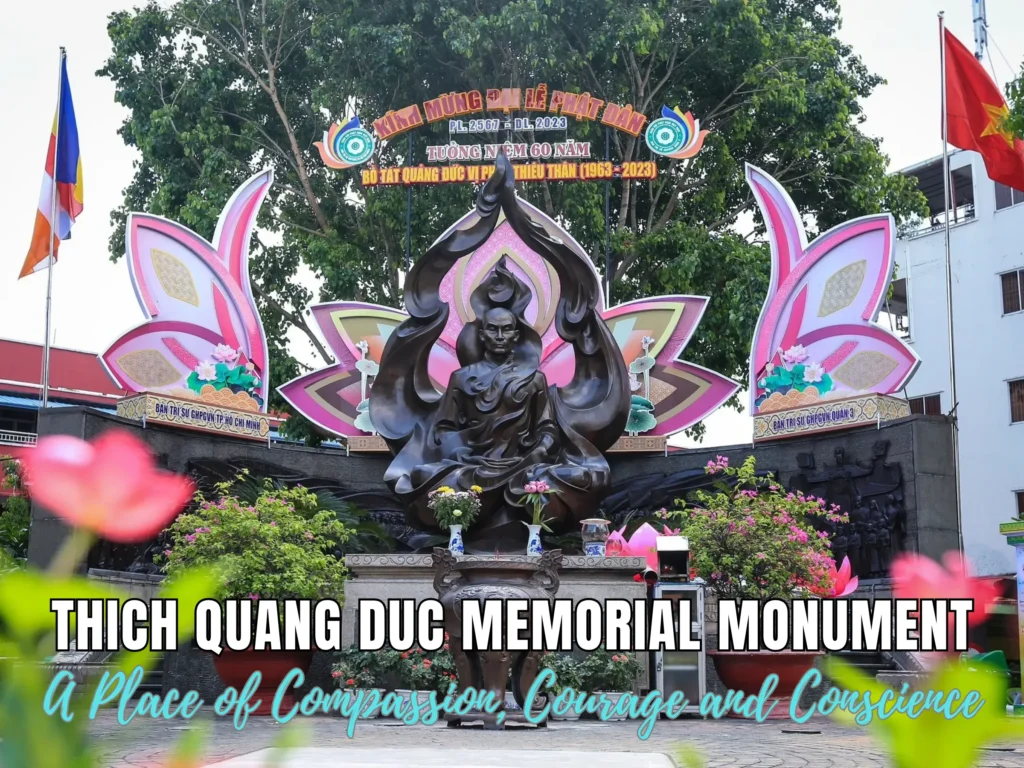
Located at the intersection of Cach Mang Thang Tam and Nguyen Dinh Chieu Streets in District 3, Ho Chi Minh City, the Thích Quảng Đức Memorial Monument is one of Vietnam’s most meaningful historical and spiritual landmarks. More than simply a monument, it commemorates one of the most powerful acts of peaceful protest in modern history – the self-immolation of the Venerable Thích Quảng Đức on June 11, 1963. Today, the site welcomes both Buddhists and visitors from around the world who come to reflect on the values of compassion, religious freedom, peace, and the power of non-violent resistance. Table of Contents A Journey Through History In the early 1960s, South Vietnam was experiencing growing political and religious tensions. Many Buddhists believed that the government under President Ngô Đình Diệm favored Catholicism while imposing restrictions on Buddhist practices. The final days before performing the noble deed. See more: Ho Chi Minh City Hall – The Elegant Heart Of Saigon After months of peaceful demonstrations, Venerable Thích Quảng Đức made an extraordinary decision. On the morning of June 11, 1963, he calmly sat in the lotus position at this busy intersection while fellow monks poured gasoline over him. He then ignited himself in complete silence. Witnesses described the scene as astonishingly peaceful. Witnesses described the scene as astonishingly peaceful. Despite the intense flames, he reportedly never cried out or moved from his meditation posture. The last temple where he served as abbot. The event was photographed by American journalist Malcolm Browne. His iconic image quickly spread around the world, appearing on the front pages of major newspapers and dramatically influencing international opinion about the situation in South Vietnam. The self-immolation became one of the defining moments of the Buddhist Crisis of 1963 and remains one of the most significant acts of non-violent protest in modern history. The Monument & Symbolism The memorial was inaugurated in 2010, nearly five decades after the historic event. At its center stands a bronze statue depicting Thích Quảng Đức seated peacefully in the lotus position. Behind him rises a stylized flame carved from stone, symbolizing both the fire of sacrifice and the eternal light of compassion and wisdom. Buddhists and local people come to offer incense. The surrounding lotus-shaped landscape represents purity in Buddhist philosophy – the lotus grows from muddy water yet blossoms unstained, reminding visitors that wisdom and compassion can emerge even during times of suffering. The monument’s design emphasizes serenity rather than tragedy. Instead of portraying pain, it invites contemplation, reflection, and hope. See more: Bach Dang Wharf – Where Saigon Meets The River Cultural & Historical Significance For many Vietnamese, Thích Quảng Đức represents selflessness and compassion rather than anger or violence. His sacrifice has become part of Vietnam’s modern historical memory and is frequently discussed in studies of civil rights, religious freedom, and non-violent resistance. Today, the monument serves not only as a historical landmark but also as a place where people of different religions and nationalities can reflect on humanity, tolerance, and peace. The event also profoundly influenced international politics. U.S. President John F. Kennedy reportedly remarked that “No news picture in history has generated so much emotion around the world as that one.” Today, the monument serves not only as a historical landmark but also as a place where people of different religions and nationalities can reflect on humanity, tolerance, and peace. Visitor Information Location: The Thich Quang Duc Memorial Monument is located in District 3, right at the corner of the intersection of Nguyen Dinh Chieu street & Cach Mang Thang Tam street. Opening Hours: The memorial is located in an open public park and can be visited at any time of day. Entry Fee: Admission is completely free. Best time to visit: Early morning and late afternoon offer cooler temperatures and a peaceful atmosphere suitable for reflection and photography. See more: Saigon Central Post Office – A Timeless Landmark In The Heart Of Ho Chi Minh City Things to Do & Experiences Visitors can enjoy several meaningful experiences: Learn about one of the world’s most famous acts of peaceful protest. Admire the symbolism of Buddhist art and architecture. Spend a few quiet moments reflecting in the peaceful garden. Photograph one of Ho Chi Minh City’s lesser-known but historically significant landmarks. Combine your visit with nearby attractions such as the War Remnants Museum, Independence Palace, and Turtle Lake. Tourists visit and offer incense. The Thích Quảng Đức Memorial Monument is not simply a historical site – it is a place where history, spirituality, and humanity meet. Whether you come to learn about Vietnam’s modern history, appreciate Buddhist philosophy, or simply seek a quiet corner amid the city’s energy, the monument offers a powerful reminder that compassion and conviction can leave an enduring mark on the world. ♥ Saigonbiketours – Food Tour In Saigon ♥
Mong Bridge — The Oldest Iron Bridge in Ho Chi Minh City
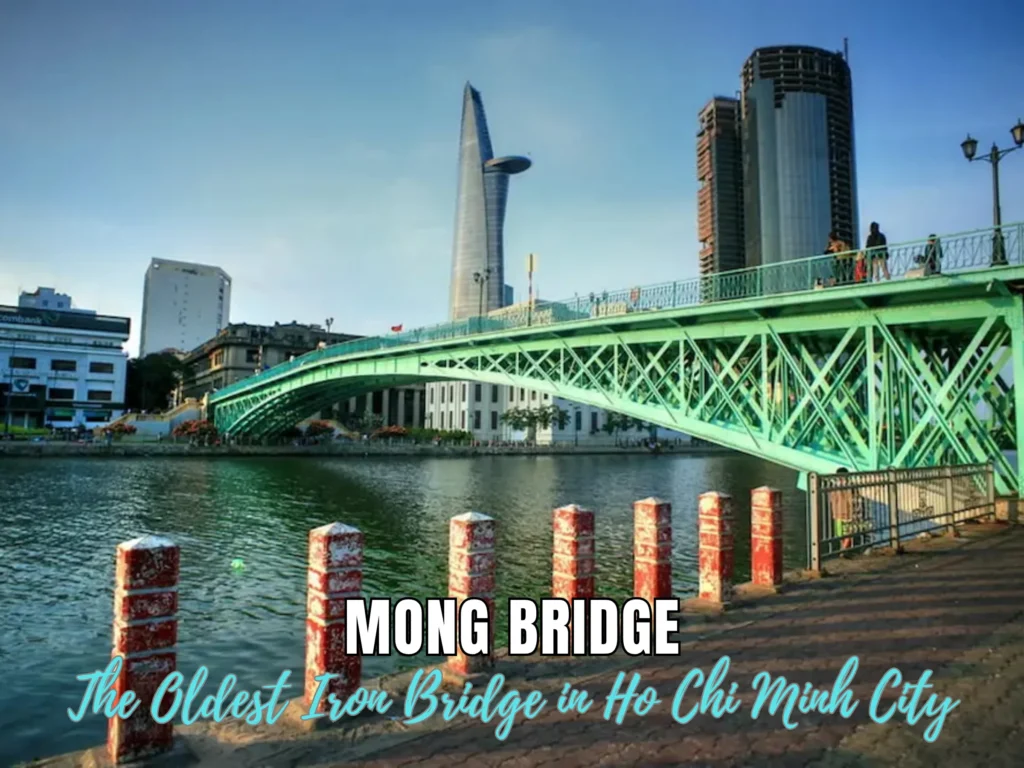
Spanning the Ben Nghe Canal and connecting District 1 with District 4, Mong Bridge is one of Ho Chi Minh City’s most charming historical landmarks. Though modest in size compared to the city’s modern infrastructure, the bridge carries over a century of history and remains a beloved gathering place for locals, photographers, and travelers alike. Table of Contents A Journey Through History The story of Mong Bridge began in the late 19th century during the French colonial era. Constructed between 1893 and 1894 by the renowned French engineering company Levallois-Perret, the bridge was designed to facilitate transportation between the bustling commercial center of Saigon and the rapidly developing port areas across the canal. Constructed between 1893 and 1894 by the renowned French engineering company Levallois-Perret. See more: Ho Chi Minh City Hall – The Elegant Heart Of Saigon Originally known as Arc-en-Ciel Bridge, meaning “Rainbow Bridge,” its elegant arching structure inspired the poetic name. Over time, local residents affectionately shortened the name to “Cầu Mống,” a Vietnamese term referring to the bridge’s graceful curved shape. One of the most distinctive features of Mong Bridge is its all-steel structure. Throughout the 20th century, the bridge witnessed Saigon’s transformation from a colonial trading port into Vietnam’s most dynamic metropolis. Despite waves of urban development, the bridge has been carefully preserved as an important piece of the city’s heritage. Architectural Elegance One of the most distinctive features of Mong Bridge is its all-steel structure. Painted in a striking turquoise-green color, the bridge stands out beautifully against the surrounding skyline of glass towers and modern developments. The bridge stretches approximately 128 meters in length and features elegant steel arches supported by riveted construction techniques commonly used in late 19th-century engineering. Its pedestrian-friendly design allows visitors to appreciate both the historic craftsmanship and panoramic views of the canal. Around these streets stood banks, insurance companies, trading houses, shipping firms, and commodity exchanges. At sunset, the bridge becomes particularly picturesque as golden light reflects off the water and illuminates the steel framework, creating one of the most photogenic urban scenes in Ho Chi Minh City. See more: Bach Dang Wharf – Where Saigon Meets The River Cultural Significance & Local Memories For many Saigonese, Mong Bridge is more than a transportation structure – it is a place filled with memories. Generations of residents have crossed the bridge on their daily journeys, while countless couples have chosen it as a backdrop for wedding photographs and special occasions. The bridge does not speak. But every inch of its iron structure tells a story of old Saigon. In recent years, the bridge has become a favorite gathering spot for young people who come to enjoy the breeze, watch the city lights, and experience a slower pace of life amid the bustling metropolis. Visitor Information Opening hours: Mong Bridge is open to pedestrians at all times and can be visited throughout the day. Entry fee: There is no admission fee. Best time to visit: Early morning and late afternoon are the most pleasant times to visit. Sunset offers particularly beautiful views of the canal and surrounding skyline. More than just a bridge, this place is also a stunning spot for taking photos. See more: Saigon Central Post Office – A Timeless Landmark In The Heart Of Ho Chi Minh City Things to Do & Experiences While many people come simply to enjoy the scenery, The Mong Bridge offers a variety of memorable experiences: Photography & sightseeing: Capture panoramic views of the Ben Nghe Canal, modern skyscrapers, and historic architecture in one frame. Sunset watching: Enjoy one of the most romantic sunset spots in the city. Urban exploration: Walk between District 1 and District 4 while discovering the contrast between old Saigon and contemporary Ho Chi Minh City. Night views: Experience the vibrant city lights reflecting on the water after dark. Mong Bridge may not be the largest or most famous landmark in Ho Chi Minh City, but it possesses a unique charm that few places can match. As the city’s oldest surviving iron bridge, it serves as a graceful reminder of Saigon’s rich past while offering stunning views of its vibrant present. For travelers seeking history, photography, or simply a quiet moment above the water, Mong Bridge is a destination well worth discovering. ♥ Saigonbiketours – Food Tour In Saigon ♥
The State Bank of Vietnam – BranchWhere the Story of Money Meets the Story of Saigon
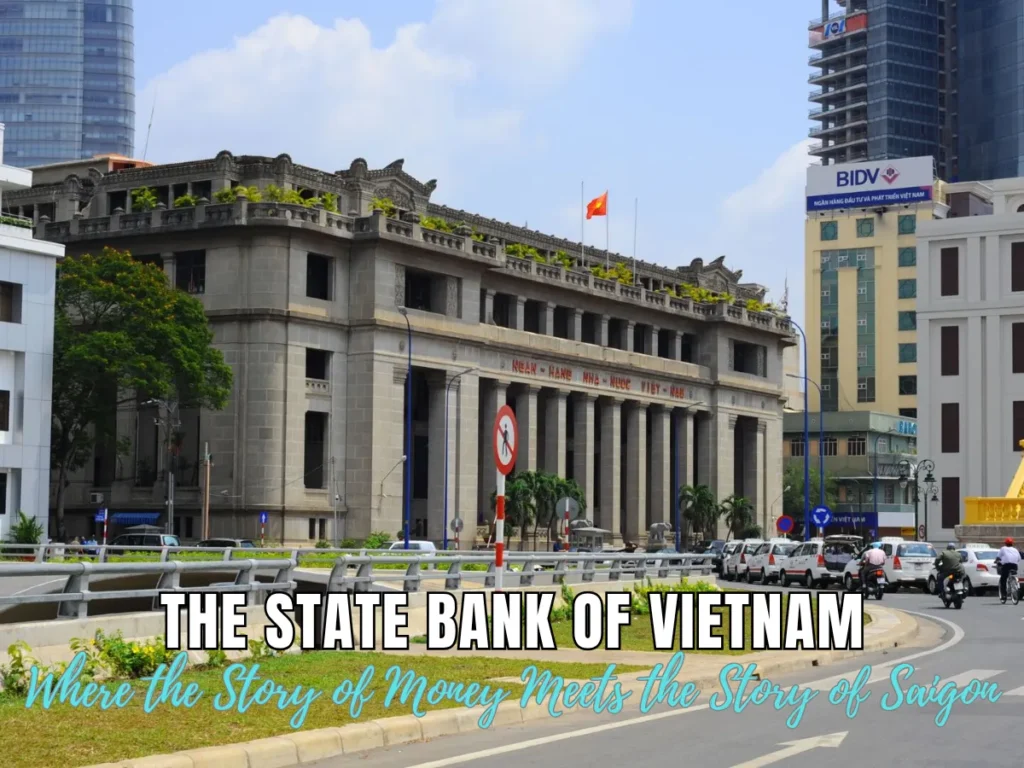
Located on Vo Van Kiet Boulevard near the historic center of Ho Chi Minh City, the State Bank of Vietnam – Ho Chi Minh City Branch is one of the city’s lesser-known yet highly significant landmarks. While most visitors pass by without noticing, this imposing colonial-era building has played a vital role in shaping Vietnam’s financial and economic history for more than a century. Table of Contents A Journey Through History The origins of this institution date back to the French colonial period when Saigon served as the economic capital of French Indochina. During the late 19th and early 20th centuries, the area surrounding the building became the financial heart of the colony, where major banks, trading companies, and government offices concentrated their activities. The State Bank Of Vietnam symbolizes the financial heartbeat that has sustained the city through colonialism, war, reconstruction, and economic transformation. See more: Ho Chi Minh City Hall – The Elegant Heart Of Saigon Following Vietnam’s independence and subsequent historical transformations, the building evolved from serving colonial financial interests to becoming part of the national banking system. Today, it functions as the Ho Chi Minh City branch of the State Bank of Vietnam, overseeing monetary and banking activities in the country’s largest economic hub. For more than 150 years, Saigon has been one of Southeast Asia’s most important commercial centers. Architectural Significance The building reflects the grandeur and confidence of colonial-era financial institutions. Its symmetrical façade, classical proportions, and elegant decorative details embody the Beaux-Arts architectural style popular in France during the late 19th century. Massive columns, high ceilings, and thick walls were designed not only to impress visitors but also to create a comfortable interior suited to the tropical climate of Saigon. Despite the city’s rapid modernization, the building continues to stand as a reminder of a different era. Around these streets stood banks, insurance companies, trading houses, shipping firms, and commodity exchanges. See more: Bach Dang Wharf – Where Saigon Meets The River Financial & Cultural Importance For historians, this building represents the evolution of Vietnam’s banking system. For locals, it symbolizes the transformation of Saigon from a colonial trading port into one of Southeast Asia’s most dynamic economic centers. The building does not speak. Yet every wall carries echoes of economic stories that helped shape modern Vietnam. The building also serves as a silent witness to major historical events, economic reforms, and the modernization of Vietnam’s financial sector over several generations. Visitor Information Exterior Viewing: Visitors can admire the building from outside and appreciate its architectural beauty as part of a walking tour through the historic district of Ho Chi Minh City. Photography: The façade is particularly photogenic during the morning and late afternoon when sunlight highlights its architectural details. Nearby Attractions: The building is conveniently located near many famous landmarks including Nguyen Hue Walking Street, Bach Dang Wharf, the Municipal Theatre, and the historic commercial center of old Saigon. More than just a bank, this place is also a stunning spot for taking photos. See more: Saigon Central Post Office – A Timeless Landmark In The Heart Of Ho Chi Minh City Things to Notice & Discuss While many people come simply to enjoy the scenery, The State Bank Of Vietnam offers a variety of memorable experiences: Observe how colonial architecture was used to project stability and authority. Compare the building with other French-era landmarks nearby and notice their shared design language. Reflect on how money, banking, and trade have shaped the development of Saigon for more than 150 years. Imagine the countless transactions, decisions, and economic transformations that have passed through this institution over generations. Although it may not appear on every tourist itinerary, the State Bank of Vietnam – Ho Chi Minh City Branch offers a fascinating glimpse into the financial foundations of modern Vietnam. Beyond its elegant architecture lies a story of commerce, transformation, and resilience that mirrors the remarkable journey of Ho Chi Minh City itself. ♥ Saigonbiketours – Food Tour In Saigon ♥
Ton That Dam Apartment – The Hidden Soul of Old Saigon
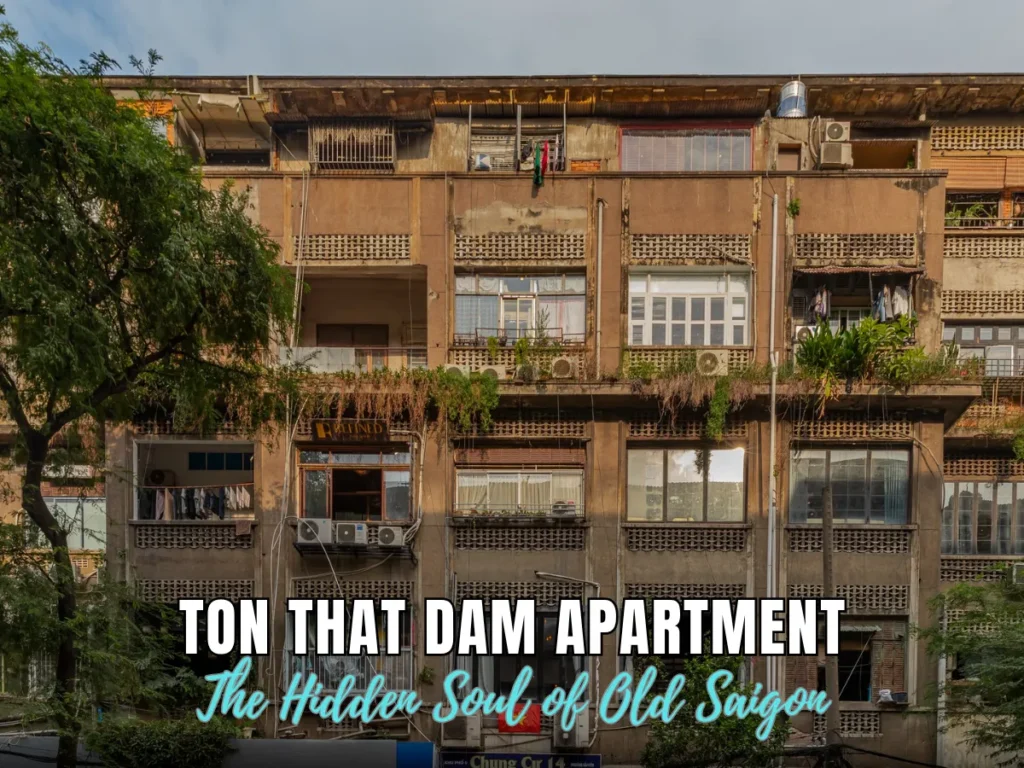
Hidden quietly behind the modern skyscrapers and bustling financial streets of District 1, Chung cư Tôn Thất Đạm is one of Saigon’s most fascinating old apartment complexes. Unlike grand colonial landmarks or luxury buildings, this aging residential block reflects the raw, authentic rhythm of everyday Saigon life – layered with history, street culture, hidden cafés, tiny local businesses, and generations of memories. Tucked away near Nguyễn Huệ Walking Street and the old commercial center of the city, the apartment has become a symbol of “Old Saigon surviving inside New Saigon.” For travelers seeking stories beyond tourist attractions, Chung cư Tôn Thất Đạm offers an intimate glimpse into the city’s soul. Table of Contents A Building That Grew With the City Chung cư Tôn Thất Đạm was built during the mid-20th century, during a period when Saigon was rapidly transforming into one of Southeast Asia’s busiest urban centers. Originally designed as a practical residential building for working families and merchants, the apartment complex gradually evolved into a dense urban maze filled with life and improvisation. Nha Rong Wharf served as the headquarters for maritime transportation and international trade between Vietnam and Europe See more: Ho Chi Minh City Hall – The Elegant Heart Of Saigon Over decades, families expanded their homes outward with metal balconies, hanging plants, rooftop additions, bird cages, laundry lines, and improvised staircases. Rather than following a perfect architectural plan, the building grew organically – almost like a living organism adapting to the city around it. In the distance is the Ba Son Bridge connecting District 1 and District 2 (on the right) Today, the apartment stands as a rare surviving witness to old urban Saigon, where neighbors still greet each other across narrow corridors and daily life spills naturally into shared public spaces. Nha Rong Wharf under the early morning mist, as Saigon awakens after a good night’s sleep The Beauty of Urban Chaos One of the most captivating things about Chung cư Tôn Thất Đạm is its atmosphere. The building may appear worn and chaotic at first glance, yet that very imperfection creates its charm. Peeling walls, faded tiles, tangled electrical wires, old shutters, and narrow stairways all tell stories of time passing slowly through generations. Inside the apartment, visitors often discover hidden cafés, vintage shops, tiny art studios, noodle stalls, or local family kitchens operating quietly behind old metal doors. Every corner feels cinematic – a blend of nostalgia, creativity, and survival. Its name, “Nhà Rồng” (Dragon House), comes from the pair of ceramic dragons mounted on the rooftop, facing the moon in traditional Vietnamese style For photographers and storytellers, the apartment offers endless textures and emotions rarely found in polished modern spaces. See more: Bach Dang Wharf – Where Saigon Meets The River Everyday Saigon Life More than architecture, Chung cư Tôn Thất Đạm represents a lifestyle deeply connected to Saigon’s urban culture. Elderly residents sit outside chatting in the afternoon breeze, neighbors share food across hallways, and motorbike sounds echo through the narrow concrete corridors. Relics that President Ho Chi Minh once used Morning begins with the smell of coffee and noodle soup. Afternoon brings heat, slow ceiling fans, and quiet conversations. At night, small lights glow from tiny apartments while the city outside continues racing forward. This contrast between stillness and chaos is what makes the apartment feel uniquely Saigon – a city constantly changing, yet still emotionally attached to its past. Visitor Experience Visiting Chung cư Tôn Thất Đạm is less about “checking in” and more about observing the hidden layers of local life. Unlike museums or official tourist attractions, the experience here feels spontaneous and personal. Visitor can: Explore hidden cafés and creative spaces. Observe authentic local daily life. Photograph vintage urban textures and architecture. Enjoy quiet moments above the noisy streets below. Discover how old Saigon continues to exist within modern Ho Chi Minh City. When visiting, travelers should remain respectful because many residents still actively live here. Quiet observation and cultural sensitivity help preserve the building’s unique atmosphere. The Ho Chi Minh Memorial Area at the Museum See more: Saigon Central Post Office – A Timeless Landmark In The Heart Of Ho Chi Minh City Chung cư Tôn Thất Đạm may not be the grandest landmark in Ho Chi Minh City, but it is undoubtedly one of the most soulful. Beneath its aging walls lies a living archive of Saigon’s urban memory – messy, vibrant, resilient, and deeply human. For travelers searching for the “real Saigon” beyond glossy postcards and modern skyscrapers, this old apartment building offers something far more valuable: authenticity. ♥ Saigonbiketours – Food Tour In Saigon ♥
Nha Rong Wharf – Where A Young Dream Began
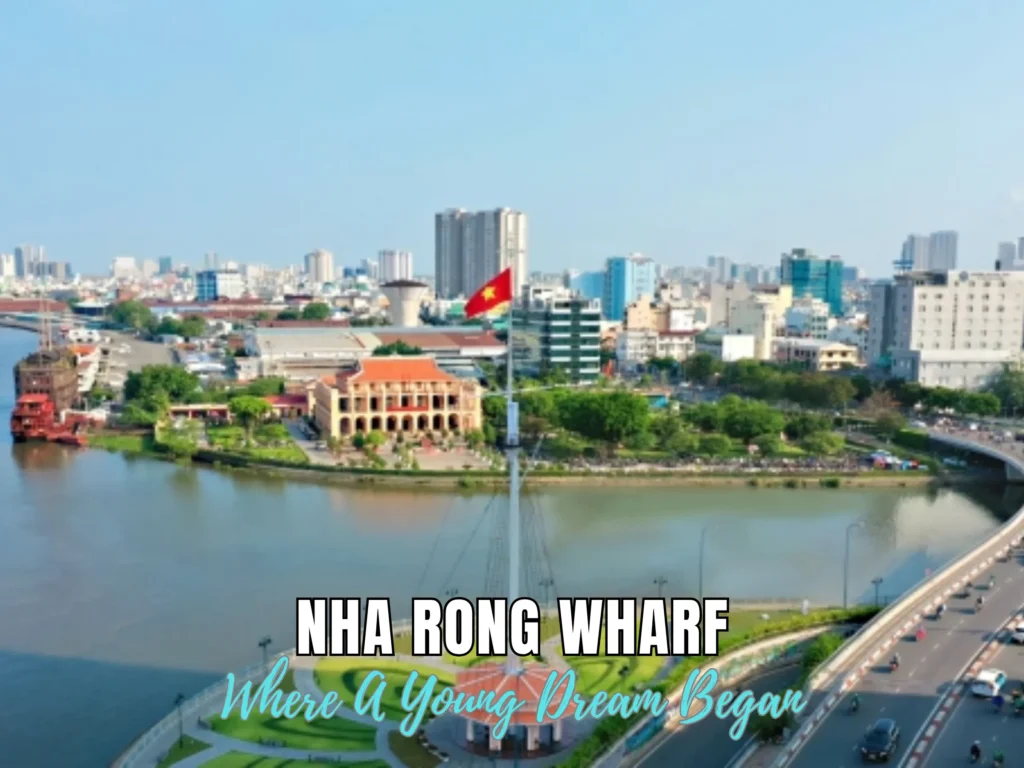
Located along the peaceful banks of the Saigon River in District 4, Bến Nhà Rồng is one of Ho Chi Minh City’s most meaningful historical landmarks. More than just a beautiful colonial building, this place marks the moment when a young Nguyễn Tất Thành – later known to the world as Hồ Chí Minh – departed Vietnam in 1911 on a life-changing journey to seek a path for national independence. Today, Bến Nhà Rồng stands as both a museum and a symbol of aspiration, resilience, and transformation – a place where history quietly meets the rhythm of modern Saigon. Table of Contents A Port Connected To History Bến Nhà Rồng was originally built in 1863 by the French shipping company Messageries Maritimes during the colonial era. At that time, Saigon was rapidly developing into one of the most important trading ports in Southeast Asia. The building served as the headquarters for maritime transportation and international trade between Vietnam and Europe. Nha Rong Wharf served as the headquarters for maritime transportation and international trade between Vietnam and Europe See more: Ho Chi Minh City Hall – The Elegant Heart Of Saigon The site became historically immortalized on June 5th, 1911, when Nguyễn Tất Thành boarded the French ship Amiral Latouche-Tréville from this very port. Working as a kitchen assistant on the ship, he began a 30-year journey across many countries before eventually returning to lead Vietnam’s independence movement. In the distance is the Ba Son Bridge connecting District 1 and District 2 (on the right) After 1975, the building was transformed into the Hồ Chí Minh Museum branch in Ho Chi Minh City, preserving thousands of photographs, documents, and artifacts related to his life and Vietnam’s revolutionary history. Nha Rong Wharf under the early morning mist, as Saigon awakens after a good night’s sleep Architecture By The River One of the most distinctive features of Bến Nhà Rồng is its unique blend of French colonial architecture and traditional Asian symbolism. The building showcases elegant European design with symmetrical arches, high ceilings, and refined decorative details typical of the late 19th century. Its name, “Nhà Rồng” (Dragon House), comes from the pair of ceramic dragons mounted on the rooftop, facing the moon in traditional Vietnamese style. This subtle cultural fusion reflects the meeting point between East and West during Saigon’s colonial era. Its name, “Nhà Rồng” (Dragon House), comes from the pair of ceramic dragons mounted on the rooftop, facing the moon in traditional Vietnamese style Standing beside the river, the building becomes especially beautiful in the late afternoon, when sunlight reflects across the water and the skyline of modern Ho Chi Minh City rises quietly behind this historic structure. See more: Bach Dang Wharf – Where Saigon Meets The River Cultural Meaning & Local Reflection For many Vietnamese people, Bến Nhà Rồng is more than a museum – it represents the courage to leave behind familiarity in pursuit of something greater. The story of a young man departing with little more than hope continues to inspire generations today. Relics that President Ho Chi Minh once used For locals in Saigon, the riverside area surrounding Bến Nhà Rồng also carries a softer emotional atmosphere. In the early mornings and evenings, people gather here to walk, enjoy the breeze from the Saigon River, and observe the contrast between old Saigon and the rapidly changing modern city. The Ho Chi Minh Museum – Ho Chi Minh City Branch is divided into themes related to the life and career of President Ho Chi Minh Visitor Information Location: The Nha Rong Wharf is located in District 4, near by Nguyen Tat Thanh bridge. Opening Hours: The museum is generally open daily from morning to late afternoon, though schedules may vary slightly during public holidays and special events. Visitors are encouraged to check updated information before arriving. Entry Fee: Entrance fees are usually affordable for both domestic and international visitors, making it an accessible cultural destination in Ho Chi Minh City. Best time to visit: Early morning and late afternoon are ideal times to visit, especially if you want to enjoy cooler weather, riverside views, and softer lighting for photography. The Ho Chi Minh Memorial Area at the Museum See more: Saigon Central Post Office – A Timeless Landmark In The Heart Of Ho Chi Minh City Things to Do & Experiences While many people come simply to enjoy the scenery, Bach Dang Wharf offers a variety of memorable experiences: Explore historical exhibits: Discover photographs, personal belongings, and stories related to Hồ Chí Minh’s journey and Vietnam’s struggle for independence. Admire the riverside scenery: Enjoy views of the Saigon River while observing the contrast between heritage architecture and modern skyscrapers. Photography & storytelling: The building’s architecture and historical atmosphere create excellent opportunities for photography and meaningful storytelling. Reflect on personal journeys: Many visitors find themselves thinking about dreams, ambition, and the courage to begin something unknown. When Saigon lights up at night, Nha Rong Wharf also shines brightly beside the river of life More than a historical monument, Bến Nhà Rồng tells a deeply human story – the story of departure, hope, sacrifice, and vision. Whether you come for history, architecture, photography, or quiet reflection, this riverside landmark offers a meaningful glimpse into the spirit of Vietnam and the soul of old Saigon. ♥ Saigonbiketours – Food Tour In Saigon ♥
Bạch Đằng Wharf – Where Saigon Meets the River
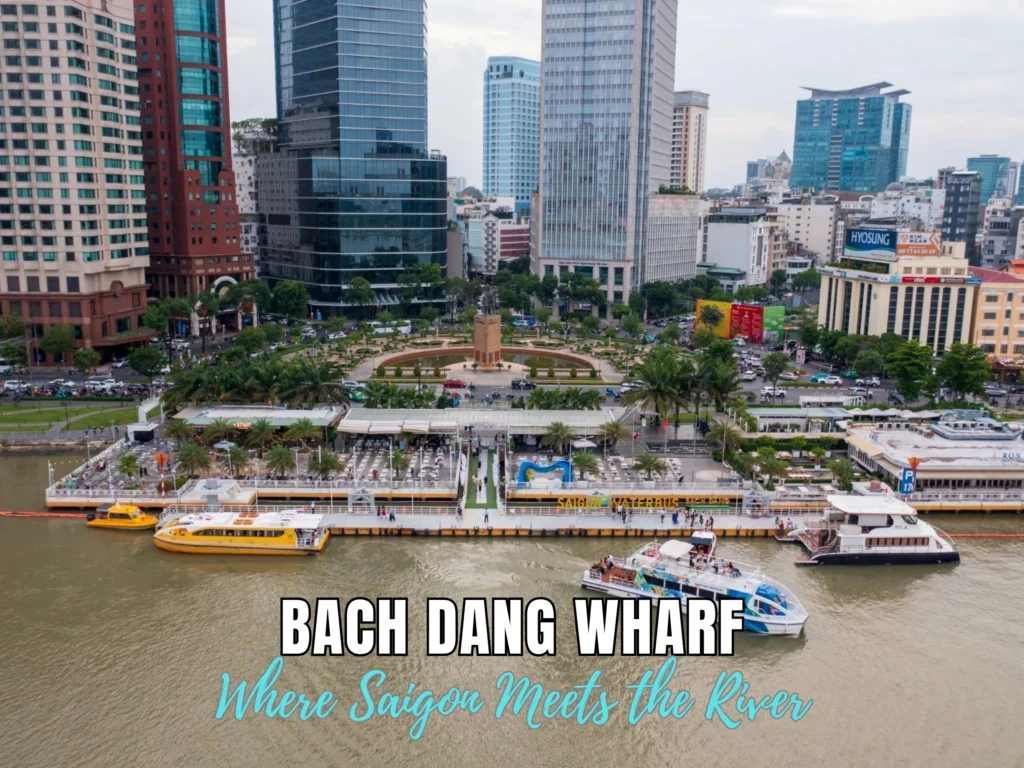
Located along the banks of the Saigon River in the heart of District 1, Bạch Đằng Wharf is one of Ho Chi Minh City’s most scenic and historically meaningful waterfront destinations. Stretching beside Ton Duc Thang Street, this riverside promenade offers a refreshing contrast to the city’s fast-moving traffic and skyscrapers. It is a place where locals exercise at sunrise, couples gather at sunset, and visitors discover the soul of old Saigon through the rhythm of the river. More than just a riverside park, Bach Dang Wharf represents the connection between Saigon’s past, present, and future – from ancient trading routes and colonial ports to modern river buses and luxury cruises. Table of Contents A Journey Through History The history of Bach Dang Wharf is deeply intertwined with the growth of Saigon itself. For centuries, the Saigon River served as the city’s lifeline, connecting southern Vietnam with international trade networks across Asia and Europe. During the Nguyen Dynasty, this riverside area was already an active docking point for merchants and transport boats carrying rice, ceramics, silk, and agricultural products. Located on the banks of the picturesque Saigon River, Bach Dang Wharf is not only a transportation infrastructure but also a symbol of rich national history and culture See more: Ho Chi Minh City Hall – The Elegant Heart Of Saigon During the French colonial era in the late 19th century, the riverfront transformed dramatically. Large piers, warehouses, and shipping facilities were built to support Saigon’s rise as the “Pearl of the Far East.” Steamships arrived carrying goods, soldiers, and travelers from Europe, while the waterfront became one of the busiest commercial zones in Indochina. The Saigon River served as the city’s lifeline, connecting southern Vietnam with international trade networks across Asia and Europe. The name “Bạch Đằng” itself carries historical significance in Vietnamese culture, commemorating the legendary Bach Dang River victories where Vietnamese forces defeated foreign invaders centuries ago. By naming this riverside area Bach Dang, the city preserved a symbol of resilience and national pride. Today, the old commercial port atmosphere has evolved into a vibrant public space where modern Saigon reconnects with its river heritage. Bach Dang Wharf under the early morning mist, as Saigon awakens after a good night’s sleep See more: Nguyen Hue Walking Street – the Beating Heart Of Modern Ho Chi Minh City Riverside Beauty & Urban Transformation One of the most attractive aspects of Bach Dang Wharf is its open riverside scenery. Unlike many crowded urban areas in Ho Chi Minh City, the promenade feels airy and peaceful. Visitors can enjoy panoramic views of the Saigon River, observe boats passing by, and watch the skyline reflect beautifully on the water at night. In recent years, the city has invested heavily in redeveloping the waterfront into a modern pedestrian-friendly space with gardens, walking paths, public art, and seating areas. The addition of the Saigon Waterbus station has also revived river transportation, allowing travelers to experience the city from a completely different perspective. Bach Dang Wharf Park, covering 18,600 square meters, is a familiar spot for locals to relax, stroll, enjoy the scenery, and exercise At sunset, Bach Dang Wharf becomes especially magical. Golden sunlight spreads across the river while the modern towers of Thu Thiem gradually illuminate across the water, symbolizing the future of Ho Chi Minh City rising beside its historical center. Cultural Significance & Local Life For locals, Bach Dang Wharf is not simply a tourist attraction — it is part of everyday life. Early in the morning, residents come here for jogging, tai chi, dancing, and group exercises. In the evening, families stroll along the river, street musicians perform, and young people gather to enjoy the breeze and city lights. As the city lights up, Bach Dang Wharf also glows brightly from the other side of the river The riverside atmosphere reflects a unique aspect of Saigon culture: despite being one of Southeast Asia’s busiest cities, Saigonese people still deeply value relaxation, social connection, and outdoor community spaces. The “Thu Ngu” flagpole is considered a symbol of the early heritage of the city formed along the Saigon River During major celebrations such as Lunar New Year, National Day, or international festivals, the Bach Dang area often hosts fireworks displays, flower streets, cultural performances, and river events that attract thousands of visitors. Visitor Information Location: Bach Dang Wharf is located along Ton Duc Thang Street in District 1, near many famous landmarks such as Nguyen Hue Walking Street, the Opera House, and Bitexco Financial Tower. Opening Hours: The riverside public area is open all day and free to access. Entry Fee:There is no fee to admire the building from outside. Ticket prices vary depending on waterbus fee ticket. Best time to visit: Sunrise and sunset are considered the most beautiful times to visit, especially from late afternoon to evening when the weather becomes cooler and the skyline lights up. These cruise ships take tourists along the river of time and allow them to enjoy the “flavor of Saigon”. Things to Do & Experiences While many people come simply to enjoy the scenery, Bach Dang Wharf offers a variety of memorable experiences: Take the Saigon Waterbus: Enjoy a relaxing river journey while observing both old Saigon and the city’s modern skyline. Riverside walking: Perfect for photography, sightseeing, and feeling the atmosphere of the city beside the river. Sunset watching: One of the best sunset spots in central Ho Chi Minh City. Street food & cafés: Nearby areas offer coffee shops, local snacks, and rooftop dining experiences. River cruises: Several dinner cruises depart from this area, offering live music and city views at night. More than a waterfront destination, Bach Dang Wharf is a living reflection of Saigon’s identity – energetic yet peaceful, modern yet deeply connected to history. Here, the river continues to tell stories of trade, migration, war, culture, and transformation while the city around it constantly evolves. Whether you visit for a peaceful morning walk, a sunset cruise, or simply to
Ho Chi Minh City Hall – The Elegant Heart of Saigon
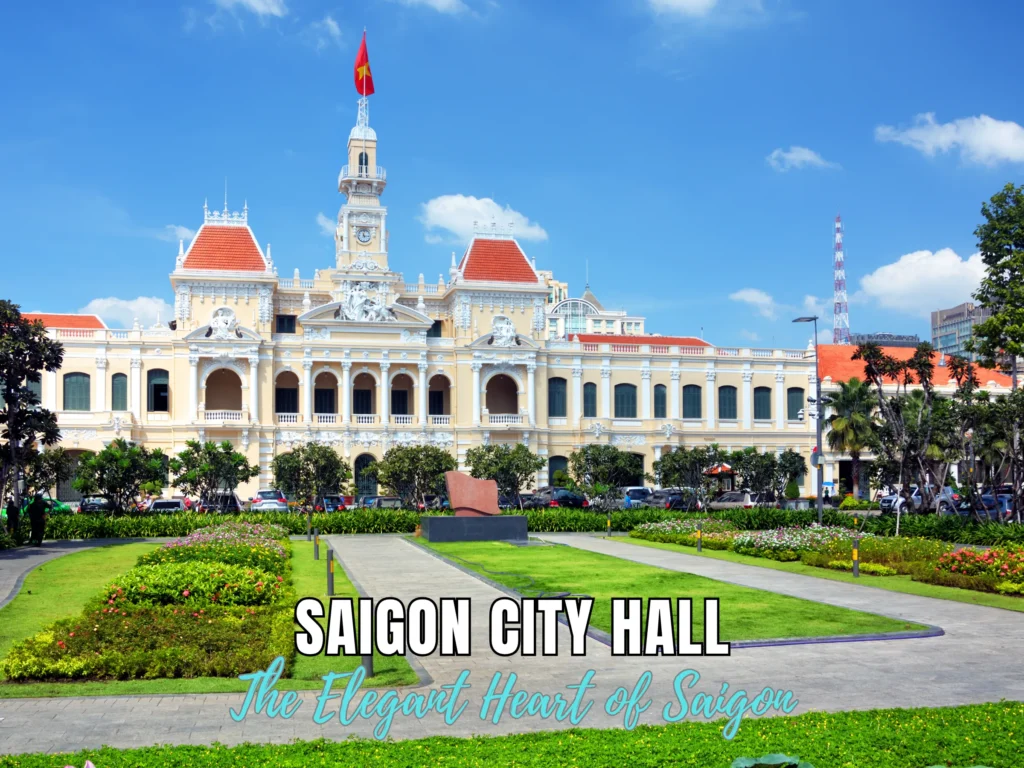
Standing proudly at the northern end of Nguyen Hue Walking Street in District 1, Ho Chi Minh City Hall is one of the most beautiful and recognizable colonial buildings in Vietnam. With its elegant French architecture, symmetrical façade, and glowing golden lights at night, the building has become an iconic symbol of Saigon’s charm and sophistication. Although many tourists call it “City Hall” the building actually serves as the headquarters of the Ho Chi Minh City People’s Committee – the administrative center of the city government. Even though visitors cannot freely enter the interior, the exterior alone is enough to leave a lasting impression. Table of Contents A Journey Through History The story of Ho Chi Minh City Hall began during the French colonial era. Construction started in 1898 and was completed in 1909 under the design of French architect Paul Gardès. Originally, the building was known as Hôtel de Ville de Saïgon – Saigon City Hall – serving as the administrative headquarters for the French colonial government in Cochinchina. A prominent architectural landmark in the administrative center of Saigon See more: Saigon Notre Cathedral Basilica – A timeless icon in the heart of Ho Chi Minh city Inspired by the grand city halls of northern France, particularly those in Paris, the structure reflected the ambition of the French to transform Saigon into the “Pearl of the Far East.” Wide boulevards, European-style squares, and elegant civic buildings were all part of that urban vision. This is a structure that can be considered the “heart of the Pearl of the Far East” After the reunification of Vietnam in 1975, the building became the headquarters of the Ho Chi Minh City People’s Committee and continues to serve that role today. Through wars, political changes, and rapid modernization, the building has remained a silent witness to more than a century of Saigon’s transformation. As the city lights up, the “City Hall” also shines brightly, welcoming a bustling crowd See more: Saigon Central Post Office – A timeless landmark in the heart of Ho Chi Minh city Architectural Elegance One of the most captivating aspects of Ho Chi Minh City Hall is its remarkable French colonial architecture. The building showcases a harmonious blend of Renaissance, Baroque, and Beaux-Arts influences, creating an atmosphere that feels more European than Southeast Asian. The façade is richly decorated with arched windows, intricate relief sculptures, columns, and ornamental details inspired by French civic architecture. At the center stands a clock tower, symbolizing order, governance, and the passing of time throughout Saigon’s history. The building showcases a harmonious blend of Renaissance, Baroque, and Beaux-Arts influences, creating an atmosphere that feels more European than Southeast Asian At night, the building transforms into a glowing masterpiece. Warm yellow lighting highlights every architectural detail, creating one of the most photogenic scenes in Ho Chi Minh City. Reflections from the lights shimmer beautifully across Nguyen Hue Walking Street, attracting both locals and visitors. Cultural Significance & Local Memories For many Saigonese, City Hall is not simply an administrative building – it is part of the emotional landscape of the city. Generations have gathered in the square in front of the building during holidays, football celebrations, New Year festivals, and important national events. The blooming lotus flowers seem to “slow down” the hustle and bustle of life in a busy city In front of the building stands the statue of President Ho Chi Minh, a familiar meeting point and symbolic landmark for both locals and tourists. Families often come here in the evening to walk, take photographs, and enjoy the lively atmosphere of downtown Saigon. Legend has it that buildings in Saigon at that time were not allowed to be taller than the top of this structure What makes this area special is the contrast between old and new. Behind the colonial façade rise modern skyscrapers, luxury hotels, cafés, and shopping centers – a visual reminder that Saigon is a city constantly balancing history and progress. Visitor Information Opening Hours: The exterior area surrounding City Hall is accessible at all times, especially along Nguyen Hue Walking Street. However, the interior of the building is generally closed to the public except during special cultural or governmental events. Entry Fee: There is no entrance fee to admire the building and surrounding public square. Best time to visit: Evening is considered the best time to visit, especially between sunset and 9 PM, when the building is illuminated and the walking street becomes vibrant with music, performances, and local life. The statue of President Ho Chi Minh waves in greeting, dressed in simple attire and with a benevolent face Things to Do & Experiences While many visitors come simply to admire the architecture and take photos, there are several engaging experiences to enjoy: Photography & architecture appreciation: Capture the magnificent colonial façade, especially at night when the lighting creates a cinematic atmosphere. Walk along Nguyen Hue Street: Enjoy street performances, local snacks, cafés, and the vibrant social energy of modern Saigon. Observe the contrast of old and new: From one viewpoint, you can see colonial architecture standing beside glass skyscrapers and luxury towers. Experience local nightlife: Families, young couples, street musicians, and tourists all gather here, creating a lively yet elegant urban atmosphere. Ho Chi Minh City Hall is more than just a government building – it is a symbol of Saigon’s identity, where history, architecture, and modern urban life meet in perfect harmony. Whether viewed during the golden light of sunset or beneath the sparkling city lights at night, the building continues to embody the timeless elegance of one of Asia’s most dynamic cities. ♥ Saigonbiketours – Food Tour In Saigon ♥
Saigon Opera House – The Elegant Heartbeat of the City
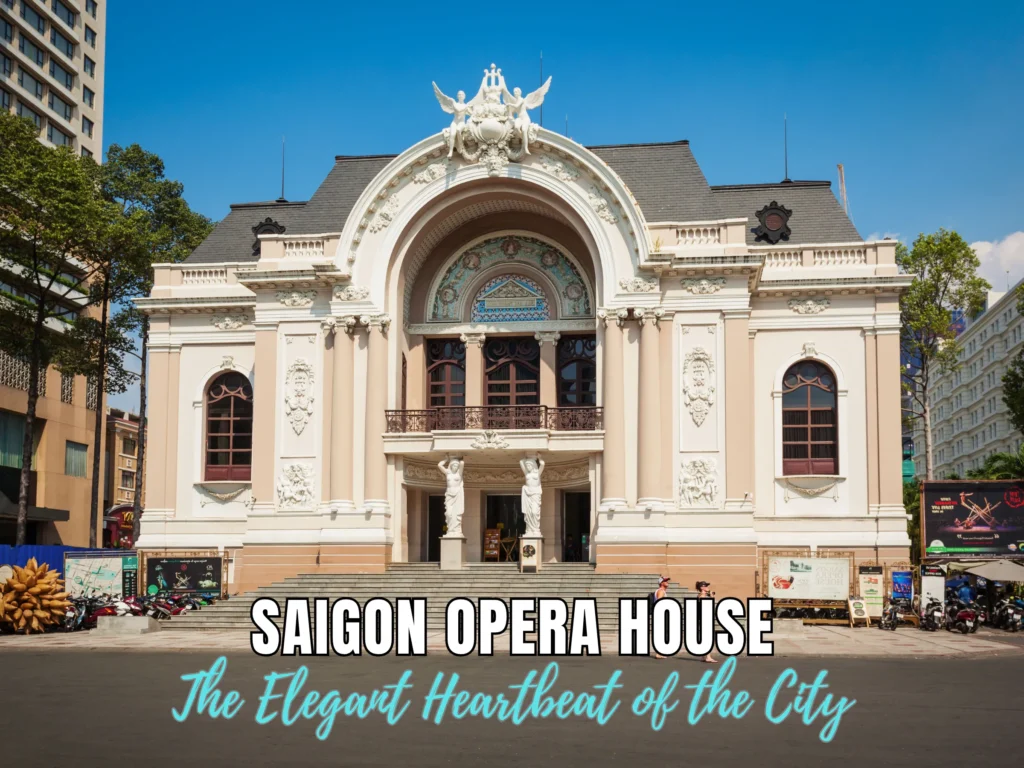
Standing gracefully at the intersection of history and modern life, the Saigon Opera House is one of the most iconic architectural landmarks in Ho Chi Minh City. Located in the vibrant District 1, this elegant building is more than just a theater – it is a symbol of Saigon’s cultural sophistication and colonial legacy. Whether you pass by during the day under the tropical sun or at night when it glows under warm lights, the Opera House always feels like a stage – quietly telling stories of the city. Table of Contents A Journey Through History The Saigon Opera House was built in 1898 during the French colonial period, designed by French architect Eugène Ferret, inspired by the grand theaters of Paris such as the Palais Garnier. Originally, it was a venue for French elites – hosting classical music, opera, and theatrical performances. However, its role changed dramatically throughout history. An aerial view shows the entire city theater and surrounding grounds. The theater’s steps are a popular spot for locals to sit, have drinks, and chat See more: Saigon Notre Cathedral Basilica – A timeless icon in the heart of Ho Chi Minh city During the Vietnam War, the building was used as the Lower House of the South Vietnamese government. Rows of seats were installed inside, transforming it from an artistic venue into a political space. To the right of the theater is Saigon’s oldest hotel – the Hotel Continental Saigon (since 1880) After 1975, it was restored back to its original function – a theater – and continues to serve as a cultural venue today. As the city lights up, the theater also shines brightly, welcoming a bustling crowd See more: Saigon Central Post Office – A timeless landmark in the heart of Ho Chi Minh city Architectural Elegance The Opera House is a stunning example of French colonial architecture, blending Beaux-Arts style with Renaissance influences. The façade is richly decorated with sculpted reliefs, arched windows, and intricate carvings that reflect the artistic ambition of the late 19th century. One interesting detail: many of the decorative statues you see today were restored or recreated over time, as some original elements were removed during different historical periods. The image of “putti” (musical angel) holding lyres is deeply ingrained in the memories of generations of Saigonese people Inside, the theater features a classic European layout with a grand staircase, velvet seats, and a main hall designed for acoustics – creating an intimate yet luxurious performance space. Cultural Significance & Local Memories For locals, the Opera House is not just a building – it is a silent witness to the city’s transformation. It has seen colonial elegance, war-time tension, and modern revival – all layered into one place. Today, it hosts performances like the famous “À Ố Show”, where traditional Vietnamese culture meets modern stage techniques. For many Saigonese, it is also a meeting point – a place to sit, wait, watch life go by, or simply enjoy the rhythm of the city. The main auditorium is designed in a horseshoe (arc) shape with a capacity of approximately 468 seats. This layout optimizes acoustics and ensures the best possible views from every position Visitor Information Opening Hours: The exterior can be visited at any time, while performances inside depend on the event schedule. It’s best to check in advance if you want to attend a show. Entry Fee: There is no fee to admire the building from outside. Ticket prices vary depending on performances. Best time to visit: Morning, evening and weekends are the best times to experience the vibrant atmosphere. On mornings, especially on weekends, people come here not only for dates, but also to take memorable photos Things to Do & Experiences While many visitors come simply to admire the architecture and take photos, there are several engaging experiences to enjoy: Watch a live performance: Experience Vietnamese culture through modern storytelling. Photography: Especially beautiful at sunset and night when lights illuminate the façade. People watching: Sit nearby and observe the flow of Saigon life. Combine nearby attractions: The Opera House is close to Nguyen Hue Walking Street and Saigon Central Post Office. The Saigon Opera House is not just about performances – it is about presence. A reminder that even in a fast-moving city like Ho Chi Minh City, there are places where time slows down… just enough for you to feel its soul. ♥ Saigonbiketours – Food Tour In Saigon ♥
Nguyen Hue Walking Street – The Beating Heart of Modern Ho Chi Minh City
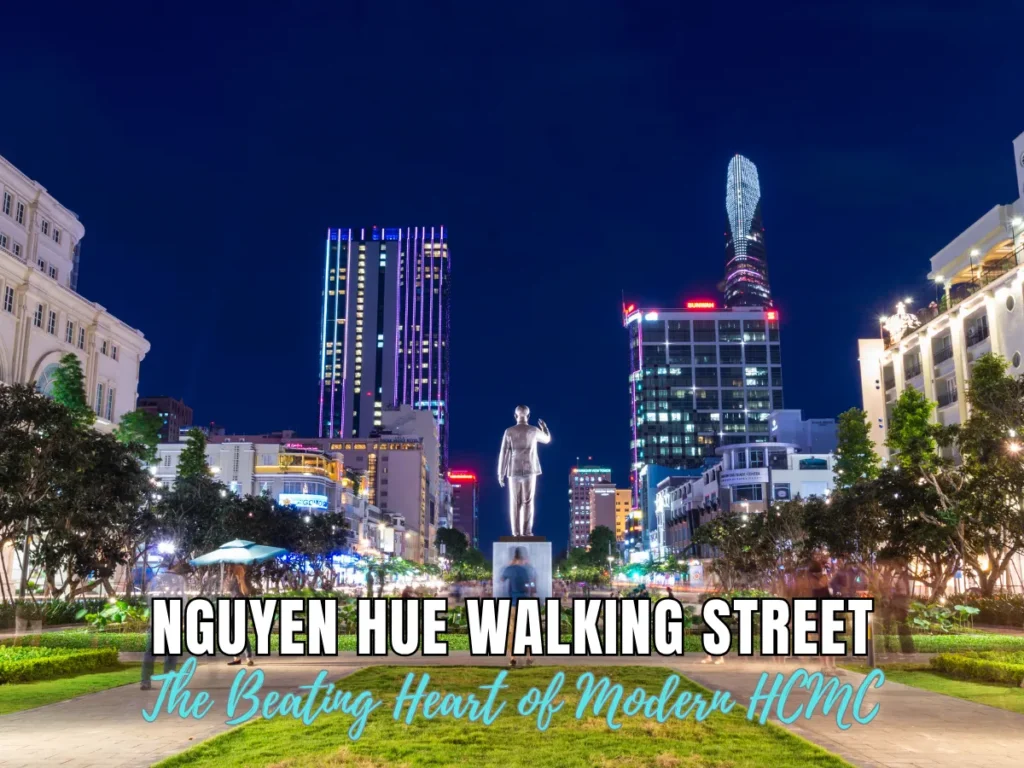
Located in the very center of District 1, Nguyen Hue Walking Street is one of the most vibrant and symbolic public spaces in Ho Chi Minh City. Stretching from the Saigon River to the headquarters of the city’s People’s Committee, this pedestrian boulevard represents the transformation of Saigon from a historical trading port into a modern urban metropolis. Unlike the fast-paced traffic that defines much of the city, Nguyen Hue offers a rare pedestrian-friendly environment where locals and visitors can gather, relax, and experience the city’s social life. Table of Contents A Journey Through History The origins of Nguyen Hue date back to the early 19th century, when this area was a canal known as Kinh Cho Vai (Charner Canal). It served as a vital commercial waterway where boats transported goods into the heart of Saigon. The “Bon Ken” Roundabout – the first roundabout in Saigon – was where the music soldiers practiced playing their instruments and also served as a children’s bathing area. See more: Saigon Notre Cathedral Basilica – A timeless icon in the heart of Ho Chi Minh city During the French colonial period, the canal was filled in and transformed into a wide boulevard named Charner Boulevard. This marked a significant shift in urban planning, reflecting Western architectural and infrastructural influences. From a canal transformed into a wide boulevard In 2015, the boulevard was officially converted into a pedestrian street, becoming one of the first large-scale walking streets in Vietnam. Since then, Nguyen Hue has evolved into a cultural and social hub, hosting festivals, public events, and daily gatherings. As the lights illuminate the hazy outlines of the buildings, the pedestrian street officially comes to a light See more: Saigon Central Post Office – A timeless landmark in the heart of Ho Chi Minh city Architectural & Urban Design Nguyen Hue Walking Street is characterized by its wide, open layout, modern landscaping, and symmetrical design. The boulevard is paved with granite stone and features fountains, LED lighting systems, and rows of trees that create a balanced urban aesthetic. At one end stands the historic Ho Chi Minh City People’s Committee Building, an architectural landmark from the French colonial era. At the other end lies the Saigon River, providing an open and refreshing contrast to the dense urban environment. Another unique highlight is the 42 Nguyen Hue Apartment, a former residential building that has been transformed into a vibrant complex of cafés, boutiques, and creative spaces. The old apartment building, decorated with modern touches, holds memories for generations of Saigon residents Cultural Significance & Local Life Nguyen Hue Walking Street plays an important role in the daily life of Saigon residents. It is not only a tourist destination but also a gathering place for locals of all ages. For many locals, Nguyen Hue represents a space of connection – a place to meet friends, spend time with family, or simply observe the rhythm of city life. These big events attract large crowds of people, turning Nguyen Hue pedestrian street into a “jam” Visitor Information Opening Hours: Nguyen Hue Walking Street is open 24/7, as it is a public pedestrian space. However, it is most lively in the late afternoon and evening. Entry Fee: There is no entrance fee to access the walking street. Best time to visit: Evenings and weekends are the best times to experience the vibrant atmosphere. Late afternoons and weekends are ideal times to explore and experience the city’s pulse Things to Do & Experiences While many visitors come simply to admire the architecture and take photos, there are several engaging experiences to enjoy: People-watching: Observe the diverse crowd and daily life of Saigon residents. Street performances: Enjoy music, dance, and spontaneous art performances. Photography: Capture the contrast between modern urban life and historical architecture. Visit cafés: Especially inside the famous apartment building. Join public events: Festivals, countdown parties, and cultural exhibitions are frequently held here. Nguyen Hue Walking Street stands as a powerful symbol of Ho Chi Minh City’s evolution – from a historical canal to a modern urban gathering space. It reflects not only the city’s past but also its dynamic present and future. Whether you are a first-time visitor or a returning traveler, Nguyen Hue offers a meaningful and accessible way to experience the spirit of Saigon. ♥ Saigonbiketours – Food Tour In Saigon ♥
Saigon Central Post Office – A Timeless Landmark in the Heart of Ho Chi Minh City
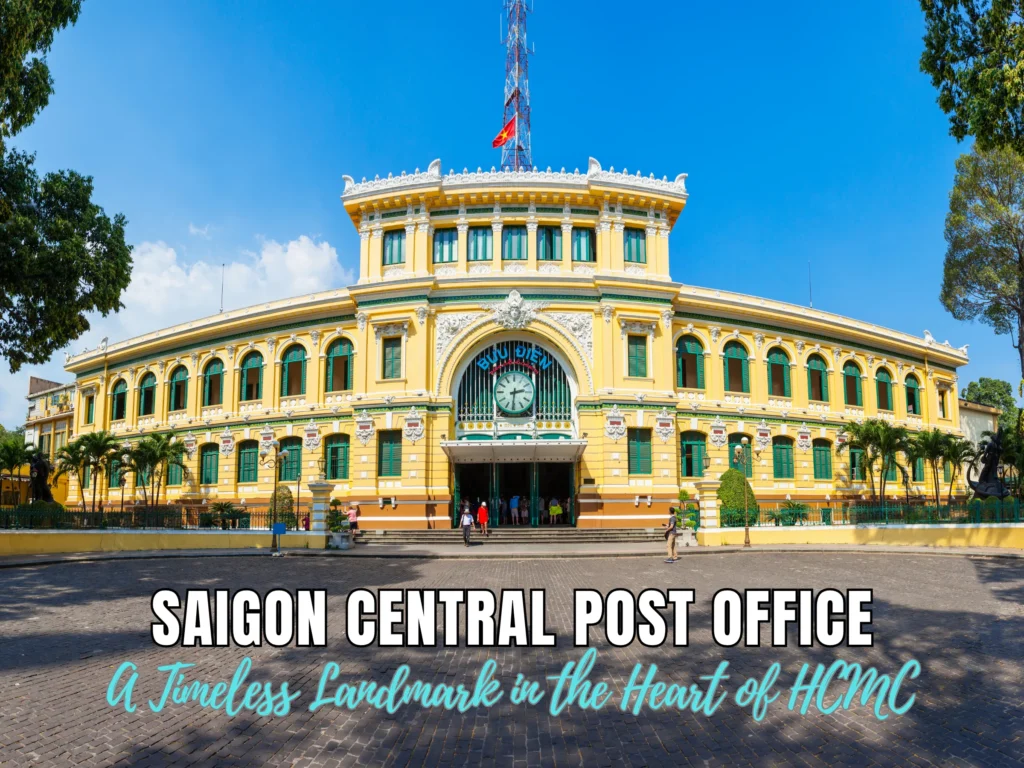
Nestled on the bustling Paris Commune Square in District 1, Saigon Central Post Office is one of Ho Chi Minh City’s most iconic historical attractions. This magnificent edifice stands next to the Notre-Dame Cathedral Basilica of Saigon, making it an essential stop for visitors exploring the heart of the city. With its blend of old-world charm and vibrant urban life, the post office offers a unique glimpse into Vietnam’s colonial past and contemporary culture. Table of Contents A Journey Through History The story of Saigon Central Post Office dates back to the French colonial period in the late 19th century. The very first Saigon Telegraph Office was established in the early 1860s to modernize communication in French Indochina. By 1863, the initial post office was officially opened and issued its first stamps, becoming a symbol of the emerging communication network. An artistic corner of the Saigon Central Post Office See more: 9 Traditional Vietnamese Folk Games That Bring Back the Joy of Childhood The magnificent building that stands today, however, was constructed between 1886 and 1891 under the design of French architects Auguste Henri Vildieu and his associate Foulhoux. Although often popularly attributed to Gustave Eiffel, the famed engineer’s company only contributed in part to the original office’s early works – the grand structure you see today is the result of Vildieu’s vision. The distinctive orange-yellow color makes Saigon Central Post Office stand out among the green trees Through wars and sweeping changes in Vietnam’s history, the Saigon Central Post Office has stood firm as both a functional post office and a cultural monument, witnessing generations of Saigonese life unfold within its walls. The image depicts the god Hermes (in Greek mythology) or Mercury (in Roman mythology) – the messenger of the gods, patron of messengers, communication, commerce, and travel See more: 9 Things That Shock Foreigners in Vietnam – But Are Totally Normal for Vietnamese People Architectural Elegance One of the most striking features of the Saigon Central Post Office is its architectural style, a graceful fusion of Gothic, Renaissance, and French influences. The exterior is painted in a warm yellow hue that beautifully contrasts with the ornate white reliefs and green window frames – a scene that perfectly embodies the colonial charm of the era. This classic-style clock, having been in operation for over 135 years, has become a distinctive historical symbol of the city At the main entrance, a large clock sits above the central archway – a reminder of the building’s historical timeline. Inside, the soaring vaulted ceiling, decorative ironwork, and beautifully preserved old telephones and mailboxes transport visitors back in time. Two remarkable historic maps adorn the walls, showing Saigon and surrounding regions from the late 19th and early 20th centuries. The interior dome architecture of the Ho Chi Minh City Central Post Office is one of its most striking features, giving it a spacious and nostalgic feel reminiscent of late 19th-century European train stations Cultural Significance & Local Memories For many locals, the Central Post Office is more than just a building – it’s a repository of memories. Older generations remember sending handwritten letters and postcards from here, while younger residents often recall family visits to pay bills or send parcels. Even during festive seasons like Tet (Lunar New Year), people gather at the office to write traditional handwritten greetings, preserving a cultural practice that continues to charm both locals and visitors alike. Join our team in Yellow Ao Dai and let’s explore Saigon’s hidden gem destinations together Visitor Information Opening Hours: Saigon Central Post Office is typically open daily for visitors. Most tourism sources list entry times roughly from 07:00 AM to 07:00 PM – though hours can vary slightly on weekends and public holidays, so it’s wise to check ahead before planning your visit. Entry Fee:For most visitors, access to the building and interior space is free of charge, making it an affordable cultural stop during your Ho Chi Minh City exploration. Best time to visit: Morning, afternoon and weekends are the best times to experience the vibrant atmosphere. Things to Do & Experiences While many visitors come simply to admire the architecture and take photos, there are several engaging experiences to enjoy: Send a postcard or letter: Write and post a message to loved ones back home from one of the oldest post offices in Vietnam. Explore historic maps: Take time to examine and appreciate the old maps that tell tales of Saigon’s expansion over the last century. Photography & architecture appreciation: Both exterior and interior offer stunning photo opportunities for architecture lovers and Instagram enthusiasts. Local interaction: Watch or engage with locals sending letters, buying stamps, or simply resting on the classic wooden benches – a quiet window into everyday life. Whether you’re a history buff, architecture enthusiast, or curious traveler, Saigon Central Post Office offers a captivating blend of culture, art, and memory in the center of Vietnam’s most dynamic city. Its enduring elegance and welcoming atmosphere make it a must-visit destination on any Ho Chi Minh City itinerary. ♥ Saigonbiketours – Food Tour In Saigon ♥