
A Journey Through History
The Saigon Opera House was built in 1898 during the French colonial period, designed by French architect Eugène Ferret, inspired by the grand theaters of Paris such as the Palais Garnier.
Originally, it was a venue for French elites – hosting classical music, opera, and theatrical performances. However, its role changed dramatically throughout history.
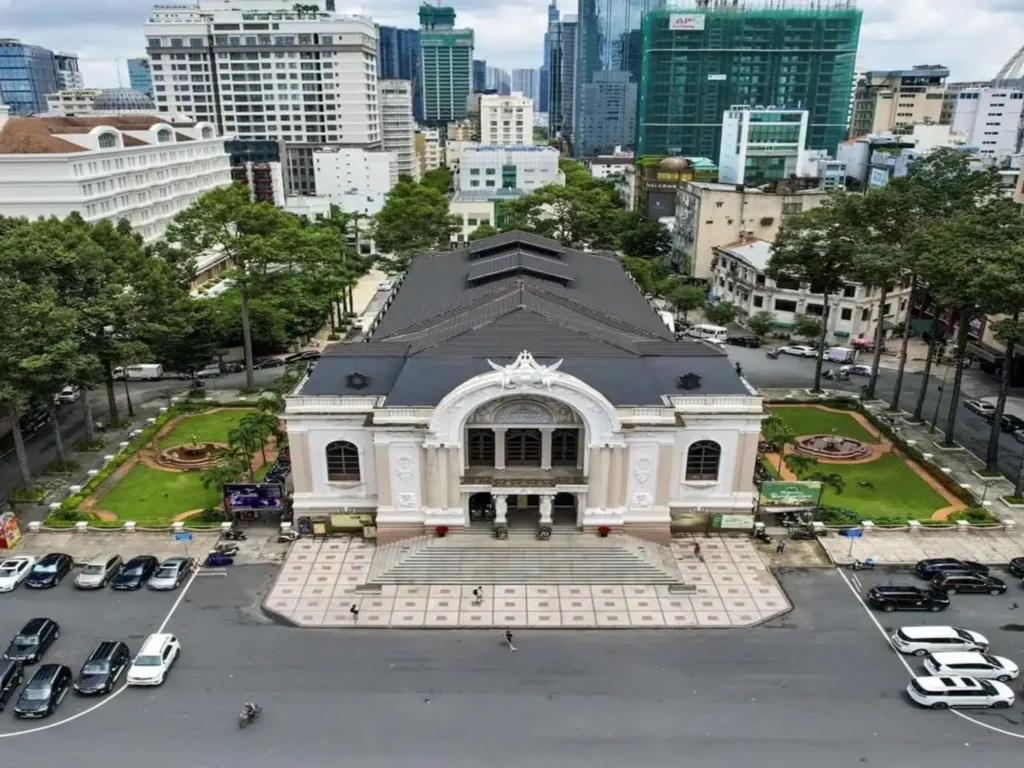
An aerial view shows the entire city theater and surrounding grounds. The theater’s steps are a popular spot for locals to sit, have drinks, and chat
See more: Saigon Notre Cathedral Basilica – A timeless icon in the heart of Ho Chi Minh city
During the Vietnam War, the building was used as the Lower House of the South Vietnamese government. Rows of seats were installed inside, transforming it from an artistic venue into a political space.
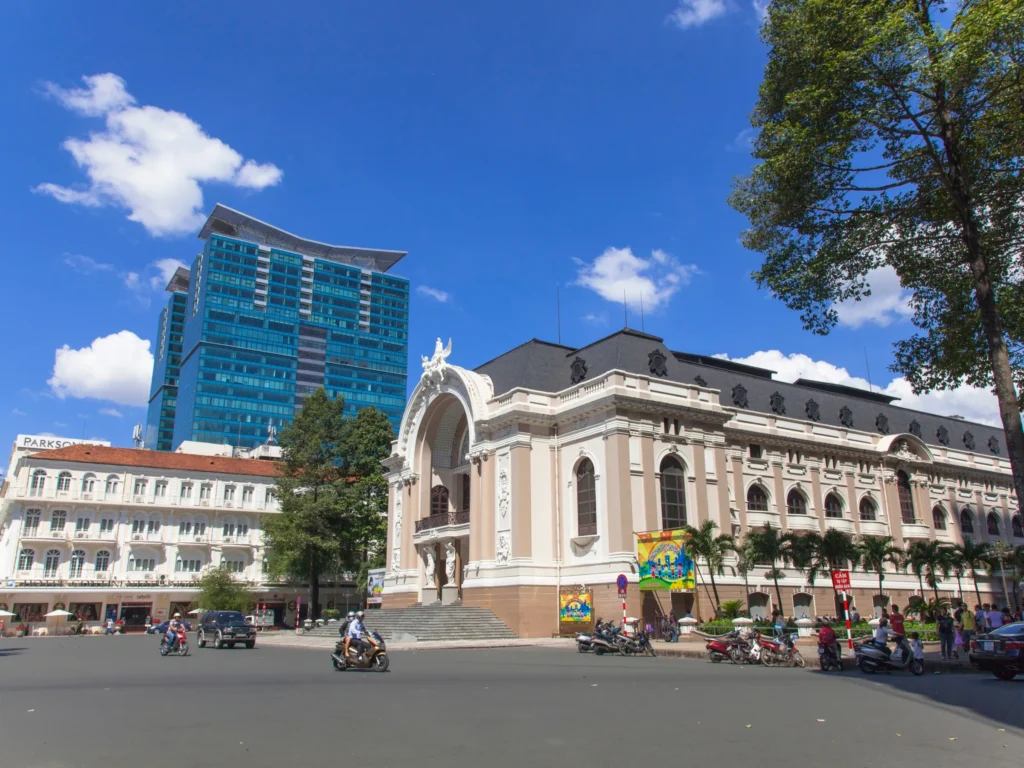
To the right of the theater is Saigon’s oldest hotel – the Hotel Continental Saigon (since 1880)
After 1975, it was restored back to its original function – a theater – and continues to serve as a cultural venue today.
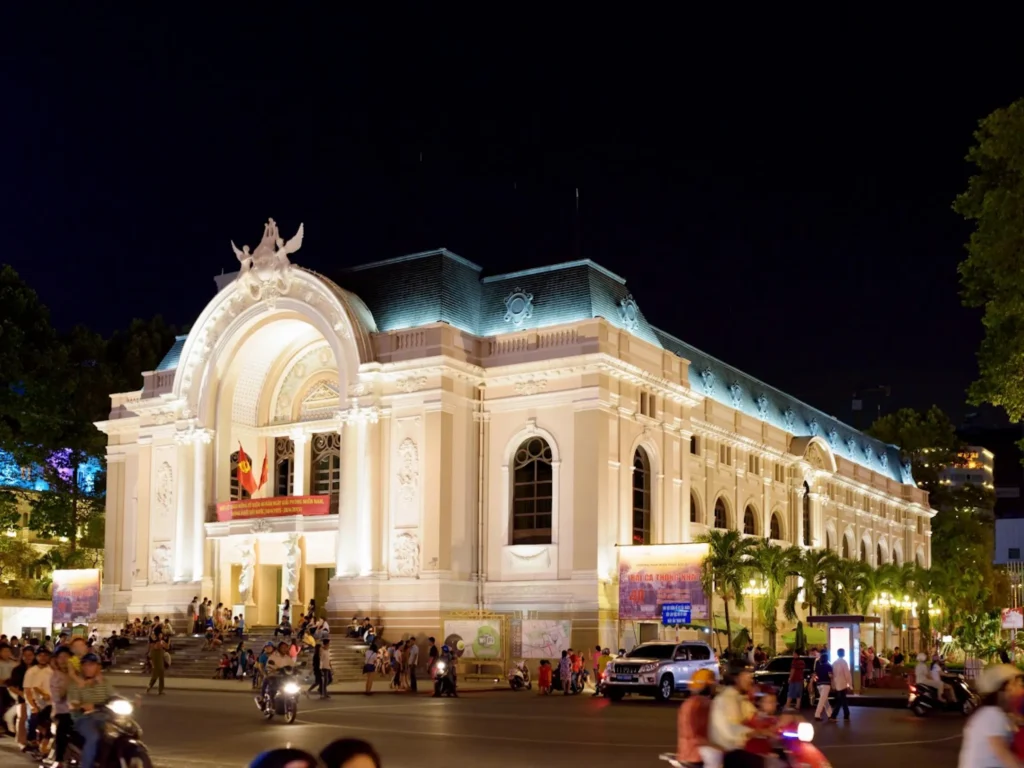
As the city lights up, the theater also shines brightly, welcoming a bustling crowd
See more: Saigon Central Post Office – A timeless landmark in the heart of Ho Chi Minh city
Architectural Elegance
The Opera House is a stunning example of French colonial architecture, blending Beaux-Arts style with Renaissance influences.
The façade is richly decorated with sculpted reliefs, arched windows, and intricate carvings that reflect the artistic ambition of the late 19th century.
One interesting detail: many of the decorative statues you see today were restored or recreated over time, as some original elements were removed during different historical periods.
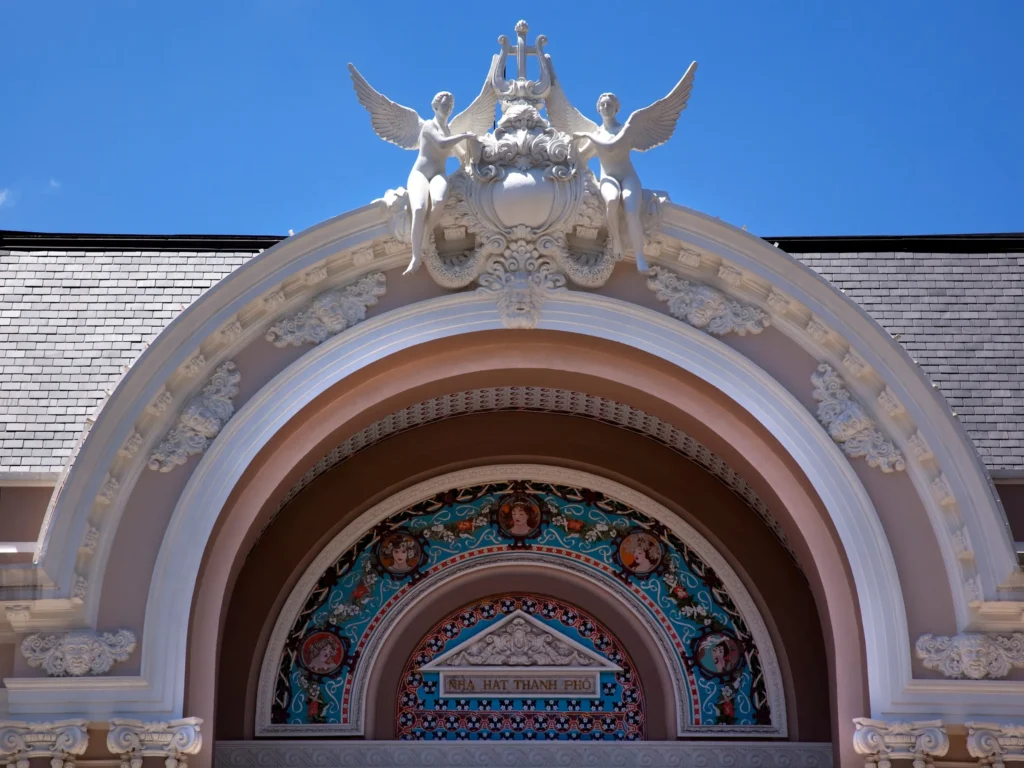
The image of “putti” (musical angel) holding lyres is deeply ingrained in the memories of generations of Saigonese people
Inside, the theater features a classic European layout with a grand staircase, velvet seats, and a main hall designed for acoustics – creating an intimate yet luxurious performance space.
Cultural Significance & Local Memories
For locals, the Opera House is not just a building – it is a silent witness to the city’s transformation.
It has seen colonial elegance, war-time tension, and modern revival – all layered into one place.
Today, it hosts performances like the famous “À Ố Show”, where traditional Vietnamese culture meets modern stage techniques.
For many Saigonese, it is also a meeting point – a place to sit, wait, watch life go by, or simply enjoy the rhythm of the city.
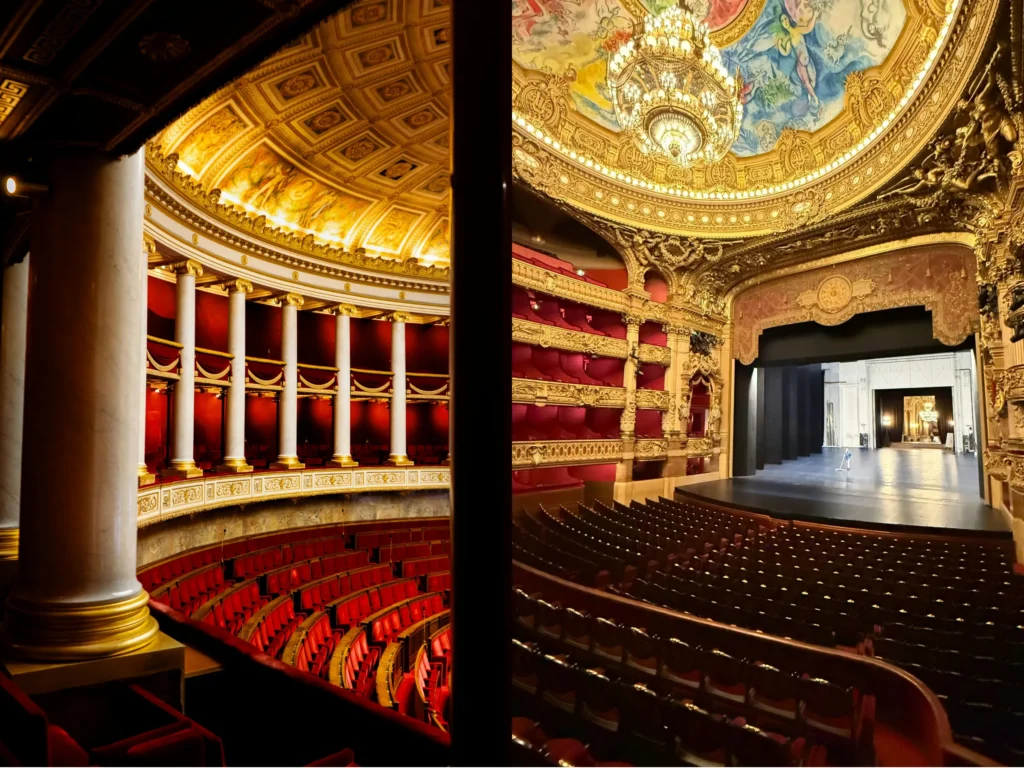
The main auditorium is designed in a horseshoe (arc) shape with a capacity of approximately 468 seats. This layout optimizes acoustics and ensures the best possible views from every position
Visitor Information
- Opening Hours: The exterior can be visited at any time, while performances inside depend on the event schedule. It’s best to check in advance if you want to attend a show.
- Entry Fee: There is no fee to admire the building from outside. Ticket prices vary depending on performances.
- Best time to visit: Morning, evening and weekends are the best times to experience the vibrant atmosphere.
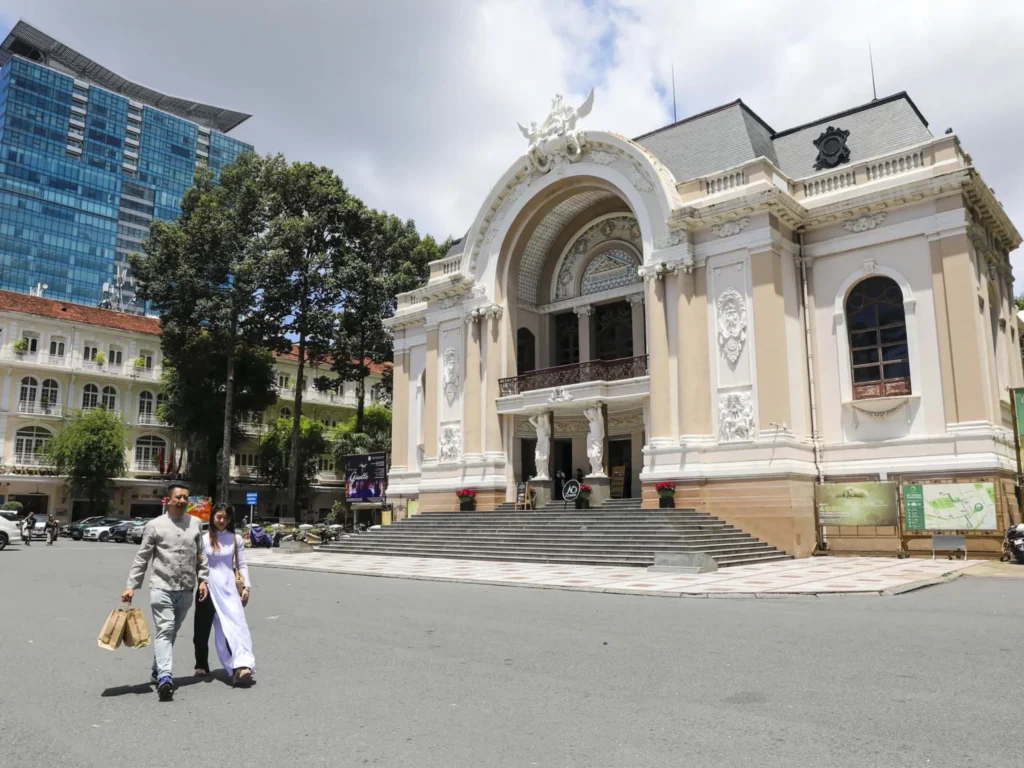
On mornings, especially on weekends, people come here not only for dates, but also to take memorable photos
Things to Do & Experiences
While many visitors come simply to admire the architecture and take photos, there are several engaging experiences to enjoy:
- Watch a live performance: Experience Vietnamese culture through modern storytelling.
- Photography: Especially beautiful at sunset and night when lights illuminate the façade.
- People watching: Sit nearby and observe the flow of Saigon life.
- Combine nearby attractions: The Opera House is close to Nguyen Hue Walking Street and Saigon Central Post Office.
The Saigon Opera House is not just about performances – it is about presence. A reminder that even in a fast-moving city like Ho Chi Minh City, there are places where time slows down… just enough for you to feel its soul.