
A Journey Through History
The origins of Nguyen Hue date back to the early 19th century, when this area was a canal known as Kinh Cho Vai (Charner Canal). It served as a vital commercial waterway where boats transported goods into the heart of Saigon.
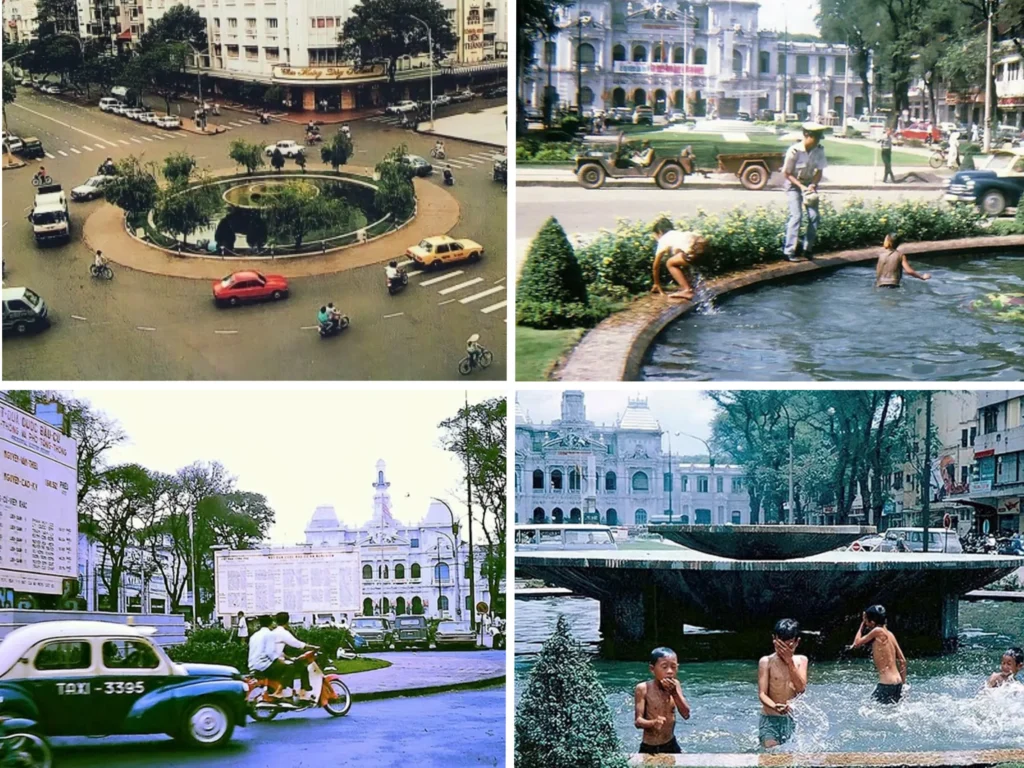
The “Bon Ken” Roundabout – the first roundabout in Saigon – was where the music soldiers practiced playing their instruments and also served as a children’s bathing area.
See more: Saigon Notre Cathedral Basilica – A timeless icon in the heart of Ho Chi Minh city
During the French colonial period, the canal was filled in and transformed into a wide boulevard named Charner Boulevard. This marked a significant shift in urban planning, reflecting Western architectural and infrastructural influences.
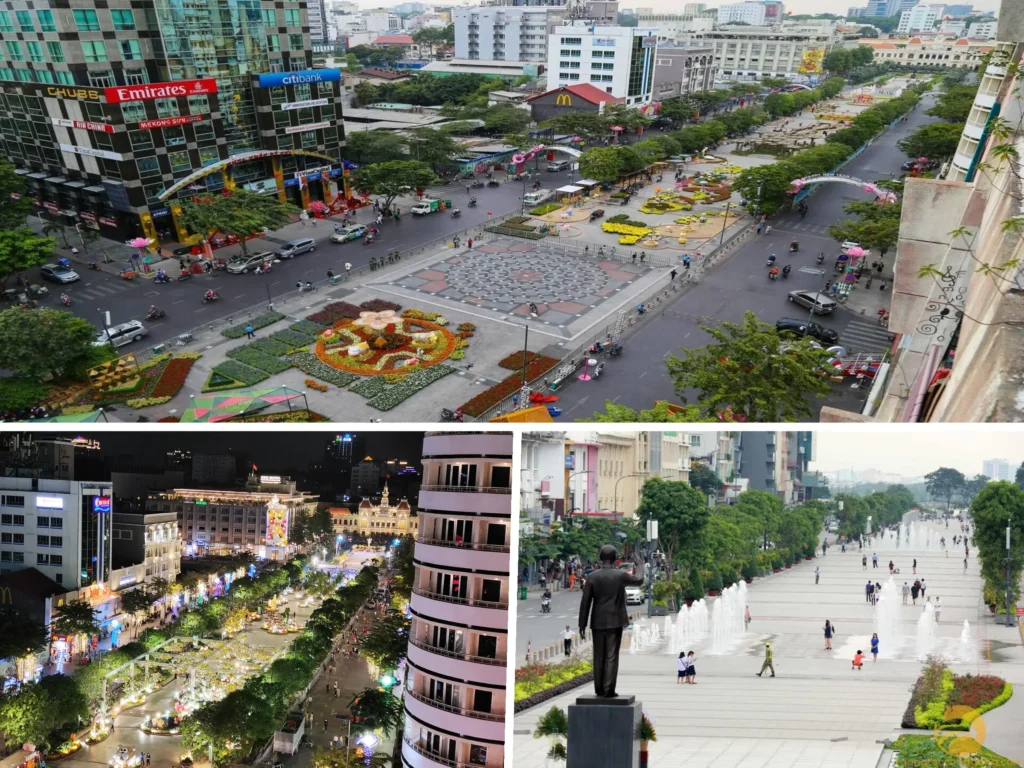
From a canal transformed into a wide boulevard
In 2015, the boulevard was officially converted into a pedestrian street, becoming one of the first large-scale walking streets in Vietnam. Since then, Nguyen Hue has evolved into a cultural and social hub, hosting festivals, public events, and daily gatherings.
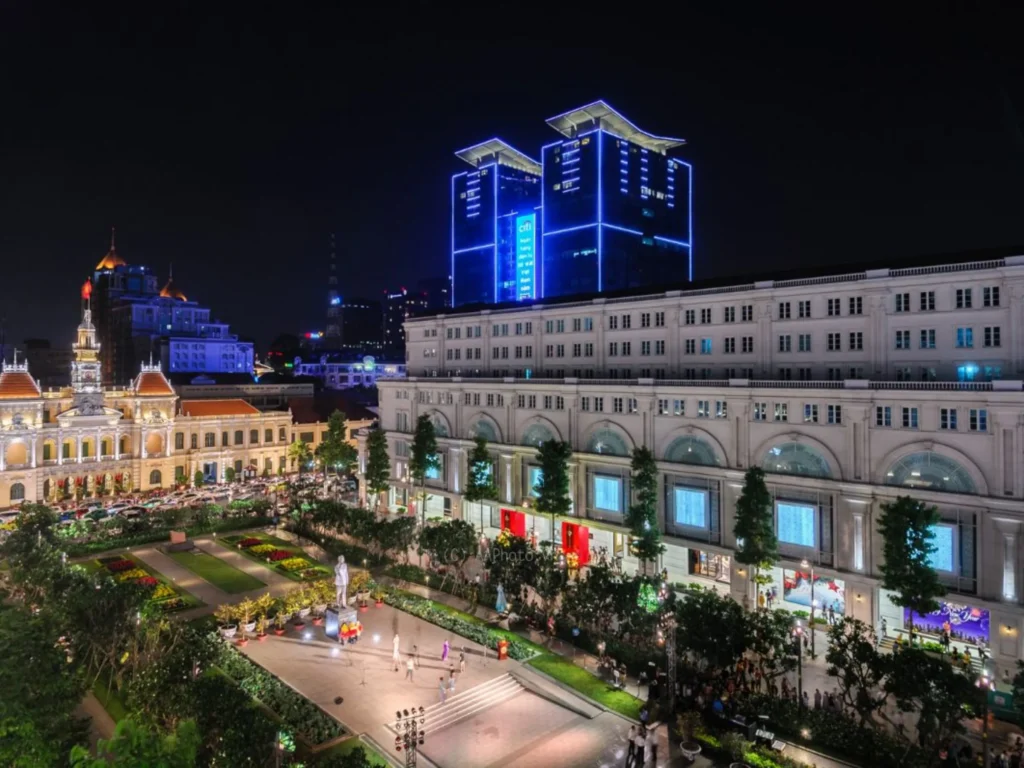
As the lights illuminate the hazy outlines of the buildings, the pedestrian street officially comes to a light
See more: Saigon Central Post Office – A timeless landmark in the heart of Ho Chi Minh city
Architectural & Urban Design
Nguyen Hue Walking Street is characterized by its wide, open layout, modern landscaping, and symmetrical design. The boulevard is paved with granite stone and features fountains, LED lighting systems, and rows of trees that create a balanced urban aesthetic.
At one end stands the historic Ho Chi Minh City People’s Committee Building, an architectural landmark from the French colonial era. At the other end lies the Saigon River, providing an open and refreshing contrast to the dense urban environment.
Another unique highlight is the 42 Nguyen Hue Apartment, a former residential building that has been transformed into a vibrant complex of cafés, boutiques, and creative spaces.
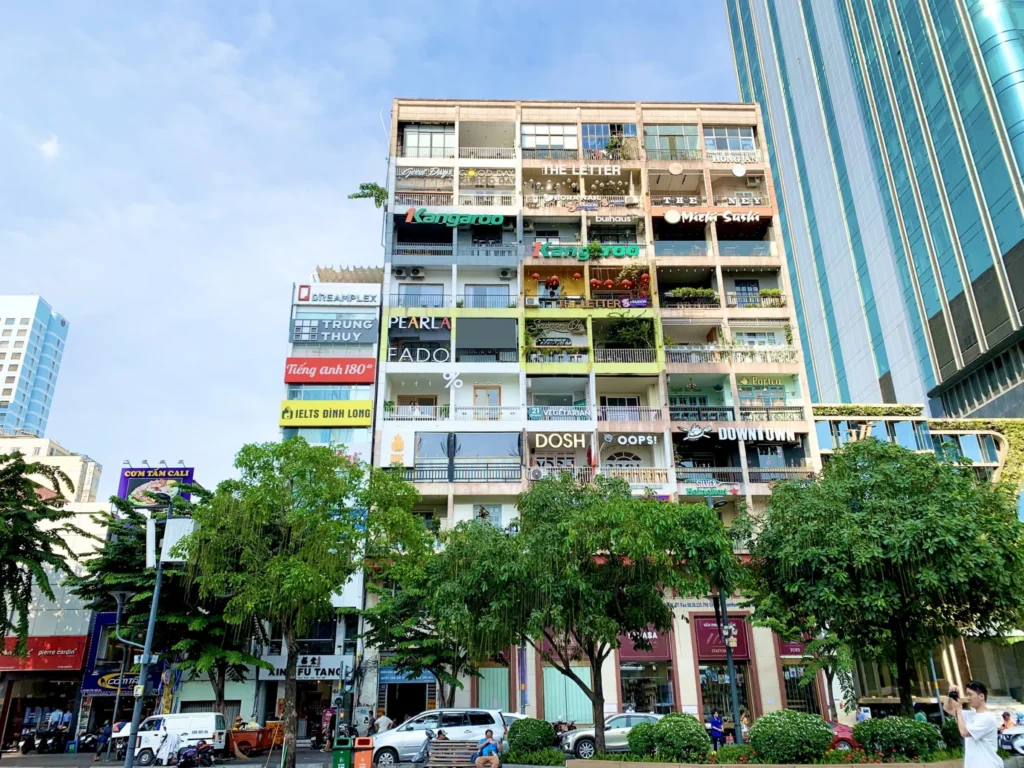
The old apartment building, decorated with modern touches, holds memories for generations of Saigon residents
Cultural Significance & Local Life
Nguyen Hue Walking Street plays an important role in the daily life of Saigon residents. It is not only a tourist destination but also a gathering place for locals of all ages.
For many locals, Nguyen Hue represents a space of connection – a place to meet friends, spend time with family, or simply observe the rhythm of city life.
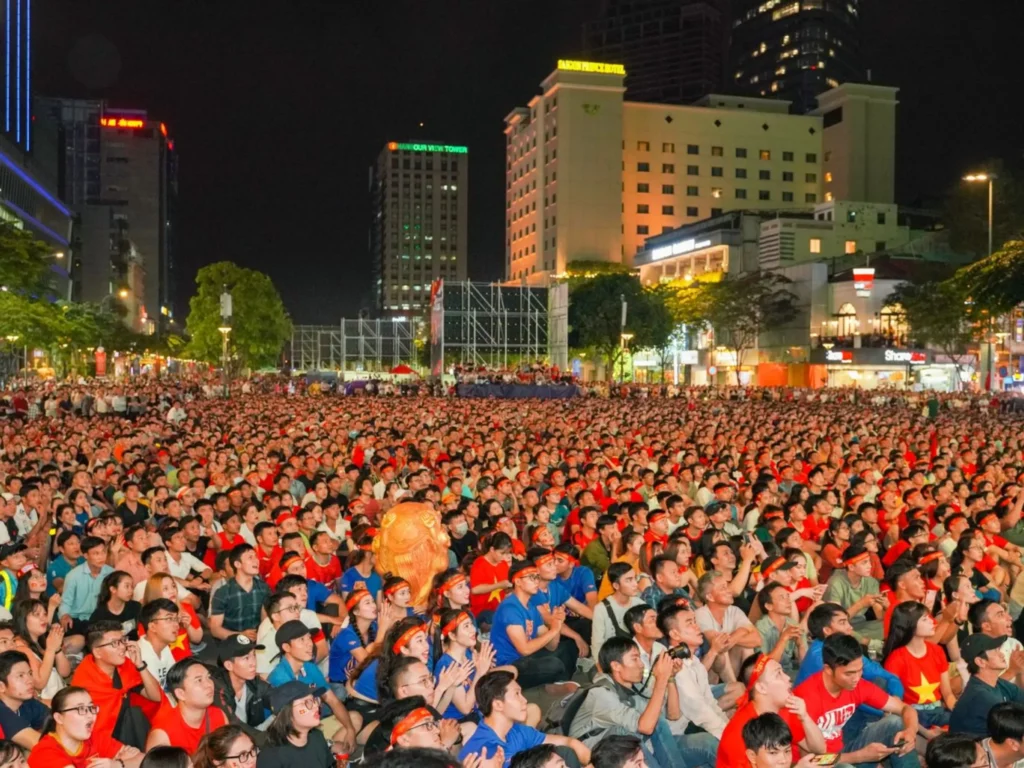
These big events attract large crowds of people, turning Nguyen Hue pedestrian street into a “jam”
Visitor Information
- Opening Hours: Nguyen Hue Walking Street is open 24/7, as it is a public pedestrian space. However, it is most lively in the late afternoon and evening.
- Entry Fee: There is no entrance fee to access the walking street.
- Best time to visit: Evenings and weekends are the best times to experience the vibrant atmosphere.
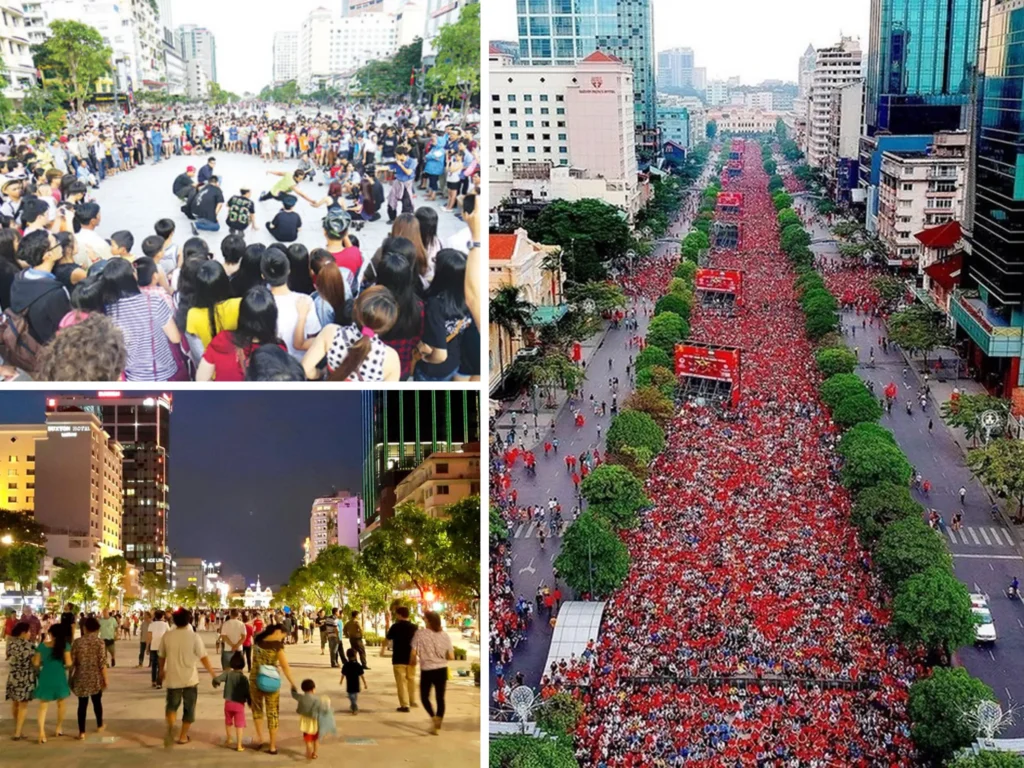
Late afternoons and weekends are ideal times to explore and experience the city’s pulse
Things to Do & Experiences
While many visitors come simply to admire the architecture and take photos, there are several engaging experiences to enjoy:
- People-watching: Observe the diverse crowd and daily life of Saigon residents.
- Street performances: Enjoy music, dance, and spontaneous art performances.
- Photography: Capture the contrast between modern urban life and historical architecture.
- Visit cafés: Especially inside the famous apartment building.
- Join public events: Festivals, countdown parties, and cultural exhibitions are frequently held here.
Nguyen Hue Walking Street stands as a powerful symbol of Ho Chi Minh City’s evolution – from a historical canal to a modern urban gathering space. It reflects not only the city’s past but also its dynamic present and future.
Whether you are a first-time visitor or a returning traveler, Nguyen Hue offers a meaningful and accessible way to experience the spirit of Saigon.