
The Secret Bunker Of The Saigon
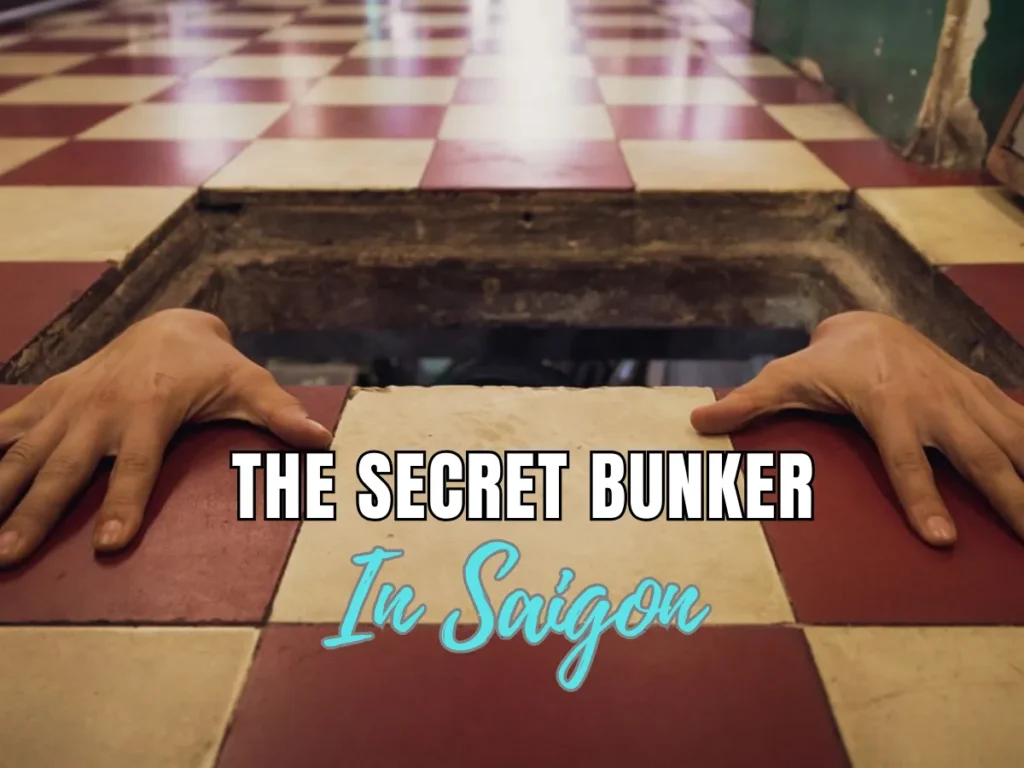
In a bustling alleyway in the heart of Ho Chi Minh City lies a “red address”—a historical testament to the unwavering courage and bravery of the Saigon Commando Force during the resistance war against American imperialism and for national liberation. This is house number 287/70 Nguyen Dinh Chieu Street (District 3, Ho Chi Minh City), with its secret underground tunnel system that once stored over 2 tons of weapons in preparation for the Tet Offensive attack on the Independence Palace in 1968. Table of Contents The house is located in an alley connecting Nguyen Dinh Chieu and Vo Van Tan streets, right in a bustling and densely populated area of District 3. The owner of the house was Mr. Tran Van Lai (also known as Mai Hong Que), who passed away in 2002 and was posthumously awarded the title of Hero of the People’s Armed Forces by the Party and State in 2015. Greeting us at the entrance to the bunker, Mrs. Dang Thi Thiep, wife of Mr. Tran Van Lai, emotionally recounted the nearly year-long process of digging this secret bunker with her husband to use as a weapons storage base, preparing for the Saigon Commando Force’s attack on the Independence Palace during the Tet Offensive of 1968. “This tunnel was dug by me and him. Back then, I was just a young girl of nineteen or twenty, so I was strong and healthy, climbing up and down, carrying earth and stones to help him. It took almost a year to finish,” Mrs. Dang Thi Thiep recounted. Many foreign tourists come to visit and experience the secret weapons storage bunker of the Saigon Commando Unit. See more: 9 Traditional Vietnamese Folk Games That Bring Back the Joy of Childhood According to Mrs. Thiep’s account, at that time, in order to build a secret weapons storage facility near the Independence Palace, right in the heart of enemy territory, Mr. Tran Van Lai bought three adjacent houses in the area. “The superiors assigned him the task of buying houses near the Independence Palace to use as weapons storage bunkers. In 1965, he drove me to the area to view the houses. Back then, the area was very desolate, with dirt roads and dilapidated houses, not as modern as it is now. After buying the houses, in 1966 and 1967, my husband and I started digging the bunker. We dug at night to avoid detection. When the superiors inspected the bunker and approved it, we began transporting weapons at the end of 1967,” Mrs. Thiep added. At that time, to transport weapons from the base to be hidden in this secret bunker, Mr. Tran Van Lai, under the guise of a contractor at the Independence Palace, secretly transported over 2 tons of various weapons in three trips by car to hide them in the bunker. According to Mr. Lam Quoc Dung, a former intelligence officer of the Saigon Special Forces, the enemy’s inspections were very strict back then. To transport weapons into the city center, a “cover” was needed to deceive the checkpoints. The transporter also had to be very brave, resourceful, flexible, but also courageous and calm when facing the enemy. “Only Mr. Tran Van Lai could have done that. At that time, Mr. Lai was working as a contractor in the Independence Palace, so he could travel in and out of the suburbs, using cars to transport weapons without being suspected or detected,” Mr. Lam Quoc Dung added. On the afternoon of the 30th day of the Lunar New Year in 1968, 17 soldiers of the 5th Saigon Special Forces Unit gathered at the house of Mr. Tran Van Lai, receiving weapons and cleaning up in preparation for the attack on the Independence Palace. Ms. Vu Minh Nghia (also known as Chin Nghia), the only female soldier who directly participated in the attack on the Palace that year, recounted: “When we arrived, the soldiers opened the hatch of the bunker for us to see what was inside. I was utterly astonished and impressed. The bunker was about 8 meters long, 2 meters wide, and 2.5 meters deep, filled with all kinds of weapons. From grenades, explosives, AK rifles, B40 rocket launchers… more than 2 tons.” Ms. Chín Nghĩa said that she admired Mr. and Mrs. Trần Văn Lai because she came from the Củ Chi area and had participated in digging tunnels, so she understood how difficult and dangerous tunnel digging was. Digging tunnels right in the heart of enemy territory was even more difficult and dangerous. “The tunnel wasn’t small and contained so many weapons. Mr. and Mrs. Năm Lai risked their own lives and the lives of their families to accomplish such a feat,” Ms. Chín Nghĩa added. After liberation, Mr. Tran Van Lai and his family redeemed and restored the house, and also painstakingly searched for, collected, and purchased artifacts and documents about the Saigon Commando Unit to display and introduce. Each artifact tells a vivid story, including the process of “camouflaging” the transportation of weapons from the base to be hidden in the bunker. Notably, the exhibition also displays and introduces the Citroen NCE-345 car that Mr. Tran Van Lai used to transport weapons and soldiers of Team 5 of the Saigon Commando Unit during the attack on the Independence Palace. Measuring 8 meters long, 2 meters wide, and 2.5 meters deep, the bunker was the largest and contained the most weapons of the Saigon Commando Unit. See more: 9 Things That Shock Foreigners in Vietnam – But Are Totally Normal for Vietnamese People According to Mr. Nguyen Tien Dang, son of Mr. Nguyen Van Tri (also known as Hai Do), his father, who was then the Political Commissar and Head of the A20-A30 Combat Support Unit of the Saigon Special Forces, commanded the digging of tunnels in the city center to hide weapons in preparation for attacks on the headquarters and key agencies of the Saigon puppet regime. “Uncle Nam Lai’s tunnel was the largest and
9 Vietnamese “Scary” Dishes That Shock Tourists but Delight the Locals!
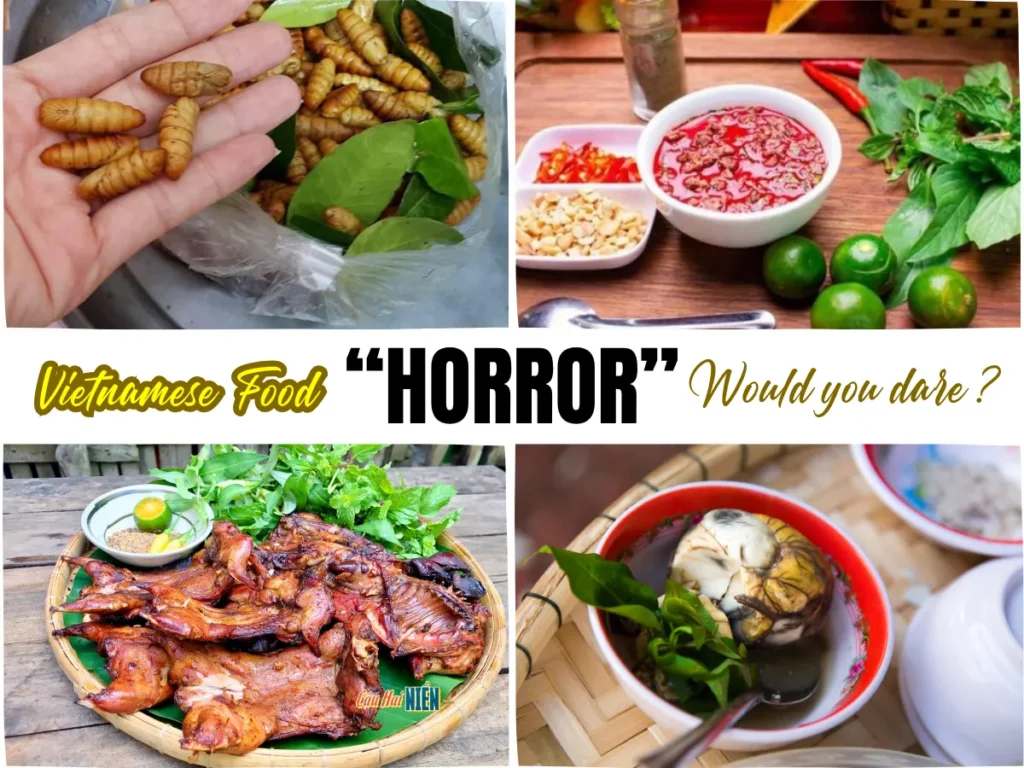
If you think you’ve got a brave stomach, Vietnam is here to test it!From dishes that wriggle to snacks that stare back at you, Vietnamese street food isn’t just about flavors – it’s an adventure.Here are 9 dishes that make tourists gasp “OMG!” but locals smile and say “It’s delicious!” Table of Contents 1. Balut “Face your fear, taste the flavor!” Balut is a fertilized duck egg with a nearly developed embryo inside – yes, feathers and all!While it may look intimidating, locals consider it a powerful, energy-boosting delicacy.Served hot with salt, pepper, and Vietnamese coriander, it’s rich, savory, and full of flavor. Once you get past the look, it’s pure comfort in a shell! Balut: where curiosity meets courage, and every bite tells a flavorful story of Vietnamese life. See more: 9 Traditional Vietnamese Folk Games That Bring Back the Joy of Childhood 2. Duck Blood Soup “Not for vampires – just for the brave!” Duck blood soup might look straight out of a vampire movie – but it’s a traditional countryside dish!Fresh duck blood is mixed with minced meat, roasted peanuts, and herbs, then chilled until it sets.It’s surprisingly light, herby, and refreshing. Locals enjoy it with rice wine and good company – it’s about flavor and fun, not fear! Duck blood pudding/soup – where bold taste, tradition, and Vietnamese courage meet in every crimson spoonful. 3. Fermented Shrimp Paste “Smells wild, tastes wonderful!” This purple fermented shrimp paste has an unforgettable aroma – strong, bold, and, well… uniquely Vietnamese!It’s the key ingredient in bún đậu mắm tôm, paired with fried tofu and herbs. Once you dare to try, the umami explosion will win your heart (and maybe your nose). Fermented shrimp paste – the fearless aroma that defines Vietnam’s boldest, most unforgettable culinary identity. 4. Snail Dishes “Suck, chew, and chat – Vietnamese style!” Vietnam’s snail dishes come in all shapes and flavors – steamed, stir-fried, or grilled with lemongrass and chili.It’s not just food; it’s a social ritual. Sitting on tiny stools, laughing with friends, and slurping spicy snails – that’s the real Vietnam! A symphony of shells, herbs, and fire – tasting Vietnam’s passion in every fragrant swirl. See more: 9 Things That Shock Foreigners in Vietnam – But Are Totally Normal for Vietnamese People 5. Eel Soup “Slippery? Maybe. Delicious? Definitely!” Eel soup is golden, spicy, and soothing. Tender eel is simmered in rice porridge with turmeric, shallots, and chili oil.It’s a signature dish from Central Vietnam – rich, warming, and packed with flavor. One spoonful and fear turn into love. A comforting bowl that heals both hunger and heart – eel porridge, Vietnam’s tender tradition. 6. Frog Dishes “Leap of faith – and flavor!” Frog dishes are crunchy, juicy, and seriously tasty!Whether fried, curried, or stir-fried with lemongrass, frog meat tastes like chicken – but better. Take the leap and you’ll be surprised how delicious it is! A rustic delicacy that leaps from farm to feast, blending tradition, spice, and joyful flavor. 7. Field Rat Meat “Don’t panic – they’re rice rats, not city rats!” Before you scream, these are rice field rats – clean, lean, and surprisingly tasty!Grilled or roasted, they’re smoky, tender, and beloved in the Mekong Delta. A countryside delicacy that proves appearances can deceive. From golden rice fields to family feasts, field rat dishes honor Vietnam’s bold rural heritage. 8. Coconut Worms “The ultimate dare on a plate!” Coconut worms are the crown jewel of Vietnamese “fear foods.”Some eat them alive with spicy fish sauce, others fry them crispy. The taste? Buttery, creamy, and unforgettable. Dare to try – and you’ll have a story for life! Not for the faint-hearted – coconut worms define Vietnam’s bravest and most unforgettable taste adventure. 9. Silkworm Pupae “Crispy courage, Vietnamese style!” Fried silkworm pupae are crunchy, nutty, and packed with protein.They might look strange, but they’re delicious and nostalgic – a taste of Vietnamese childhood on a plate. Silkworm pupae – a humble delicacy where golden crunch meets Vietnam’s timeless tradition of nourishment. 10. Dare to Dine? Vietnamese cuisine is more than pho and banh mi – it’s bold, wild, and full of stories.These “scary” dishes might challenge your limits, but they’ll also redefine what you call delicious.So go on – take a bite, and taste the fearless side of Vietnam!
9 Traditional Vietnamese Folk Games That Bring Back the Joy of Childhood
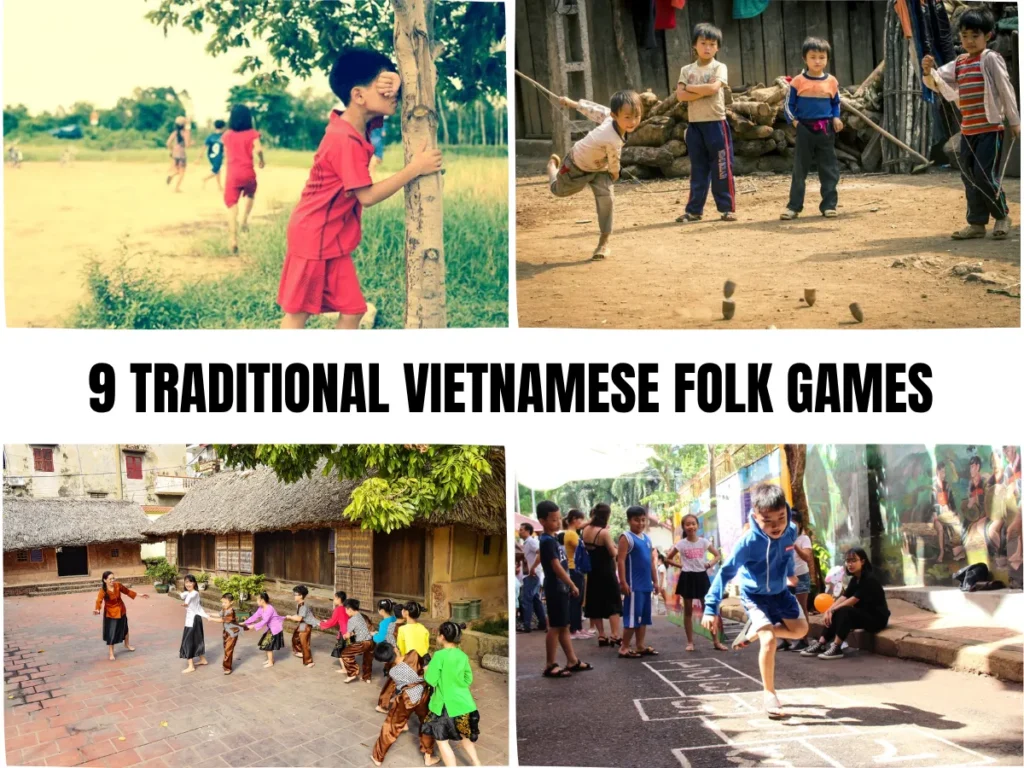
When you travel through Vietnam, you’ll quickly notice that the country’s charm doesn’t just lie in its landscapes, food, or ancient temples – it’s also hidden in the laughter of children playing simple yet delightful games that have lasted for generations.These folk games are more than just pastimes; they’re tiny windows into Vietnam’s spirit – creative, communal, and endlessly joyful. Here are nine traditional Vietnamese folk games that will make you smile, maybe even want to join in! Table of Contents 1. Tug of War (Kéo co) Imagine a dusty village square, the air filled with cheering, as two teams grip a long rope and pull with all their might. Tug of war is a classic game played across Vietnam during festivals or school events.It’s a test of strength, teamwork, and rhythm, but also a symbol of unity – everyone pulling together for a common goal. Whether you win or lose, you’ll always end up laughing and maybe a little bit sweaty! See more: 9 Things That Shock Foreigners in Vietnam – But Are Totally Normal for Vietnamese People Feel the strength, unity, and laughter as teams pull together in Vietnam’s thrilling Tug of War! 2. Mandarin Square Capturing (Ô ăn quan) This ancient Vietnamese board game requires more brains than brawn. Played by two people using small pebbles or seeds on a board drawn in the dirt, it’s all about strategy, quick thinking, and patience.Each move feels like a mini battle of wits, as players count and capture their opponent’s “mandarin squares.”Many Vietnamese adults still remember kneeling on the ground, completely absorbed in this simple yet brilliant game. Count, plan, and conquer – experience Vietnam’s timeless strategy game, the captivating Mandarin Square! 3. Jump Rope (Nhảy dây) No schoolyard in Vietnam is complete without a skipping rope.Children jump in rhythm – one, two, three – sometimes even adding songs or creative moves. It’s a perfect combination of fun, fitness, and friendship.The best part? You don’t need fancy equipment – just a rope, some friends, and an open space filled with laughter. Hop, laugh, and fly with friends – feel the joyful rhythm of Vietnam’s jump rope game! 4. The Dragon and Snake Game (Rồng rắn lên mây) This is one of the most joyful and musical folk games in Vietnam.Kids form a long line, holding each other’s waists to create a “dragon” or “snake,” led by one child playing the “head.” They sing traditional rhymes as they weave and chase the “doctor” at the front.It’s a lively game that celebrates teamwork, rhythm, and imagination, turning any schoolyard into a scene of pure happiness. Run, laugh, and chase the dragon’s tail – feel Vietnam’s childhood joy in The Dragon and Snake Game! 5. Hide and Seek (Trốn tìm) Simple, universal, and timeless – hide and seek is loved all around the world, but in Vietnam, it often takes on a special charm.Children hide behind banana trees, clay jars, or under stilt houses while one person counts with their eyes covered.The thrill of being found (or not!) never gets old. It’s a game that connects kids across generations and reminds us of the innocent excitement of childhood. See more: What Foreigners Should Do When Dining with Vietnamese People Hide, seek, and giggle – relive the timeless childhood thrill of Vietnam’s playful Hide and Seek! 6. Shuttlecock Kicking (Đá cầu) Walk through any Vietnamese park in the morning and you’ll see people – young and old – gracefully kicking a feathered shuttlecock in the air using their feet.This traditional sport combines balance, agility, and style. Players can keep the shuttlecock flying for minutes without letting it touch the ground, often forming small circles to challenge each other.It’s not just a game; it’s a daily ritual of energy, friendship, and community life. Kick, spin, and soar – feel the vibrant energy of Vietnam’s favorite shuttlecock kicking game! 7. Hopscotch (Nhảy lò cò) Draw some boxes on the ground with chalk, grab a small stone, and start hopping – that’s how a Vietnamese hopscotch game begins.Players balance on one leg as they move through the squares, picking up their stone without stepping on a line.It looks easy, but it takes precision, focus, and balance – and the laughter when someone wobbles and falls is half the fun!This simple game has taught generations of children patience and coordination. Hop on one foot, balance with joy – relive Vietnam’s playful spirit through the classic Hopscotch game! 8. Can Knockdown Game (Tạt lon) If you grew up in Vietnam, you probably remember the sound of clanging cans and excited shouts.Tạt lon – literally “can hitting” – is a favorite among kids in rural areas. Players use a sandal or small stone to knock over a stack of empty cans.Once the cans tumble, one team rushes to rebuild them while the other tries to stop them.It’s chaotic, funny, and full of friendly competition, turning any dusty alleyway into a lively playground. Aim, throw, and dash – experience Vietnam’s thrilling childhood game of speed, skill, and laughter! 9. Spinning Top Game (Đánh cù / Đánh quay) There’s something magical about watching a wooden top spin endlessly on the ground.In the traditional đánh cù game, players wind a string around the top and throw it skillfully to make it whirl. The one whose top spins the longest – or knocks out the opponent’s – wins.The buzzing sound and circular motion seem simple, yet they capture the craftsmanship, precision, and playful spirit that define Vietnamese folk culture. Spin, strike, and cheer – feel the excitement of Vietnam’s traditional spinning top game, Spinning Top Game! Why These Games Matter In today’s digital age, where children spend more time with screens than with each other, these folk games remind us of a simpler time – when laughter echoed through courtyards, and friendships were built through play.Each game carries a piece of Vietnamese culture: creativity, community, and joy in simplicity. They don’t need technology, money, or fancy equipment – just people, imagination, and
9 Things That Shock Foreigners in Vietnam – But Are Totally Normal for Vietnamese People
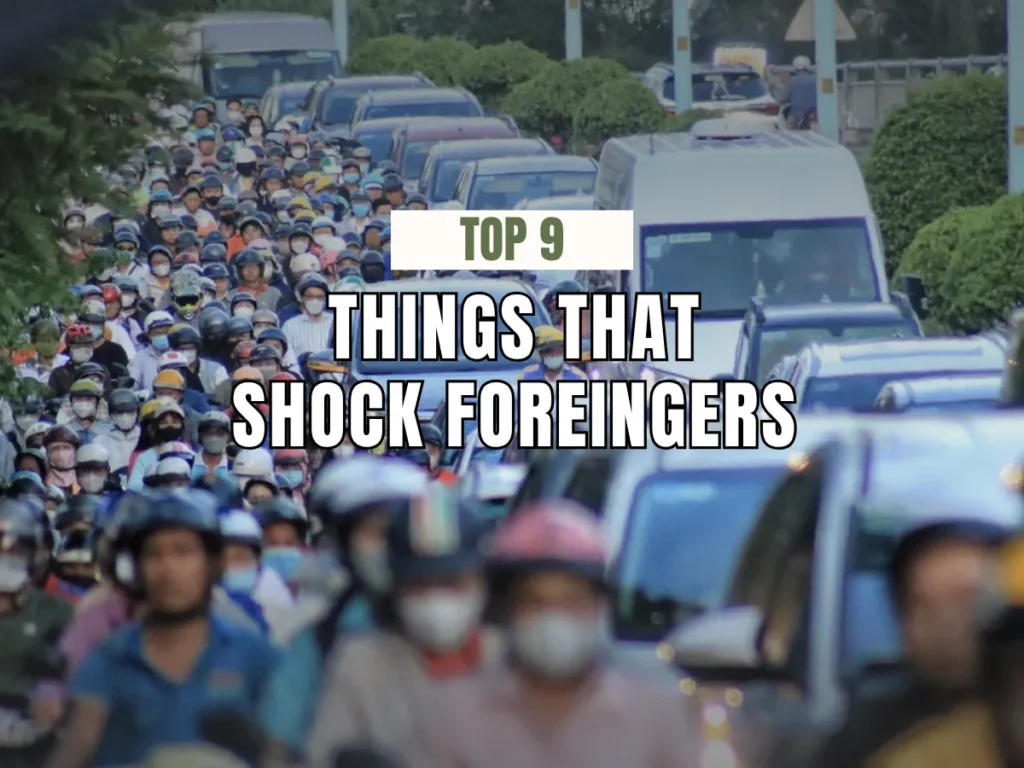
Come to Vietnam and prepare for the ultimate culture shock: chaotic traffic that somehow flows, strangers asking your age, coffee that could wake the dead, and street food so good you’ll forget every table manner you ever learned! Table of Contents 1. Street food dining is a luxury experience Tiny plastic stools, food served on the sidewalk, and steam rising from a pot of noodles – it may look simple, but it’s the heart of Vietnamese cuisine. Foreigners are shocked by how delicious and cheap everything is! See more: 9 must-do things in Saigon 2. The “chaotic” traffic that somehow works Motorbikes fill every inch of the road, horns never stop honking, and people cross right in the middle of moving traffic – total chaos to a foreigner. But to locals, it’s an unspoken system that works perfectly. Everyone just flows and somehow, no one crashes. 3. Vietnamese coffee is “no joke” Forget your usual latte – Vietnamese coffee is thick, sweet, and extremely strong. One sip of cà phê sữa đá can keep you awake all day. For locals, it’s the morning ritual. For foreigners, it’s a caffeine bomb. 4. Sharing food from the same dish In Vietnam, meals are about togetherness. Everyone uses their own chopsticks to pick food from shared plates. It’s a gesture of warmth and trust – though many foreigners find it a bit… unhygienic. 5. Personal questions are friendly, not rude “How old are you?”, “Are you married yet?”, “How much do you earn?” – these might sound intrusive elsewhere, but in Vietnam, they’re simple ice-breakers. Asking means you care and want to connect. 6. Strangers love to hold and play with babies In many countries, touching someone’s child is off-limits. In Vietnam, it’s a sweet and genuine way to show affection. Locals adore babies – and everyone’s a potential babysitter. 7. Napping anywhere, anytime Office workers, shopkeepers, drivers – everyone takes a quick nap after lunch. Under the table, on a motorbike, or even on the sidewalk. It’s a true Vietnamese superpower: the ability to sleep anywhere. 8. Bathing and doing laundry in open spaces In many towns or rural areas, it’s normal to see people showering or washing clothes outside. It’s just daily life – nothing to be embarrassed about. But for foreigners, it’s definitely a culture shock. 9. Deep respect for ancestors and spirituality Most Vietnamese homes have an altar for their ancestors. People burn incense on the first and fifteenth day of the lunar month, and make offerings during holidays. To outsiders, it may seem mysterious – but for Vietnamese people, it’s a sacred way to stay connected to family and tradition. And that’s what makes traveling here so fascinating – the everyday details that reveal the heart and soul of Vietnamese culture. ♥ Saigonbiketours – Food Tour In Saigon ♥
What Foreigners Should Do When Dining with Vietnamese People
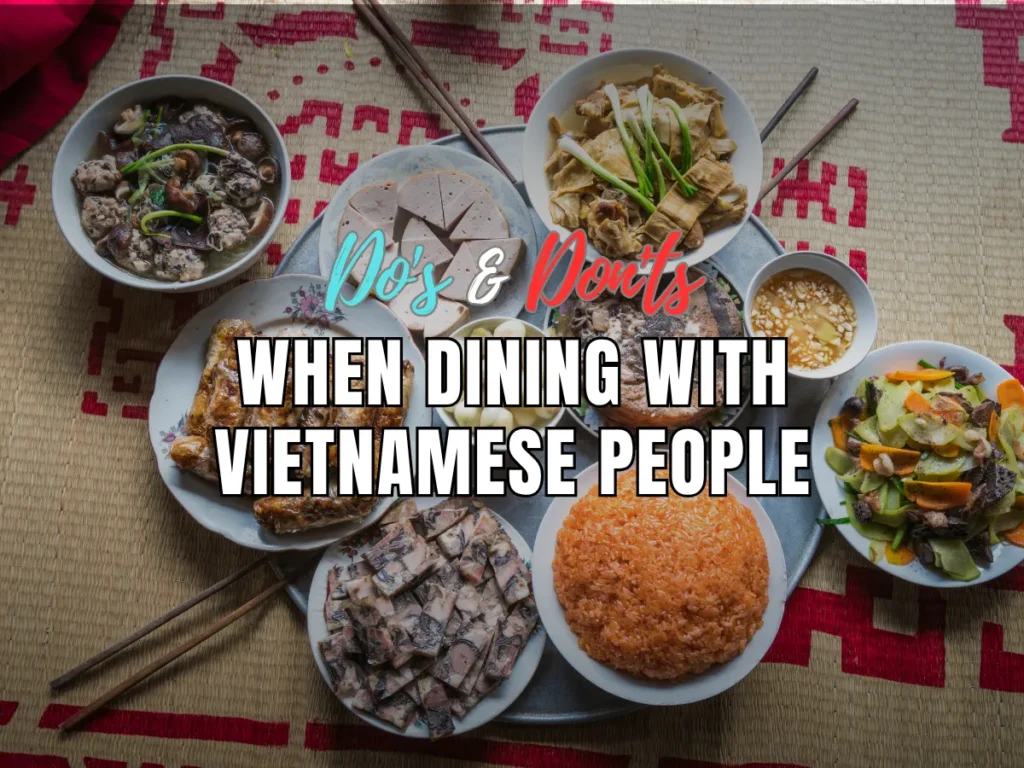
Sharing a meal in Vietnam is more than just eating together – it’s an important social and cultural experience. The way you behave at the table shows your respect, appreciation, and willingness to connect. Here are some essential tips for foreigners dining with Vietnamese people. Table of Contents 1. Wait to Be Invited Before Eating In Vietnam, it’s polite to wait until the host or the eldest person at the table says, “Mời cả nhà ăn cơm” (“Please enjoy the meal”) before you start eating.You can reply with a friendly “Cảm ơn, mời cả nhà!” (“Thank you, please enjoy too!”). It’s a simple gesture that shows respect and cultural awareness. See more: 9 must-do things in Saigon 2. Use Chopsticks Properly Chopsticks are an essential part of Vietnamese dining culture.Hold them near the top, not the middle or bottom, and never stick them upright into a bowl of rice – this resembles incense sticks at funerals and is considered bad luck.When sharing dishes, take food from the top of the plate, and don’t dig around to find the best pieces. 3. Share Dishes Gracefully Vietnamese meals are usually served family-style, with all dishes placed in the center of the table for everyone to share.If you’d like to offer food to someone else, it’s a kind gesture – but remember to use a clean spoon or the other end of your chopsticks to serve them, not the end you’ve eaten from. 4. Compliment the Food Vietnamese hosts truly appreciate compliments about their cooking.Simple phrases like “It’s delicious!” or “This dish is amazing!” go a long way.It shows gratitude and makes your host feel proud and happy. 5. Drink and Socialize Respectfully If alcohol is served, you may be invited to drink together. Raise your glass, make eye contact, and say “Một, hai, ba, dô!” (One, two, three, cheers!).If you don’t drink alcohol, just smile and say politely, “Thank you, I don’t drink much.” Most Vietnamese people will understand and won’t pressure you. 6. Respect the Elders Respect for elders is a cornerstone of Vietnamese culture.Before eating, it’s polite to invite older people to start first.Pouring them a drink or serving them food shows good manners and earns instant respect. 7. Things to Avoid In addition to the things you should do when dining with Vietnamese people, below are some things you should avoid doing when dining with Vietnamese people: Don’t point your chopsticks directly at others. Don’t stir through shared dishes looking for your favorite piece. Don’t leave too much food uneaten – finishing your meal shows respect for the cook. Don’t sit down or start eating before you’re invited, especially at formal meals. A Vietnamese meal is not just about food – it’s about connection.People talk, laugh, and share stories. Eating together is a way to build relationships and express warmth.If you approach the meal with an open heart, curiosity, and respect, you’ll not only enjoy great food but also gain a deeper understanding of Vietnamese culture. ♥ Saigonbiketours – Food Tour In Saigon ♥
9 Must-Do Things in Saigon
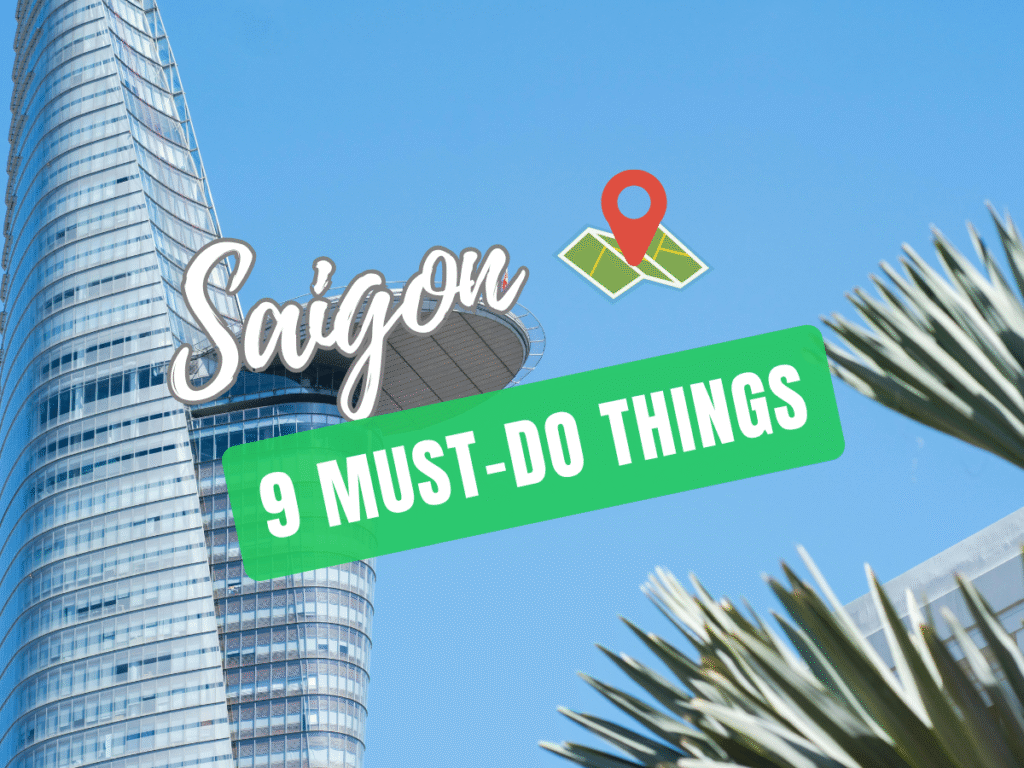
If you truly want to feel the pulse of Vietnam, Saigon – or Ho Chi Minh City – is where it all begins. This city never sleeps, never slows down, and never fails to surprise you. Here are 9 things every traveler must do in Saigon to experience the city like a local. Table of Contents 1. Sip Iced Coffee on the Sidewalk Forget fancy cafés – the best coffee in Saigon is brewed on the streets. Grab a plastic stool, order a cà phê sữa đá (iced coffee with condensed milk), and watch the chaotic beauty of motorbikes whizzing by. It’s not just coffee, it’s a way of life. See more: What Foreigners Should Do When Dining with Vietnamese People 2. Explore Bến Thành Market Step into this buzzing market to taste local snacks, hunt for souvenirs, and practice your bargaining skills. The air is filled with the scent of spices, flowers, and freshly cooked food – a sensory overload that perfectly captures the spirit of Saigon. 3. Stroll Along Nguyễn Huệ Walking Street At night, this pedestrian boulevard transforms into a lively stage. Locals sing, dance, skate, and laugh under the city lights. Grab a snack, join the crowd, and soak in the electric energy of modern Saigon. 4. Visit Notre-Dame Cathedral and the Central Post Office Standing proudly side by side, these two French colonial landmarks tell the story of Saigon’s past. The red bricks of the cathedral and the elegant arches of the post office make for picture-perfect memories – and a peaceful break amid the urban rush. 5. Dive Into Saigon’s Street Food Scene From bánh tráng nướng (Vietnamese pizza) to ốc xào me (snails with tamarind sauce), the city’s street food is a flavor-packed adventure. Night markets and tiny alleys hide some of the best bites you’ll ever taste. Don’t be afraid to try everything! 6. Watch the Sunset on the Saigon River Hop on a river cruise or find a quiet riverside bar. As the sun dips below the skyline and skyscrapers light up one by one, you’ll understand why locals love their city so deeply. 7. Visit the Independence Palace A time capsule of 1960s design and a major site in Vietnam’s modern history. Walk through its elegant halls and imagine what Saigon looked like decades ago. 8. Discover Chinatown (Chợ Lớn) Wander through vibrant temples, herbal medicine shops, and markets bursting with color. This historic district blends Chinese and Vietnamese culture in fascinating ways, especially during festivals like Lunar New Year. 9. Ride a Motorbike Like a Local No visit to Saigon is complete without a motorbike ride. Feel the breeze, weave through narrow alleys, and see the city’s hidden gems up close. It’s thrilling, chaotic, and absolutely unforgettable. Saigon isn’t just a destination – it’s an experience that stays with you. Between the street food, coffee culture, and unfiltered energy, every corner of this city tells a story waiting for you to discover. ♥ Saigonbiketours – Food Tour In Saigon ♥
Saigon Notre-Dame Cathedral: A Timeless Icon in the Heart of Ho Chi Minh City
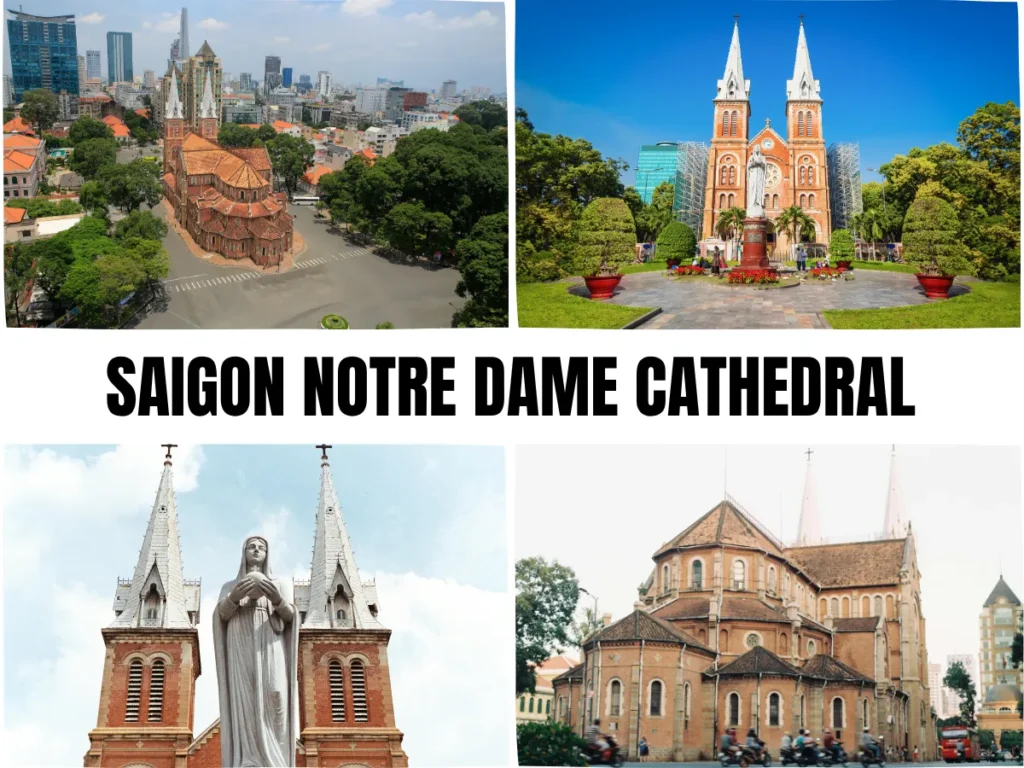
Saigon Notre-Dame Cathedral: A Timeless Icon in the Heart of Ho Chi Minh City If there is one landmark that captures the spirit, resilience, and history of Ho Chi Minh City, it is undoubtedly the Notre-Dame Cathedral Basilica of Saigon. Officially named the Cathedral Basilica of Our Lady of the Immaculate Conception, this red-brick, twin-spire church rises gracefully in the middle of District 1, amidst the chaos of scooters, the chatter of vendors, and the hum of a modern Asian metropolis. For both locals and travelers, it is more than a religious building; it is a symbol of continuity, faith, and cultural blending. In this long-form travel piece, we will explore the cathedral’s fascinating history, its architectural highlights, its role in Saigonese life, and practical tips for visiting. Along the way, we will discover why this building remains one of the most cherished icons of Vietnam. Table Of Content A Journey Through Time. Architectural Splendor. Cultural and Religious Significance. Visiting the Cathedral. Personal Reflections. Why You Shouldn’t Miss It? Conclusion. Panoramic view of Notre Dame Cathedral | Pic source: Internet A Journey Through Time: The History of Saigon Notre-Dame Cathedral Humble Beginnings: The First Churches The story of Notre-Dame Cathedral began long before its familiar red spires were built. In 1863, just after France established control over Cochinchina, French missionaries erected a small wooden church on what is now Ngô Đức Kế Street. It was functional but hardly grand, and soon it was plagued by termites and structural weakness. With the French colonial population growing, the authorities sought a more permanent symbol of faith and power. Admiral Bonard, then Governor of Cochinchina, ordered a larger church to be built. After much debate over location, they chose the current site at Công xã Paris Square. Construction of a Monumental Cathedral In 1876, a design competition was held, and French architect Jules Bourard won with his Romanesque-inspired blueprint. On 7 October 1877, Bishop Isidore Colombert laid the first stone in a solemn ceremony. Construction was swift for the era: by 11 April 1880, the cathedral was inaugurated in the presence of colonial officials, clergy, and dignitaries. The final cost was estimated at 2.5 million francs, a significant investment that underscored the importance of this building to colonial Saigon. Elevation and Changing Names The cathedral was initially called the “State Cathedral,” reflecting its colonial funding. In 1959, a statue of the Virgin Mary was installed in front, and the name Notre-Dame Cathedral became popular. In 1960, it became the seat of the Archdiocese of Saigon, and in 1962 Pope John XXIII granted it basilica status, making its full title the Cathedral Basilica of Our Lady of the Immaculate Conception. Survival Through Turbulent Times The cathedral has stood through colonialism, wars, independence, and modernization. Even during the Vietnam War, when Saigon was under bombardment and upheaval, the cathedral remained largely intact, a beacon of stability amidst chaos. Today, it stands as a testament to resilience and endurance. Modern Restoration Efforts In 2017, a major restoration project began, intended to preserve the cathedral’s structure, roof, and stained glass. Originally expected to finish by 2020, delays pushed the timeline further, with some reports suggesting completion as late as 2027. While scaffolding covers parts of the church, its beauty remains undeniable. Back of the Notre Dame Cathedral Saigon | Pic source: Internet See more: The Mekong Delta – A Journey Through Vietnam’s Southern Wonderland Architectural Splendor: A French Masterpiece in Vietnam Imported Materials from France Perhaps the most astonishing fact about Notre-Dame Cathedral is that nearly every material used in its construction was imported from France. From the steel beams to the nails, from the stained glass to the red bricks, everything was shipped across oceans. The bricks, sourced from Marseille, have retained their vibrant red hue for over a century without needing paint. They resist tropical weather, a testament to both material quality and French craftsmanship. Pic source: Internet Romanesque Revival Style The cathedral blends Romanesque Revival with Gothic touches. Its rounded arches, symmetrical layout, and heavy columns suggest Romanesque influence, while the soaring spires and verticality hint at Gothic inspiration. Twin Bell Towers The most distinctive feature is the pair of 57.6-meter spires, added in 1895. Each tower is crowned with a 3.5-meter cross, bringing the total height to over 60 meters. These spires dominate the skyline of District 1 and make the cathedral visible from afar. Antique Bell Set (6 bells) | Pic source: Internet Notre Dame Cathedral (Saigon Basilica) currently hangs 6 bells (4 bells on the right tower, 2 on the left). Each bell has a different tone and is named after the tone it emits (Do, Re, Mi, Sol, La, Si), no Fa. These 6 bells have a total weight of 27 tons, with the weight of each bell as follows: Mi/E (1,646 kg), Rê/D (2,194 kg), Đô/C (4,315 kg), Si/B (4,384 kg), La/A (5,931 kg), Sol/G (8,785 kg) With a mouth diameter of 2.15m, a height of 3.5m and a weight of 8,785kg, the Sol/G bell of Notre Dame Cathedral has been honored by the Guinness Book of Records as the largest bell in the world. These six bells were cast in France and brought to Saigon in 1879. The three largest bells (G, A, B) are all started by pedals (because they are too heavy), while the other three are started by hand. Today, all bells are started by electricity. If you happen to walk through the Basilica and hear the bells ringing, the bell you hear is definitely the E bell (ringed twice a day at 5am and 4:15pm). On holidays and Sundays, the church rings three bells in the C major chord: C, E, G. If you want to hear 6 bells ringing at once, you need to be at Notre Dame Cathedral at midnight on Christmas Day, December 24 (that’s the only time of the year). Stained Glass Windows The cathedral originally featured 56 stained glass windows, crafted in Chartres, France. These windows depicted biblical
Tan Long Islet (Dragon Islet) – A Corner Of Mekong Delta
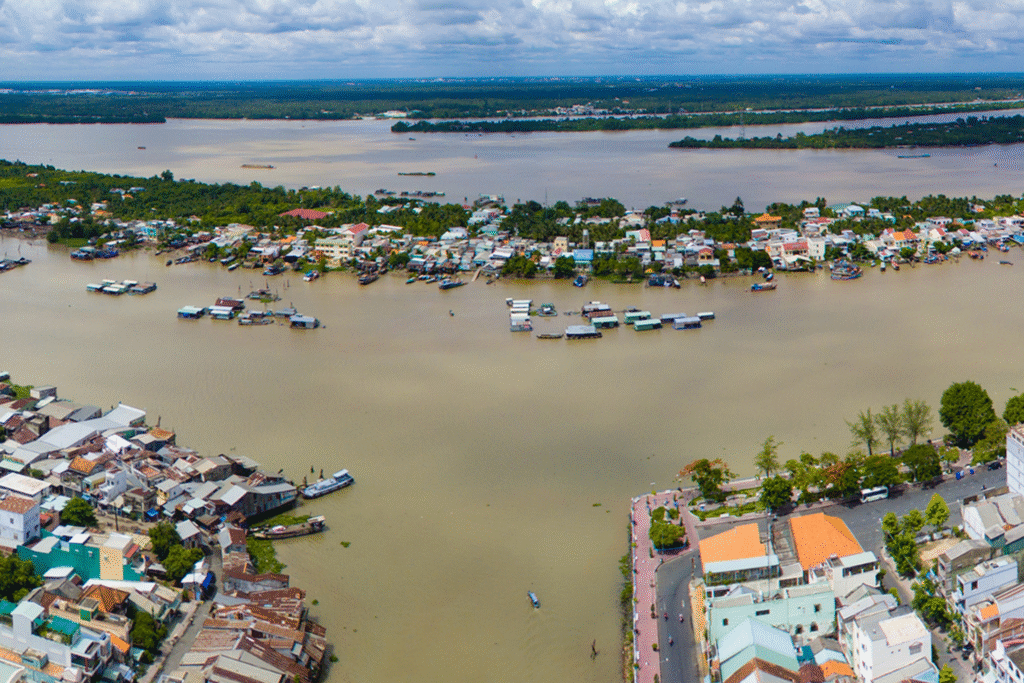
Tan Long Islet (Dragon Islet) – A Corner Of Mekong Delta Con Long – better known locally as Con Tan Long or “Con Rong” (Dragon Islet) – is a mid‑channel island in the Tien River directly opposite downtown My Tho City, Tien Giang Province. Though small compared with the surrounding plain, the islet is a compact portrait of the upper Mekong Delta: orchards pressed up against river revetments, fish cages swinging in the current, and family boatyards whose timbers smell of brine and resin. In daily usage, “Con Long” refers to the landform itself; historically, the administrative unit covering the islet was Tan Long (commune, then ward). In 2025, as part of Vietnam’s nationwide rearrangement of commune‑level units, Tan Long Ward was merged with Wards 1 and 2 to form the new My Tho Ward, but the physical island and the local name Con Tan Long remain in common use. Visitors remember the proximity first. From the My Tho riverfront, a short ferry or hired wooden boat carries you a few hundred meters across the bright braid of the Tien River; within minutes you step from city pavement into a riverscape of palms, longan trees, and low sheds where engines are stripped and planks are planed. Names and identity The islet’s names carry its meaning. “Con Long” is the geographic term. “Con Rong” – Dragon Islet – is the nickname that ties the place to river folklore. Administratively, the area was long known as Tan Long, elevated to Tan Long Ward in 2003. In tourism, Con Long is presented as one of the four neighboring islets commonly called the “Tu linh” (Four Sacred Animals): Long (Dragon-Con Long), Lan (Unicorn-Thoi Son), Quy (Tortoise-Con Quy), and Phung (Phoenix-Con Phung). Together they sit astride the Tien River where Tien Giang meets Ben Tre. Location and size Con Long lies mid‑stream right in front of My Tho. The islet’s commonly cited land area is about 273 hectares (≈ 2.73 km²), a figure repeated in multiple gazetteers. Within the “Tu linh” set, Thoi Son/Con Lan is the largest at about 1,200 ha; Con Quy is roughly 170 ha; and Con Phung a little over 50 ha. These numbers are useful for orientation and for understanding how the four islets fit together along the same reach of the river. A methodological note helps reconcile sources. When Tan Long Ward was established in December 2003, the Government’s founding decree recorded “330 hectares of natural area and 4,723 inhabitants” for the ward. The difference between ≈273 ha (the land body most people mean by “Con Long”) and 330 ha (the 2003 administrative figure) reflects boundary definitions – physical islet vs. ward delimitation that can include a belt of water surface – and the reality that river islands in the Mekong slowly shift. Both numbers belong to the record; in practice, “about 273 ha” describes the present landform, while “330 ha” is a legal snapshot tied to the 2003 upgrade. River‑made origins and early memory Delta islands accrete. In local oral history, the sandbar that became Con Rong surfaced as a small shoal around the late eighteenth century (often dated to about 1788). By 1872, the shoal had grown into an island, initially clothed in pioneer species such as river tamarisk, mangroves, and nipa palms. Later accounts mention a powerful river creature (“ong Cu”) and tell of a Dinh Tuong-era landholder crossing to claim the new ground before the French era; whatever the embellishment, the core is plain: this is a place literally made by the river’s sediment and settled by people willing to test the water. A difficult episode shadows the memory too. In 1958, during the late‑colonial/early‑Republic period, a small leprosy camp associated with Binh Duc was set up on the island and operated until 1971, after which patients were moved to Quy Hoa (Quy Nhon). The harsh nickname “Con Cui” dates from that time. In the decades that followed, poor families without land on the mainland moved out to the islet, establishing the mixed livelihoods-fishing, aquaculture, fruit growing-that define the community today. See more: Thoi Son Islet (Lan Islet) – Touch the Soul of the Mekong Administrative evolution (to 2025) After 1975, Tan Long Commune belonged to the new Tien Giang Province together with My Tho. On 9 December 2003 the Government issued Decree 154/2003/ND‑CP, upgrading Tan Long to Tan Long Ward of My Tho City with 330 hectares and 4,723 residents recorded in the decree. As part of the 2023-2025 national program to streamline commune‑level units, My Tho consolidated several wards. In 2024, Ward 7 was merged into Ward 1; official provincial reporting at the time still referenced adjacent Tan Long. In 2025, press and legal summaries reported that Ward 1, Ward 2, and Tan Long Ward were merged to form the new “My Tho Ward.” For visitors, this matters mostly for paperwork; the island itself remains the same physical place and the local name Con Tan Long endures. Landscape and environment Con Long’s landscape is the river woven into gardens. The ring levee and internal lanes have been progressively hardened; nearly all neighborhood roads are now concrete, making it easier for farm carts and visitors. Coconut palms and longan anchor most plots, interspersed with banana, jackfruit, guava, and herbs. Along the banks you will see lines of fish cages bobbing in the current; inside the creeks are clusters of low‑roofed sheds where wooden fishing boats and aluminum skiffs are maintained or rebuilt. Rivers give and rivers threaten. Like other mid‑channel islets, Con Long lives with bank erosion, seasonal flooding, and occasional salinity pulses that stress certain crops. Residents adapt by re‑vetting the banks, switching varieties, keeping floors raised, and diversifying household work. The same long‑term accretion that created the island also continues to reshape it; shoreline plots appear and disappear, and the exact contour of the island is a conversation rather than a fixed line. Economy: from river to market Aquaculture and capture fisheries. The island’s households work both sides of the water’s
Thoi Son Islet (Lan Islet) – Touch the Soul of the Mekong
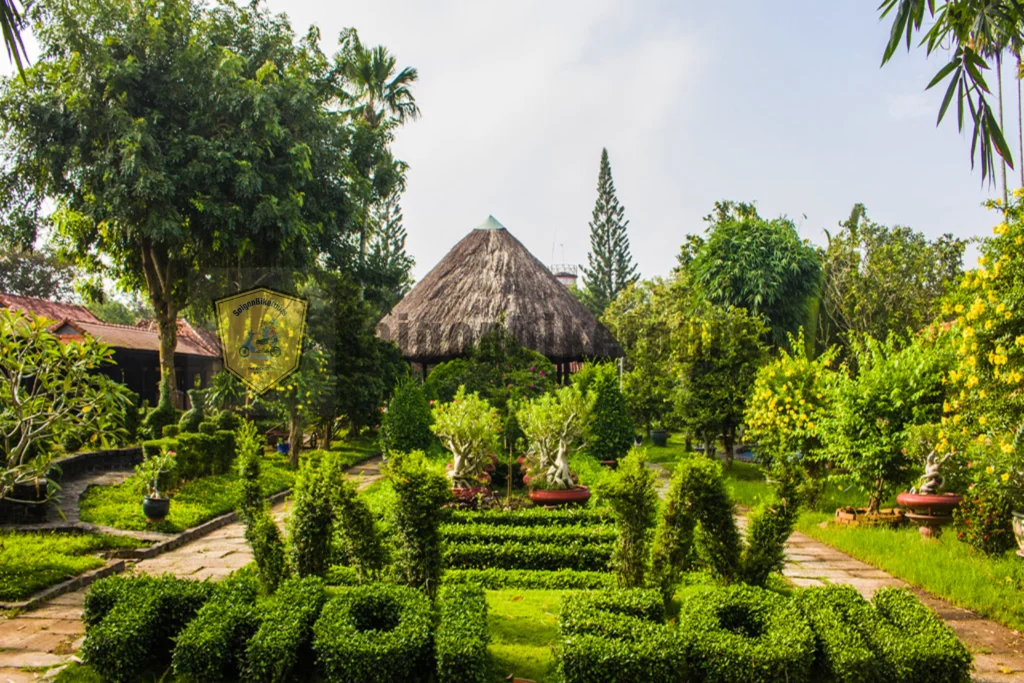
Thoi Son Islet (Lan Islet) – Touch the Soul of the Mekong Thoi Son Islet, or Con Lan, is one of the four well-known islets on the Tien River, collectively named Long, Lan, Quy, and Phung. Located about 70 kilometers from Ho Chi Minh City, in My Tho City of Tien Giang Province, the islet spans approximately 1,200 hectares and hosts a community of around 6,000 residents. Over the years, it has transformed from a quiet agricultural settlement into a leading eco-tourism hub in southern Vietnam, welcoming an estimated 400,000 visitors annually, including 300,000 international tourists. Geography and Formation Con Lan was formed through centuries of alluvial deposits from the Mekong River. The fertile soil supports dense orchards and coconut groves. Approximately 500 hectares of land on the islet are under cultivation, providing seasonal and off-season fruit thanks to improved farming techniques. This agricultural abundance also supports beekeeping, as fruit flowers feed thousands of bee colonies that produce high-quality honey. See more: Long-Lan-Quy-Phung Islets: The Four Sacred Animals of the Mekong Delta History Settlement on Con Lan began centuries ago when migrants sought fertile land and calm waters. The community developed farming, fishing, and small-scale craft industries. During colonial and wartime periods, the island remained relatively sheltered. In the 1990s, as Vietnam opened to tourism, Con Lan emerged as a key eco-tourism site. Today, it contributes to over 50% of Tien Giang’s total tourist arrivals. People and Daily Life The roughly 6,000 residents of Con Lan live mainly by fruit farming, aquaculture, craftwork, and tourism services. Multiple generations often share a household, fostering strong family bonds. Daily life revolves around tending orchards, producing coconut candy, keeping bees, and welcoming tourists. Community ties remain strong through religious festivals and cultural gatherings. Traditional Crafts Con Lan is famous for coconut candy production, with family workshops demonstrating the process to visitors. Beekeeping provides honey, served with lime tea to guests. Handicrafts made from water hyacinths and coconut leaves display local artisanship. These crafts are both economic activities and cultural markers. Cuisine and Specialties Meals on Con Lan highlight Mekong Delta flavors: fresh tropical fruits, crispy fried elephant ear fish, braised pork, and sour soup with river fish. Visitors often enjoy meals in family-run gardens, accompanied by honey tea or fresh coconut water. Such meals represent the island’s generosity and abundance. Tourism Development Tourism began booming in the 1990s. Currently, Con Lan hosts 1,500–3,000 visitors daily, with spikes of over 7,000 during national holidays. Visitors experience rowing boat rides under nipa palms, cycling tours, orchard visits, craft workshops, and ‘Đờn Ca Tài Tử’ performances. Tourism has diversified income while promoting heritage conservation. Cultural Heritage Music and festivals are central to the islet’s identity. ‘Đờn Ca Tài Tử,’ a UNESCO-recognized folk music, is performed regularly for visitors. Religious ceremonies, ancestor worship, and Buddhist festivals unify the community and preserve traditions. Development and Prospects Con Lan has seen significant infrastructure improvements: roads, bridges, and electricity. In 2023, Tien Giang Province welcomed over 876,000 visitors in 8 months, generating 552 billion VND in revenue. Sustainable tourism is emphasized, with eco-friendly tours and waste management initiatives. Authorities aim to balance development with cultural and environmental preservation. Conclusion Thoi Son Islet is more than a tourist site; it is a living example of the harmony between nature, culture, and community in the Mekong Delta. With fertile land, traditional crafts, warm people, and thriving tourism, Con Lan continues to flourish as both a cultural treasure and a sustainable development model. For travelers, it offers not only sightseeing but also immersion into authentic delta life. ♥ Saigonbiketours – Food Tour In Saigon ♥
Long-Lan-Quy-Phung Islets: The Four Sacred Animals of the Mekong Delta
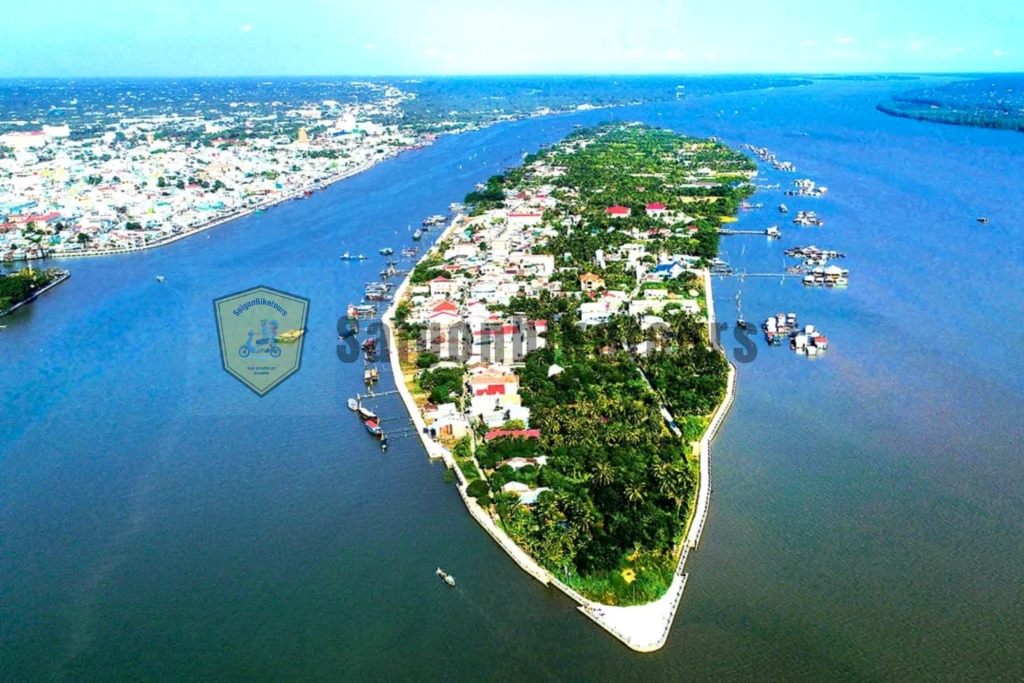
Long, Lân, Quy, Phụng Islets: The Four Sacred Animals of the Mekong Delta Overview The Long, Lân, Quy, and Phụng Islets, named after the four sacred animals in Vietnamese culture – dragon, unicorn, turtle, and phoenix – are situated on the Tien River between Ben Tre and Tien Giang provinces. These islets are celebrated for their fertile land, lush orchards, and cultural richness. They are among the most popular eco-tourism destinations in the Mekong Delta. History and Origins Each islet has its own legend and history. Long Islet symbolizes strength and abundance. Lân Islet is associated with peace and purity. Quy Islet is said to represent longevity and steadfastness. Phụng Islet, linked with prosperity and renewal, has a history intertwined with religious communities and trading activities. See more: The Mekong Delta – Vietnam’s Fertile Heartland Life on the Islets Life revolves around agriculture, aquaculture, and tourism. Families grow tropical fruits such as rambutan, longan, pomelo, and coconut. Fishing on the Tien River provides additional income. Residents live in harmony with the river, following seasonal cycles for planting and harvesting. Specialties Visitors can taste honey tea, coconut candy, tropical fruits, and Mekong-style dishes like fried elephant ear fish. Handicrafts, including products made from coconut shells and bamboo, are also popular. Tourism Boat tours allow visitors to hop between islets, enjoy traditional music performances, explore craft villages, and relax in riverside gardens. Phụng Islet is the tourism hub, offering more developed services, while the others maintain a more rustic charm. People The locals are known for their warmth, generosity, and deep connection to their land and water. Their way of life reflects the values of the Mekong Delta: resilience, community spirit, and a strong cultural identity. Conclusion Long, Lân, Quy, and Phụng Islets are more than just scenic spots; they are living cultural landscapes where nature and people thrive together. ♥ Saigonbiketours – Food Tour In Saigon ♥