
Ho Chi Minh City Hall – The Elegant Heart of Saigon
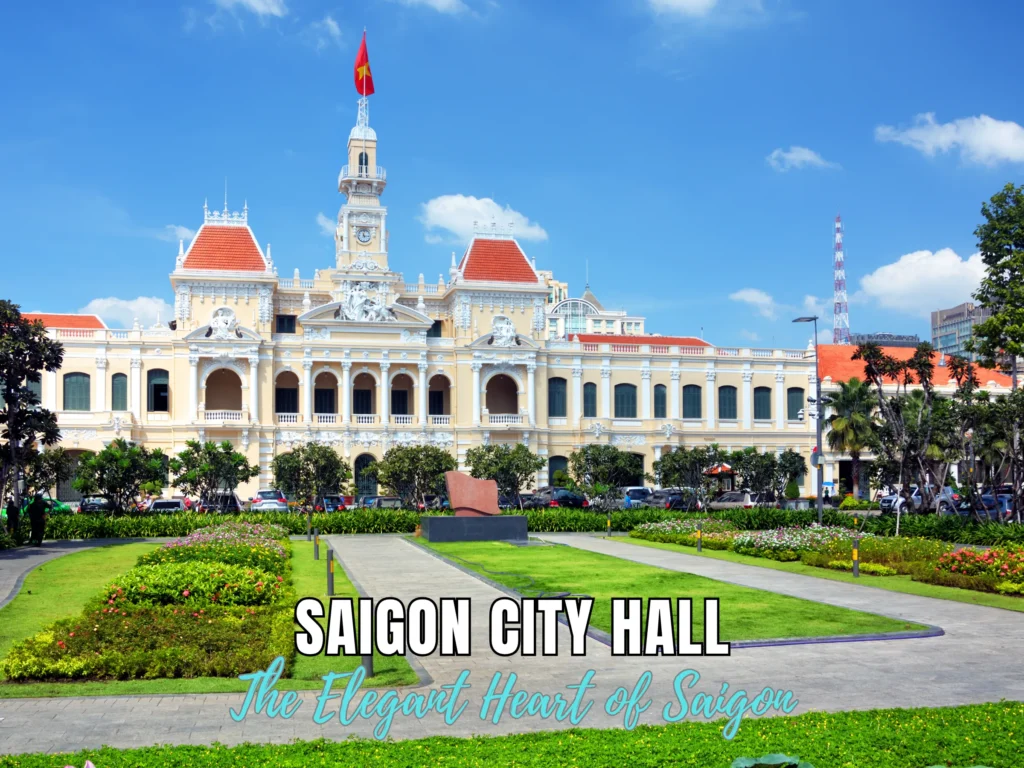
Standing proudly at the northern end of Nguyen Hue Walking Street in District 1, Ho Chi Minh City Hall is one of the most beautiful and recognizable colonial buildings in Vietnam. With its elegant French architecture, symmetrical façade, and glowing golden lights at night, the building has become an iconic symbol of Saigon’s charm and sophistication. Although many tourists call it “City Hall” the building actually serves as the headquarters of the Ho Chi Minh City People’s Committee – the administrative center of the city government. Even though visitors cannot freely enter the interior, the exterior alone is enough to leave a lasting impression. Table of Contents A Journey Through History The story of Ho Chi Minh City Hall began during the French colonial era. Construction started in 1898 and was completed in 1909 under the design of French architect Paul Gardès. Originally, the building was known as Hôtel de Ville de Saïgon – Saigon City Hall – serving as the administrative headquarters for the French colonial government in Cochinchina. A prominent architectural landmark in the administrative center of Saigon See more: Saigon Notre Cathedral Basilica – A timeless icon in the heart of Ho Chi Minh city Inspired by the grand city halls of northern France, particularly those in Paris, the structure reflected the ambition of the French to transform Saigon into the “Pearl of the Far East.” Wide boulevards, European-style squares, and elegant civic buildings were all part of that urban vision. This is a structure that can be considered the “heart of the Pearl of the Far East” After the reunification of Vietnam in 1975, the building became the headquarters of the Ho Chi Minh City People’s Committee and continues to serve that role today. Through wars, political changes, and rapid modernization, the building has remained a silent witness to more than a century of Saigon’s transformation. As the city lights up, the “City Hall” also shines brightly, welcoming a bustling crowd See more: Saigon Central Post Office – A timeless landmark in the heart of Ho Chi Minh city Architectural Elegance One of the most captivating aspects of Ho Chi Minh City Hall is its remarkable French colonial architecture. The building showcases a harmonious blend of Renaissance, Baroque, and Beaux-Arts influences, creating an atmosphere that feels more European than Southeast Asian. The façade is richly decorated with arched windows, intricate relief sculptures, columns, and ornamental details inspired by French civic architecture. At the center stands a clock tower, symbolizing order, governance, and the passing of time throughout Saigon’s history. The building showcases a harmonious blend of Renaissance, Baroque, and Beaux-Arts influences, creating an atmosphere that feels more European than Southeast Asian At night, the building transforms into a glowing masterpiece. Warm yellow lighting highlights every architectural detail, creating one of the most photogenic scenes in Ho Chi Minh City. Reflections from the lights shimmer beautifully across Nguyen Hue Walking Street, attracting both locals and visitors. Cultural Significance & Local Memories For many Saigonese, City Hall is not simply an administrative building – it is part of the emotional landscape of the city. Generations have gathered in the square in front of the building during holidays, football celebrations, New Year festivals, and important national events. The blooming lotus flowers seem to “slow down” the hustle and bustle of life in a busy city In front of the building stands the statue of President Ho Chi Minh, a familiar meeting point and symbolic landmark for both locals and tourists. Families often come here in the evening to walk, take photographs, and enjoy the lively atmosphere of downtown Saigon. Legend has it that buildings in Saigon at that time were not allowed to be taller than the top of this structure What makes this area special is the contrast between old and new. Behind the colonial façade rise modern skyscrapers, luxury hotels, cafés, and shopping centers – a visual reminder that Saigon is a city constantly balancing history and progress. Visitor Information Opening Hours: The exterior area surrounding City Hall is accessible at all times, especially along Nguyen Hue Walking Street. However, the interior of the building is generally closed to the public except during special cultural or governmental events. Entry Fee: There is no entrance fee to admire the building and surrounding public square. Best time to visit: Evening is considered the best time to visit, especially between sunset and 9 PM, when the building is illuminated and the walking street becomes vibrant with music, performances, and local life. The statue of President Ho Chi Minh waves in greeting, dressed in simple attire and with a benevolent face Things to Do & Experiences While many visitors come simply to admire the architecture and take photos, there are several engaging experiences to enjoy: Photography & architecture appreciation: Capture the magnificent colonial façade, especially at night when the lighting creates a cinematic atmosphere. Walk along Nguyen Hue Street: Enjoy street performances, local snacks, cafés, and the vibrant social energy of modern Saigon. Observe the contrast of old and new: From one viewpoint, you can see colonial architecture standing beside glass skyscrapers and luxury towers. Experience local nightlife: Families, young couples, street musicians, and tourists all gather here, creating a lively yet elegant urban atmosphere. Ho Chi Minh City Hall is more than just a government building – it is a symbol of Saigon’s identity, where history, architecture, and modern urban life meet in perfect harmony. Whether viewed during the golden light of sunset or beneath the sparkling city lights at night, the building continues to embody the timeless elegance of one of Asia’s most dynamic cities. ♥ Saigonbiketours – Food Tour In Saigon ♥