
Notre-Dame Cathedral in Ho Chi Minh City shines bright for Christmas
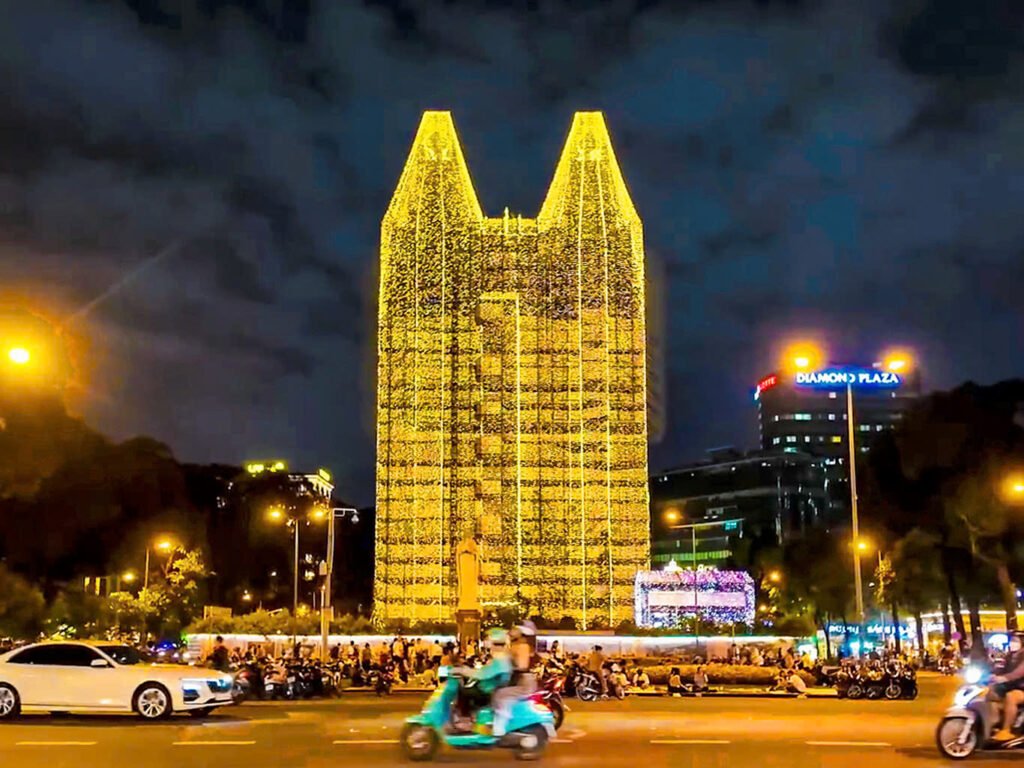
Saigon’s Notre Dame Cathedral lit up for Christmas For about a week now, the campus in front of Notre Dame Cathedral in District 1 has been decorated with 500-meter-long golden strings of lights covering the scaffolding of its two bell towers, which are currently under restoration. This is the first time the church has been brightly decorated for Christmas since renovations began in 2017. Originally built by French colonists between 1863 and 1880 and named the Church of Saigon, it has been known as Notre-Dame Cathedral since 1959. The major restoration project for the cathedral began on July 1, 2017, and is being carried out by the Belgian contractor Group Monument. The two 58-meter-high bell towers and zinc spires have suffered the most damage during the cathedral’s long history. The restoration of Notre-Dame Cathedral has been underway for seven years.
A unique “Banh Xeo” in Vietnam
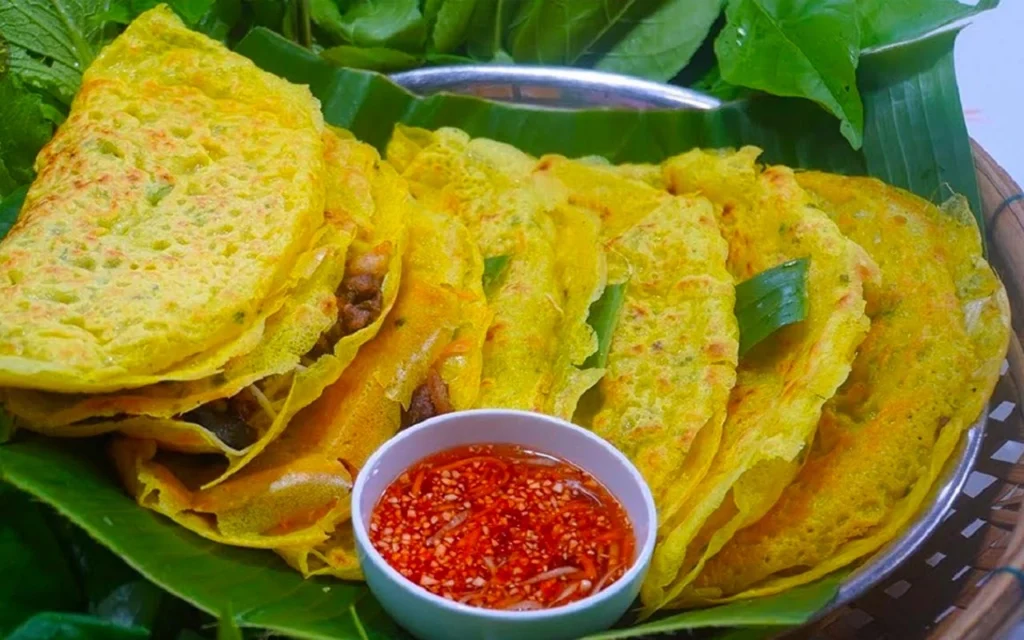
“Banh xeo” is Vietnamese style crepe with whole shrimp, thinly sliced pork and bean sprouts. What is Banh Xeo? Like the salad roll, the “banh xeo” is a do-it-yourself dish that involves the messy but delicious process of wrapping the crepe in lettuce with cilantro and basil. Though the filling might fall out on your table, you will be completely lost in the crispy, warm combination of lettuce and crepe, and the attentive staff will happily clean up after you. Different Styles of “Banh Xeo” “Banh xeo” is prepared differently throughout the country. Tourists traveling about in Vietnam are sure to encounter a different recipe, and sometimes even a different name, for “banh xeo” depending on which region and province they are visiting. These are a pale yellow spicey Vietnamese style crepe. One piece on the bottom, and another on top encase what is usually a salad consisting of been sprouts, prawns, boiled pork, taro and carrot. Drenched in fish sauce, and you have a deliciously messy slice of fine pleasure. The dish is round, and you cut it into slices, like a pizza, so it resembles a triangle on the main platter, but usually by the time it arrives on your plate, it could resemble anything really. n the Southern region, the “banh xeo” is the size of a large dish and yellow in color due to the employment of turmeric powder. The Southern people always add coconut milk to the rice flour to make the crepe extra delicious. The crepe is stuffed with bean sprouts, mung beans, shrimp and pork. A sweet and sour fish sauce and fresh vegetables are used as accompaniments. In the Central region, “banh xeo” cooks make a smaller crepe that is white in color. In Hue, the crepes are called “banh khoai”, which is similar to “banh xeo”, but smaller in size and stuffed with fennel, sour star fruit, green banana and a thick soy sauce. In addition to selling the crepes to patrons, vendors also prepare them en masse for birthday parties and festivals. Northern preparations of “banh xeo” are similar to the ones down south, but include special fillings like slices of Indian taro and manioc. In some regions, “banh xeo” is prepared thick, but Southern crepes are characteristically thin, crispy and served fresh out of the frying pan. The secret to extra-thin crepes is a deep frying pan and a quick wrist to coat the frying pan with the batter before it starts to set.
Chè – Vietnamese Sweet Soup
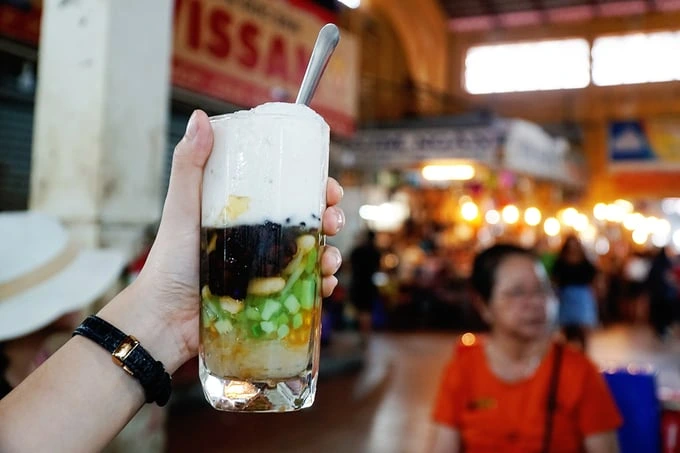
“Chè” is a Vietnamese term that refers to any traditional Vietnamese thick, sweet dessert soup. Sweet Soup is a kind of sugary flavored beverage which is protein-rich. As such, it may, with the addition of qualifying adjectives, refer to a wide variety of distinct soups or puddings, which may be served either hot or cold. Some varieties, such as “chè xôi nước”, may also include dumplings. What is Che – Vietnamese Sweet Soup? Chè are often prepared with one of a number of varieties of beans and/or glutinous rice, cooked in water and sweetened with sugar. Other ingredients may include tapioca starch, salt, and pandan leaf extract. Each variety of chè is designated by a descriptive word or phrase that follows the word chè, such as chè đậu đỏ (red bean sweetened porridge), chè đậu đen (black bean sweetened porridge) and so on. In southern Vietnam, chè is often garnished with coconut milk. Chè may be made at home, but are also commonly available freshly made in plastic containers, in Vietnamese grocery stores.
Nuoc Mia, or Sugar-cane Juice – A Refreshing Drink in Vietnam
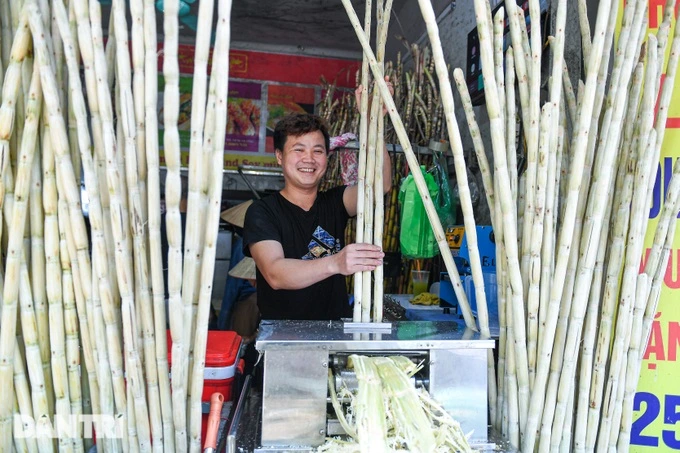
In hot weather like Vietnam, people know sugar cane juice as a natural beverage that is delicious and cheap. Therefore, sugar cane juice is so popular in Vietnam and is available at most small street stalls, often sold alongside other popular beverages. The juice is served from distinctive metal carts with crank-powered sugar cane stalk crushers that release the juice. So what is it and why is it so popular? What is Sugar-cane Juice in Vietnam Like? There used to be a vendor that would make freshly squeezed sugar-cane juice. Previously, sugar-cane juice was sold in small plastic bags filled with ice and tied at the open end with an elastic band around a straw. Buyers could then suck the drink out through the straw. There has been a movement to selling sugar cane-juice in white foam cups and it’s got a slight lime taste to it as commonly seen in Vietnam today. How is Sugarcane Juice made? Vietnam ranks as one of leading producers of sugarcane in the world. That’s why sugar cane juice is such a popular drink in Vietnam, especially on harsh days of summer. Local people often call it “nước mía”. After being cut down and peeled, the sugar canes are cut into 50-centimeter segments. Sellers often use a manual or an electric machine to extract the juice from these sugar canes. Each segment is placed between the two opposite rotating rollers of the machine. For the manual machine, the sellers must use their hand to wheel on. The process is easier with an electric machine because they just need to push the start button and everything is done. The juice is extracted and flows into a big cup while the grinding residues are thrown away. The ingredients to make a cup of sugar cane juice are very simple, with just peeled sugarcane. In some stalls, the sellers will add some kumquat to create citrus fragrance and boost the sweet flavor of the juice, bringing it to a whole new level. Why is Sugar-cane Juice Popular? Cheap Price This drink doesn’t cost you much to get a cup of it. Looking for a cheap and nutritious beverage, you should not ignore sugarcane juice in Vietnam. The price is just VND 10.000 – VND 15.000 depends one the size that you want. In some stalls, you can add another fruit, the price will be around VND 15.000 – 25.000. Good for Your Health Though its price is very cheap, Sugarcane juice is extremely good for your health. Containing many nutritious value, it can boost your energy up after a long day of wandering around the streets. If you feel tired and thirsty, let’s try sugarcane juice, you will surely be awake. In a cup of the juice, there is a great deal of protein, antioxidants and minerals. It means it is very beneficial for your skin and helps you prevent pimples and acne. Freshly Made Because it is an instant beverage, it is freshly made. Most sellers don’t make it before customers buy it. They usually make the juice when they receive orders. It would need around 2 to 3 sugarcane stalks to make a half liter of sugarcane juice.
Unique Coffee Culture in Ho Chi Minh

There is no doubt that Vietnam – the 2nd largest coffee producer in the world is well known for consuming coffee at a large amount. So here comes Saigon, where coffee has been an exclusive culture compared to any place in Vietnam. Coffee Culture in Ho Chi Minh City Strangers may recognize Ho Chi Minh City as a city of both ancient and modern values with historical, and cultural tourist attractions. But maybe to other wanderlusts, small things called coffee, street food, etc. are absolutely the most unforgettable experience ever! No one knows exactly the number of coffee shops in the City as apart from many eye-catching coffee shops on main large streets, there are countless ones in cul-de-sacs and even in very small, meandering alleys. The diversity and popularity of coffee shops here have resulted in a spiritual culture with distinctive features in the daily life of Saigon. When it comes to comparing the coffee culture in Hanoi and Saigon, if Hanoians would like to check in luxurious or branded coffee shops, Saigoners just need a cup of coffee, sitting on a plastic stool around where they feel comfortable and where they can freely chat with friends. There is just no chair, and no cake counter, and the coffee here is served super quickly. All you have to do is just raise your voice and your favorite drink will come in less than 5 minutes! Normally, people call for black coffee or milk coffee, and a cup of coffee costs around VND20.000 – a cheap price for a “coffee shop” in the city center in the most expensive city in Vietnam. So just try coffee your way here in Saigon!
LANTERN STREET IN HO CHI MINH CITY

What is The Lantern Street? Lantern Street in Ho Chi Minh City, also known as Luong Nhu Hoc Lantern Street, is a vibrant and enchanting destination that comes alive during the Mid-Autumn Festival and other festive occasions. Located in District 5’s Chinatown, the street has numerous shops and stalls offering a dazzling array of lanterns and festive accessories. It provides you with a unique opportunity to immerse yourself in the rich cultural heritage of Vietnam, witness the vibrant colors of lantern displays, and capture memorable moments in this magical setting. Things to do & see at Lantern Street Admire the Lanterns: Stroll along Lantern Street and marvel at the wide array of lanterns on display. From delicate silk lanterns to intricately crafted bamboo lanterns, something suits every taste. Shopping: Lantern Street is a shopping paradise for lantern enthusiasts. Visitors can explore the shops and stalls to find their perfect lantern souvenir to take home. Nighttime Illumination: As the sun sets, Lantern Street comes alive with a magical glow as the lanterns are lit up, creating a breathtaking spectacle. The vibrant colors and intricate designs create a truly enchanting atmosphere. Traditional Performances: Experience the rich cultural heritage of Vietnam through traditional performances such as lion dances and folk music, which are frequently held along the street. Enjoy Local Cuisine: Lantern Street is also home to numerous street food stalls and restaurants where visitors can savor delicious Vietnamese delicacies while immersing themselves in the lively atmosphere. A woman takes a photo with colorful lanterns on Luong Nhu Hoc Street in District 5, Ho Chi Minh City. Photo: Ngoc Phuong / Tuoi Tre A man takes his grandson to a lantern shop on Luong Nhu Hoc Street in District 5, Ho Chi Minh City. Photo: Ngoc Phuong / Tuoi Tre People buy lanterns at a shop on Luong Nhu Hoc Street in District 5, Ho Chi Minh City. Photo: Ngoc Phuong / Tuoi Tre People crowd Luong Nhu Hoc Street in District 5, Ho Chi Minh City. Photo: Ngoc Phuong / Tuoi Tre
𝐕𝐢𝐞𝐭𝐧𝐚𝐦 𝐀𝐢𝐫𝐥𝐢𝐧𝐞𝐬 𝐥𝐚𝐮𝐧𝐜𝐡𝐞𝐬 𝐇𝐚𝐧𝐨𝐢-𝐌𝐮𝐦𝐛𝐚𝐢 𝐚𝐢𝐫 𝐫𝐨𝐮𝐭𝐞
𝐕𝐢𝐞𝐭𝐧𝐚𝐦 𝐀𝐢𝐫𝐥𝐢𝐧𝐞𝐬 𝐥𝐚𝐮𝐧𝐜𝐡𝐞𝐬 𝐇𝐚𝐧𝐨𝐢-𝐌𝐮𝐦𝐛𝐚𝐢 𝐚𝐢𝐫 𝐫𝐨𝐮𝐭𝐞 National flag carrier Vietnam Airlines on Sunday launched a direct air route connecting Hanoi with India’s Mumbai to strengthen trade, and socio-cultural connectivity between the two nations. This is the carrier’s second route connecting Vietnam and India, after New Delhi capital. Its Deputy General Director Trinh Ngoc Thanh said that with a new route linking to Mumbai, India’s most important financial, commercial and cultural center, the airline wants to show its commitment to continuously expanding and developing a network of routes, giving passengers options. Vietnam Airlines will operate four flights per week on the Hanoi-Mumbai route on Tuesdays, Thursdays, Saturdays, and Sundays. To mark the new service, it is offering preferential fares, with a round-trip ticket, including taxes and fees, costing $199. The prices are applied for tickets purchased until May 26, for flights between May 20 and 26. Via Vnexpress
𝐃𝐮𝐫𝐢𝐚𝐧 𝐝𝐢𝐬𝐡𝐞𝐬 𝐭𝐨 𝐚𝐝𝐝 𝐭𝐨 𝐲𝐨𝐮𝐫 𝐛𝐮𝐜𝐤𝐞𝐭 𝐥𝐢𝐬𝐭
Maybe you want to try something new, or maybe your country does not have the fresh fruit – either way, here are Vietnam’s best dishes and desserts made from durian. Banh dua sau rieng – Coconut cake with durian Banh dua, or coconut cake, is a Teochew (Singaporean-Chinese) cuisine that many people in Saigon associate with their childhoods. The ingredients for the durian version are quite simple: flour, eggs, granulated sugar, coconut, and durian filling. Coconut cake with durian is one of the most intriguing flavors available. The flat, circular cake is 20 centimeters in diameter. It has a thin, light-brown crust. The green cake with white shredded coconut flesh is particularly eye-catching when you cut the cake into pieces. The coconut cake is soft, spongy, not too sweet, and buttery. You can find the cake at Banh dua Tan Da shop at 45 Tan Da Street in District 5, Ho Chi Minh City. The price of the durian-filled coconut cake is VND75,000 ($3.18). The shop has fillings such as coconut, ca dé (made from eggs, coconut milk, fresh milk, sugar), durian, peanut butter, buttermilk, and sugar butter. Banh tieu sau rieng – Sesame hollow donuts with durian Banh tieu, or sesame hollow donuts, is a popular snack in the south, familiar to many people by the cries of street vendors cycling around the city. The main ingredients for the donuts are flour, baking powder, sugar, salt, roasted white sesame seeds, and a little vanilla extract. The dough is cut into equal parts, and then deep fried in hot oil. At 133 Ha Ton Quyen Street in HCMC, you can find a sesame hollow donuts cart selling this pastry with durian filling. Sesame hollow donuts are not as sweet as other pastries. The puffy golden brown donut has a crispy crust with the subtle aroma of sesame and a fragrant durian filling. The price of a sesame hollow donut with durian filling is VND7,000 (30 cents) per cake. Kem bo sau rieng – Avocado durian ice cream Avocado durian ice cream is exactly the perfect blend of the flavors of the two fruits. The combination creates a delicious treat for those who love sweets. This cuisine is believed to have originated in the southern beach town Vung Tau as an upgraded version of the already famous avocado ice cream. A finely blended avocado smoothie is served with a scoop of coconut ice cream, topped with dried coconut, grated fresh copra, and of course, a piece of durian. The creamy taste of avocado combines with the sweet and custardy taste of durian. Mixed with coconut ice cream, everything seems to melt in your mouth. This delicious treat can be found at numerous dessert shops in HCMC. A cup of avocado ice cream with durian is about VND50,000 ($2.12). Che sau – Durian sweet beverage Che sau, a durian-flavored sweet beverage, contains condensed milk, coconut milk, and several varieties of jelly in addition to the core durian ingredient. A mix of all the different sweet ingredients manages to soothe the scent of the durian and turn it into a delightful dessert. This sweet beverage is a popular treat in Da Nang City. One of the most well-known stores that sells this dessert is Che sau Lien in Da Nang. But you can still enjoy this cold treat in Hanoi or Saigon, as it has become a favorite trendy food over the years. The price of durian sweet beverage is about VND30,000 ($1.27) per serving. Xoi sau rieng – Durian sticky rice Sticky rice is a popular and well-known dish among Vietnamese people. It is not only a staple breakfast item, but it is also a must-have meal for important events such as Lunar New Year, weddings, and death anniversaries. Sticky rice can be eaten with a variety of toppings depending on the region, making it a versatile cuisine ideal for people of all ages. One of the Mekong Delta’s specialties is sticky rice cooked with durian. The ingredients used to cook this sticky rice dish are quite simple, just glutinous rice, coconut milk and durian. When the rice has been cooked, it is combined with coconut milk and a pinch of salt. Durian paste is created by boiling coconut milk and then adding durian meat, and sugar. The sticky rice and durian paste will then be combined. The end product is soft and has a distinct durian scent with a touch of coconut milk. Green beans are sometimes added to the rice to increase the softness and fattiness of the meal. Durian sticky rice may be purchased at Xoi Ha Dung at 77 Ton That Dam Street in District 1, HCMC. Nuoc mia sau rieng – Sugarcane juice with durian A recent addition to the famous Vietnamese beverage nuoc mia is sugarcane juice with durian. Fresh durian is gently mashed into a fine paste before being added to sugarcane juice. In addition, green bean paste and a little coconut milk are added to the glass. The drink is well-balanced, not too sweet, and retains the tastes of sugarcane and durian. This special beverage is now available in both Saigon and Hanoi. A cup of sugarcane juice with durian is around VND15,000 (64 cents) Sau rieng nuong – Grilled durian Locals in the central province of Dak Lak prepare durian in a variety of wonderful ways. One of the most popular is grilling the whole fruit over charcoal. After about 15 minutes of roasting on the charcoal burner, the durian shell breaks open on its own, revealing the hot and delicious durian flesh. Grilled durian tastes like grilled sweet potatoes When grilled, the sweetness deepens, and the flesh takes on the flavor and scent of baked sweet potatoes. The durian aroma has softened and is no longer as strong as it once was. The flesh is tender and on the verge of melting. You can try to recreate this dish at home by wrapping each piece of durian flesh in tin foil and grilling
𝟕 𝐕𝐢𝐞𝐭𝐧𝐚𝐦𝐞𝐬𝐞 𝐬𝐨𝐮𝐩𝐬 𝐚𝐦𝐨𝐧𝐠 𝐒𝐨𝐮𝐭𝐡𝐞𝐚𝐬𝐭 𝐀𝐬𝐢𝐚’𝐬 𝐛𝐞𝐬𝐭
International cuisine magazine TasteAtlas has released a list of the 50 best soups in Southeast Asia and Vietnam has seven representatives in the ranking. Bun oc (snail noodle soup) is a specialty in Hanoi where it is usually prepared with freshwater snails that are combined with a tomato-based broth. The broth is made from stewed bones, tomatoes, and other ingredients. The dish includes rice vermicelli noodles, fish cakes, fried tofu, sliced scallions, fried shallots and cilantro. In Hanoi, snail noodle soup can be served in two different ways: in a broth called “hot snail noodles” or with a broth in a separate bowl called “cold snail noodles,” which are eaten by dipping the noodles in the broth. Lime wedges, shrimp paste, and chili sauce are optional. TasteAtlas recommended some addresses to try the dish, including Giang’s stall in Hanoi’s Old Quarter, Madam Luong’s stall on Khuong Thuong Street and Thanh Hai’s stall on Ky Dong Street in HCMC. Photo by Bui Thuy Canh chua ca (Vietnamese sweet and sour soup with fish) originates from the Mekong Delta and has become a part of daily meals in southern Vietnam. The soup is usually made with a tamarind-based broth, chunks of pineapple, tomatoes, okra, bean sprouts, and other vegetables. Most varieties are prepared with catfish, but some versions use carp, snakehead fish, eel, or salmon. In Mekong Delta restaurants, the soup is always served with white rice and ca kho to (Vietnamese braised fish in clay pot). Photo by Khanh Thien Bun mam is a noodle soup that uses the highly pungent mam, a fermented fish/shrimp paste as its base. The dish was originally from Cambodia, where the broth was made from mam bo hoc – Cambodian fermented fish sauce. However, locals have substituted it with fish sauce. The type of fish and fish sauce used varies by region. Spirit fish, gourami fish, or naked catfish are all common in the Mekong Delta, particularly in the commercial hub of Can Tho as well as in Tra Vinh, Soc Trang, Bac Lieu, and An Giang provinces, which are near to Cambodia. To further enhance the flavor of the dish, shrimp, squids, and roasted pork are added. The soup is served with herbs including water lilies, banana flower, water spinach and a small bowl of dipping sauce with lemon juice and minced chili and lemongrass. On a tour of the Mekong Delta, you can savor a bowl of bun mam in Chau Doc Market or street-side restaurants at the foot of Sam Mountain in An Giang near the Cambodian border. Photo by Khanh Thien Banh canh, Vietnamese thick noodle soup, is said to originate from the southern province of Tay Ninh near the Cambodian border. The thick noodles are made from tapioca or rice flour and the dish has different kinds of variations such as with pork, snakehead fish or crab, shrimp and other seafood. “This noodle soup is usually thicker than other Vietnamese soups and the base is typically made from pork bones or sometimes chicken. It’s seasoned with sugar, salt, and fish sauce,” according to TasteAtlas. In central tourist hubs such as Nha Trang and Phu Yen, banh canh with fish cakes are also a popular breakfast. A bowl of noodles with fish cakes is usually served as a small snack with fried and steamed fish cakes, and costs around VND15,000 (7 cents). In Saigon, the dish is sold in many wet markets and on the streets but usually without the fish roe. Photo by Cao Ly Bun rieu cua (tomato and crab noodle soup) originates from northern Vietnam. The dish is a vermicelli soup with a tomato-based broth made by slowly simmering pork or chicken bone. The key protein component of this soup is the crab meat mixture made of freshwater mini crabs, pork and egg that is almost like a patty. This soup combines lots of ingredients like fried tofu, prawn, crab meat, pig’s blood pudding, bean sprouts and fresh Vietnamese herbs such as perilla and cilantro. Though its origin is in northern Vietnam, you can easily bump into a bun rieu food stall anywhere around the country. In HCMC, you can try the dish on Nguyen Canh Chan Street or Ganh’s stall while the stall at 11 Hang Bac Street is a famous place in Hanoi that serves the dish. Photo by Thanh Thoa Pho ga (chicken noodle soup) is a traditional Vietnamese pho variety made with chicken. The broth is much lighter and clearer than the one found in other beef noodle soup versions. Other ingredients used in the preparation of chicken noodle soup often include ginger, fish sauce, rice noodles, shallots, green onions, and cilantro. Lime wedges, mint, sliced chili peppers, bean sprouts, and Thai basil sprigs cannot be missed. A bowl of chicken noodle soup costs from VND30,000-VND50,000. Photo by Giang Huy Bun bo Hue, or Hue beef noodle soup, is a specialty of the former imperial capital in central Vietnam, where it was invented. The broth requires both pork and beef bones to be boiled with a generous dose of lemongrass, sugar, annatto, and shrimp paste. Vendors then add various things like sliced brisket, crab balls and meatballs. When served, the dish is garnished with a tangle of vegetables like lime, scallion, cilantro, banana blossoms, mint, basil, and Vietnamese coriander. In Hue, tourists can savor the dish at food stalls in Dong Ba Market or Kim Chau Restaurant which was praised by late celebrity chef Anthony Bourdain. Photo by Kim OanhVia Vnexpress CONTACT USZalo/Hotline: (+84) 899 220 987Youtube: https://www.youtube.com/@saigonbiketours2022 Facebook: https://www.facebook.com/Saigonbiketours2022
𝐕𝐢𝐞𝐭𝐧𝐚𝐦 𝐡𝐚𝐬 𝐨𝐧𝐞 𝐨𝐟 𝐰𝐨𝐫𝐥𝐝’𝐬 𝟏𝟎 𝐛𝐞𝐬𝐭 𝐬𝐭𝐞𝐰𝐬: 𝐓𝐚𝐬𝐭𝐞𝐀𝐭𝐥𝐚𝐬
International cuisine magazine TasteAtlas has listed bo kho (Vietnamese beef stew), a popular breakfast in the south, one of world’s 10 best stews. The dish includes ingredients such as diced beef, carrots, lemongrass, cinnamon, chili, pepper, garlic, and shallots, all simmered in a spicy broth. The stew is garnished with chopped green onions, coriander and onions and is always served with banh mi (Vietnamese baguette) or hu tiu (rice vermicelli). A bowl of bo kho costs around VND50,000 ($2.13). “In rural areas of Vietnam, the stew is usually much spicier than in urban areas,” according to TasteAtlas experts. Thailand’s phanaeng, a type of red Thai curry, was the world’s best rated stew, followed by Kare (Japanese-style curry) and China’s Sichuan hotpot. Via Vnexpress CONTACT USZalo/Hotline: (+84) 899 220 987Youtube: https://www.youtube.com/@saigonbiketours2022 Facebook: https://www.facebook.com/Saigonbiketours2022