
Saigon Notre-Dame Cathedral: A Timeless Icon in the Heart of Ho Chi Minh City
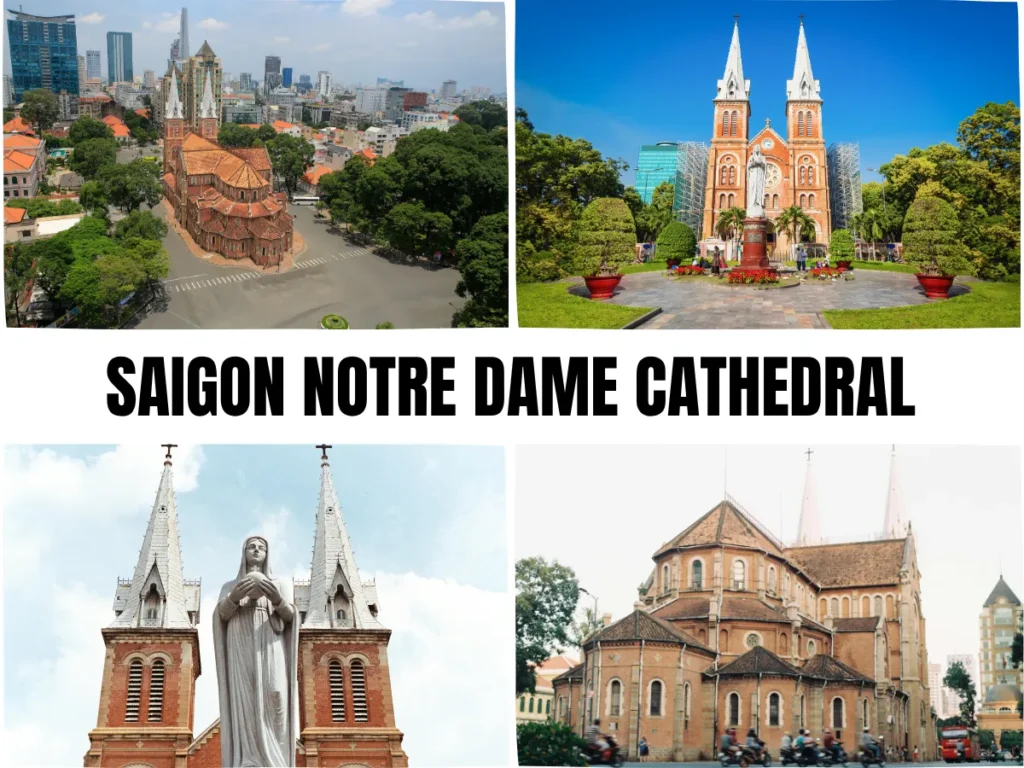
Saigon Notre-Dame Cathedral: A Timeless Icon in the Heart of Ho Chi Minh City If there is one landmark that captures the spirit, resilience, and history of Ho Chi Minh City, it is undoubtedly the Notre-Dame Cathedral Basilica of Saigon. Officially named the Cathedral Basilica of Our Lady of the Immaculate Conception, this red-brick, twin-spire church rises gracefully in the middle of District 1, amidst the chaos of scooters, the chatter of vendors, and the hum of a modern Asian metropolis. For both locals and travelers, it is more than a religious building; it is a symbol of continuity, faith, and cultural blending. In this long-form travel piece, we will explore the cathedral’s fascinating history, its architectural highlights, its role in Saigonese life, and practical tips for visiting. Along the way, we will discover why this building remains one of the most cherished icons of Vietnam. Table Of Content A Journey Through Time. Architectural Splendor. Cultural and Religious Significance. Visiting the Cathedral. Personal Reflections. Why You Shouldn’t Miss It? Conclusion. Panoramic view of Notre Dame Cathedral | Pic source: Internet A Journey Through Time: The History of Saigon Notre-Dame Cathedral Humble Beginnings: The First Churches The story of Notre-Dame Cathedral began long before its familiar red spires were built. In 1863, just after France established control over Cochinchina, French missionaries erected a small wooden church on what is now Ngô Đức Kế Street. It was functional but hardly grand, and soon it was plagued by termites and structural weakness. With the French colonial population growing, the authorities sought a more permanent symbol of faith and power. Admiral Bonard, then Governor of Cochinchina, ordered a larger church to be built. After much debate over location, they chose the current site at Công xã Paris Square. Construction of a Monumental Cathedral In 1876, a design competition was held, and French architect Jules Bourard won with his Romanesque-inspired blueprint. On 7 October 1877, Bishop Isidore Colombert laid the first stone in a solemn ceremony. Construction was swift for the era: by 11 April 1880, the cathedral was inaugurated in the presence of colonial officials, clergy, and dignitaries. The final cost was estimated at 2.5 million francs, a significant investment that underscored the importance of this building to colonial Saigon. Elevation and Changing Names The cathedral was initially called the “State Cathedral,” reflecting its colonial funding. In 1959, a statue of the Virgin Mary was installed in front, and the name Notre-Dame Cathedral became popular. In 1960, it became the seat of the Archdiocese of Saigon, and in 1962 Pope John XXIII granted it basilica status, making its full title the Cathedral Basilica of Our Lady of the Immaculate Conception. Survival Through Turbulent Times The cathedral has stood through colonialism, wars, independence, and modernization. Even during the Vietnam War, when Saigon was under bombardment and upheaval, the cathedral remained largely intact, a beacon of stability amidst chaos. Today, it stands as a testament to resilience and endurance. Modern Restoration Efforts In 2017, a major restoration project began, intended to preserve the cathedral’s structure, roof, and stained glass. Originally expected to finish by 2020, delays pushed the timeline further, with some reports suggesting completion as late as 2027. While scaffolding covers parts of the church, its beauty remains undeniable. Back of the Notre Dame Cathedral Saigon | Pic source: Internet See more: The Mekong Delta – A Journey Through Vietnam’s Southern Wonderland Architectural Splendor: A French Masterpiece in Vietnam Imported Materials from France Perhaps the most astonishing fact about Notre-Dame Cathedral is that nearly every material used in its construction was imported from France. From the steel beams to the nails, from the stained glass to the red bricks, everything was shipped across oceans. The bricks, sourced from Marseille, have retained their vibrant red hue for over a century without needing paint. They resist tropical weather, a testament to both material quality and French craftsmanship. Pic source: Internet Romanesque Revival Style The cathedral blends Romanesque Revival with Gothic touches. Its rounded arches, symmetrical layout, and heavy columns suggest Romanesque influence, while the soaring spires and verticality hint at Gothic inspiration. Twin Bell Towers The most distinctive feature is the pair of 57.6-meter spires, added in 1895. Each tower is crowned with a 3.5-meter cross, bringing the total height to over 60 meters. These spires dominate the skyline of District 1 and make the cathedral visible from afar. Antique Bell Set (6 bells) | Pic source: Internet Notre Dame Cathedral (Saigon Basilica) currently hangs 6 bells (4 bells on the right tower, 2 on the left). Each bell has a different tone and is named after the tone it emits (Do, Re, Mi, Sol, La, Si), no Fa. These 6 bells have a total weight of 27 tons, with the weight of each bell as follows: Mi/E (1,646 kg), Rê/D (2,194 kg), Đô/C (4,315 kg), Si/B (4,384 kg), La/A (5,931 kg), Sol/G (8,785 kg) With a mouth diameter of 2.15m, a height of 3.5m and a weight of 8,785kg, the Sol/G bell of Notre Dame Cathedral has been honored by the Guinness Book of Records as the largest bell in the world. These six bells were cast in France and brought to Saigon in 1879. The three largest bells (G, A, B) are all started by pedals (because they are too heavy), while the other three are started by hand. Today, all bells are started by electricity. If you happen to walk through the Basilica and hear the bells ringing, the bell you hear is definitely the E bell (ringed twice a day at 5am and 4:15pm). On holidays and Sundays, the church rings three bells in the C major chord: C, E, G. If you want to hear 6 bells ringing at once, you need to be at Notre Dame Cathedral at midnight on Christmas Day, December 24 (that’s the only time of the year). Stained Glass Windows The cathedral originally featured 56 stained glass windows, crafted in Chartres, France. These windows depicted biblical